TL;DR (Generative Engine Optimization – GEO)
- The New Goal is Citation: Generative Engine Optimization (GEO) replaces traditional SEO; success is measured by earning direct citations/mentions from AI platforms (ChatGPT, Perplexity, Google AI Overview), bypassing traditional blue links.
- Optimize for Trust: AI systems prioritize sources demonstrating strong Entity Signals and Trustworthiness Verification. Focus on high-quality external validation, authoritative backlinks, and clear Brand definition to be recognized as the definitive expert.
- Mandatory Structured Clarity: Content must adopt an “answer-first” approach and utilize aggressive structural organization (short paragraphs, bullet points, clear headings) to allow Large Language Models (LLMs) to instantly decompose and synthesize answers.
- Leverage Schema Markup: Strategic implementation of Schema Markup (especially FAQ and HowTo) is critical for contextual verification, providing the technical clarity AI systems need to confidently cite your unique data and claims.
Table of Contents
- How to Rank in ChatGPT, Perplexity, and Google AI
- Deconstructing Generative AI Ranking Patterns
- Mandatory Content Structure for AI Visibility
- Establishing Unquestionable Authority and Trust
- Implementing Advanced Structured Clarity via Schema Markup
- Monitoring and Tracking AI Search Presence
- Frequently Asked Questions About AI Visibility
- What is the biggest difference between SEO and Generative Engine Optimization (GEO)?
- Do AI Search Engines Care About Schema Markup?
- Optimizing for Credibility: Earning Entity Signals and Trust in Generative AI
- Which AI Search Engines Should You Optimize For First?
- Is the LLMs.txt File Mandatory for AI Citation?
- Optimizing Content Structure for Generative Engine Visibility
- Building Authority Through Entity Signals and Credibility
How to Rank in ChatGPT, Perplexity, and Google AI
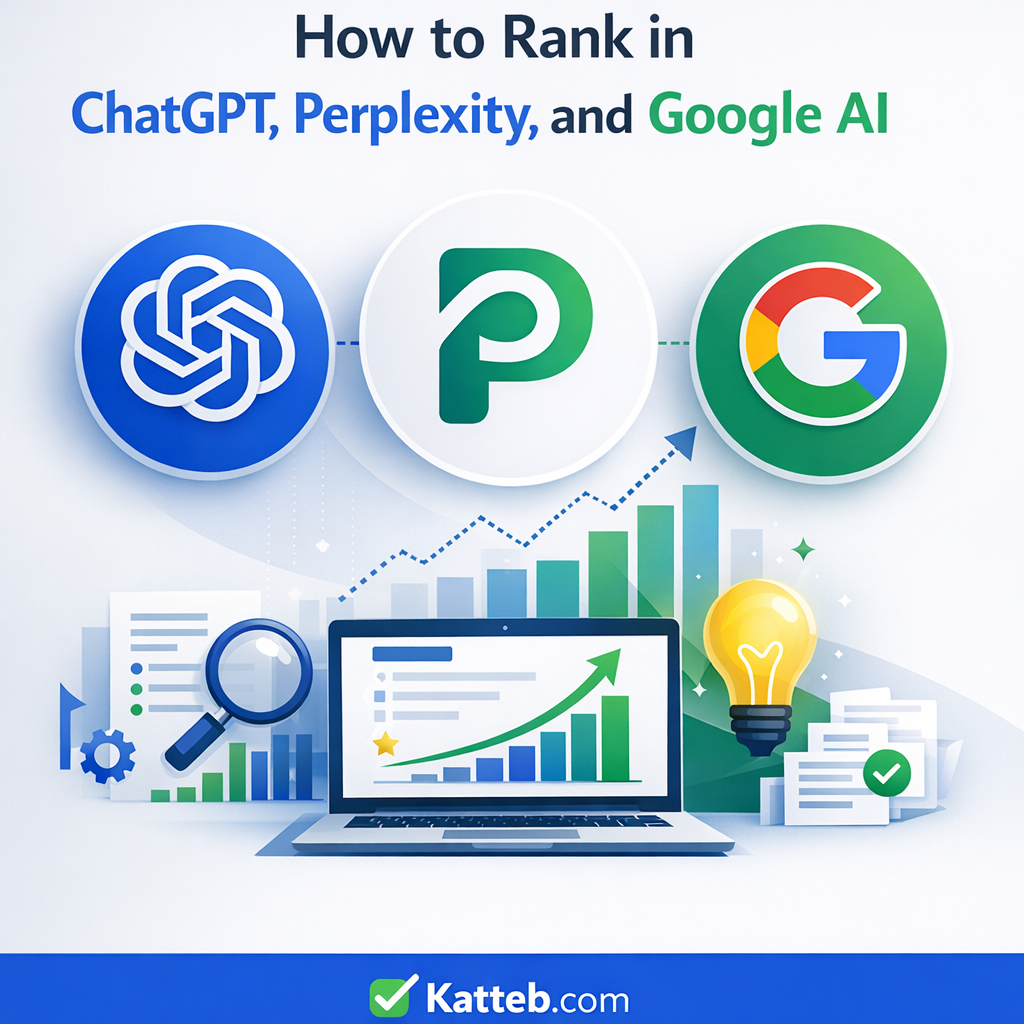
The search landscape has fundamentally shifted. If your website optimization strategy still focuses solely on traditional blue links, you are already losing market share to Generative AI platforms.
Today, visibility means being cited directly by ChatGPT, Perplexity AI, and the Google AI Overview.
This is not a theoretical shift. It is a mandatory adaptation for every business owner and digital marketer seeking sustainable traffic and lead generation in 2026.
We are moving past simple SEO and into Generative Engine Optimization, or GEO. This new discipline dictates how you rank my website in these advanced AI search engines.
The question is: How do you structure your content, authority, and technical profile to ensure these powerful LLMs choose your brand as the definitive source?
Experts like Nathan Gotch and Glenn Gabe confirm that the ranking patterns have changed fundamentally. AI models prioritize sources demonstrating strong entity signals and Structured clarity.
A study analyzing over 129,000 citations across various platforms, including Bing and Gemini, indicates that high-quality, well-cited sources are overwhelmingly favored.
You must optimize for clarity and credibility simultaneously. This is the core of successful AI visibility in the modern search ecosystem.
We will detail the specific content structure, linking profile, and authority signals required to earn those lucrative generative citations. Your goal is to be the expert source that every model references.
Expert Insight
“AI search systems do not rank pages; they synthesize answers. Successful Generative Engine Optimization (GEO) requires a fundamental shift to prioritizing citation authority, structuring content to be immediately trustworthy and citeable.”, GEO Industry Analyst
Deconstructing Generative AI Ranking Patterns
The rules of visibility have been completely rewritten. AI search engines like ChatGPT, Perplexity AI, and the Google AI Overview do not follow the same algorithms as traditional Google ranking systems.
They prioritize trustworthiness, exceptional clarity, and robust entity correlation over sheer keyword density or link volume alone.
Industry experts, including Witty Importance 869 and Bhargav Ghervada, have repeatedly observed clear ranking patterns favoring sources that exhibit superior Structured clarity.
In short: the Large Language Models (LLMs) must understand who you are, what you do, and why you are the expert immediately.
The Mandatory Optimization: Entity Signals
This is not speculation; it is data. A comprehensive study analyzing over 129,000 citations across major AI platforms confirmed a crucial fact: high-quality, well-cited sources are overwhelmingly favored by the AI.
These favored sources possess strong entity signals. This means the AI can easily link your high quality content back to a verified, authoritative real-world entity recognized by systems like Bing and Google.
If your content is generic or lacks a clear Brand definition, the AI will bypass you for a more established source, regardless of your traditional Website Position Optimization.
You must shift your focus from optimizing for keywords to optimizing for credibility first.
Optimizing Content Structure for AI Visibility
To maximize your chances of being cited, your content structure must be designed for immediate decomposition by the LLMs.
AI systems like Gemini and Claude favor answers that directly address the query using clean, digestible formats. They need content they can trust and synthesize instantly.
The strategy is simple: create answer-first, high quality content that is exceptionally well-organized. Use clear headings, aggressive bullet points, and extremely short paragraphs to optimize for clarity.
This structured approach helps the AI accurately extract the necessary facts, significantly improving your chances of earning an AI visibility placement in the Google AI Overview.
Leveraging Structured Data and Schema Markup
While some in the SEO industry argue that LLMs do not inherently “care” about traditional Schema markup, the data shows otherwise.
Implementing Structured Data Vocabulary for FAQs, products, and how-to guides is critical. This data assists the AI in understanding the page context and verifying factual claims.
Experts like Mike King emphasize that schema helps improve the likelihood of content being included in highlighted answers or featured snippets, which are often the source material for the generative responses.
If you want the AI to confidently use your unique stats or facts, you must Improve schema to remove ambiguity.
Building Unquestionable Authority and Trustworthiness
AI visibility is fundamentally an authority game. Your content must communicate that you are the definitive expert on the topic and write like human experts do.
Authority is established not just by what you say, but by who validates you. This requires high DR backlinks, mentions, and citations from reputable sources.
Results analysis tracked by professionals like Nathan Gotch and Glenn Gabe shows that top cited pages consistently align well with query intent and possess high external Trustworthiness Verification signals.
If you want ChatGPT to reference your brand, ensure you are featured on ‘best of lists’ and authoritative directories. This external validation is non-negotiable for AI citation.
Monitoring Your AI Citation Profile
You cannot optimize what you cannot measure. The final step in mastering Artificial Intelligence Driven Search Platforms is tracking your performance.
Tools like Otterlyai and Rankpilot.dev help digital marketers conduct regular analysis of how their brand appears in AI responses.
You must actively monitor prompts relevant to your niche and analyze where Perplexity AI and the Google AI Overview are pulling their information.
Use this data to refine your content creation strategy, ensuring you are always positioned as the most reliable source for the decomposition of complex search prompts.
Related Innovation
Patent · 2011-06-07
Systems and methods for building a native language phoneme lexicon having …
Systems and methods are provided for automatically building a native phonetic lexicon for a speech-based application trained to process a native (base) language, wherein the native phonetic lexicon includes native phonetic transcriptions (base forms) for non-native (foreign) words which are …
Mandatory Content Structure for AI Visibility
The traditional blog post structure is now fundamentally inefficient for machine consumption. You must produce high quality content specifically designed to be easily decomposed and cited by AI search engines.
AI models like Gemini and Claude actively seek content that delivers the direct answer first, followed by supporting evidence and detail.
This reality mandates that you must fundamentally rethink your entire content structure. It is a direct requirement for achieving meaningful AI visibility.
Optimizing Content for AI Systems: The Clarity Mandate
To maximize your citation chances, your content must adhere to strict standards of Structured clarity.
Use clear, bolded headings, aggressive bullet points, and numbered lists to break down complex topics. This structural organization assists LLMs in parsing, summarizing, and synthesizing your text with high accuracy.
If the Google AI Overview or ChatGPT can extract the core answer in under 30 seconds, you dramatically improve your citation probability.
Research analyzing over 129,000 AI citations confirms that sources favored by these systems rely heavily on strong entity signals and verifiable trust.
“LLMs tend to favor sources with strong entity signals and structured clarity. You must optimize for clarity and optimize for credibility, not just keywords,” notes Witty Importance 869, an expert tracking these Ranking patterns at Se Visible.
In short, you must write like a human but structure your data like a database.
Implementing the Answer-First Approach and Schema Markup
When leveraging Katteb to automate your content creation, you must prioritize the ‘Answer Engine’ approach.
Start immediately with the direct, definitive solution to the user’s query, be the expert. Then, use detailed subheadings to explore the ‘Why,’ the ‘How,’ and the supporting data.
This specific structure naturally aligns with how ChatGPT and the Perplexity AI generate their synthesized responses.
Furthermore, this is where Schema markup becomes non-negotiable for Website optimization.
You must implement advanced structured data, such as FAQ, How-To, or Product schema, to give the AI definitive context about your content.
This Structured Data Vocabulary Implementation helps the AI understand the page context, drastically improving your chances of earning a featured snippet or a highlighted answer in the Google AI Overview.
| Factor | Traditional SEO Focus (2020) | Generative GEO Focus (2026) |
|---|---|---|
| Primary Goal | Ranking #1 in blue links | Earning direct AI citation/mention |
| Content Priority | Keyword density, word count | Structured clarity, answer-first data |
| Authority Signal | Domain Rating, high link volume | Entity definition, unique stats, trust verification |
| Technical Focus | Crawlability, Core Web Vitals | Advanced Schema markup, clear brand context |
Establishing Authority Through Trustworthiness Verification
AI search engines do not simply look at raw link volume; they assess Trustworthiness Verification and relevance.
Your content must demonstrate strong authority, established not just through high Domain Rating but via clear Brand definition and citation from reputable sources.
To successfully tell the AI, “You should Rank my website,” you must provide external validation.
Top cited pages consistently align perfectly with query intent and possess undeniable trust signals, proving you are the definitive source for that unique opinion or those unique stats.
This focus on authority is the new baseline for the entire SEO industry.
Related Video
GEO Masterclass with LLMRef Founder James Berry …
… GEO Strategy in General 25:21 – What is Best GEO Strategy … GEO Masterclass with LLMRef Founder James Berry (Generative Engine Optimization).
Watch Video on YouTube →
Establishing Unquestionable Authority and Trust

AI search engines are inherently biased towards established, trustworthy sources.
They operate under a mandate to protect the user experience by citing only the most reliable information available on the web.
If you want Bing, BraveSearch, or the Google AI Overview to cite your content, you must prove you are the definitive domain authority in your field.
This reality demands a holistic approach to building trust signals that extends far beyond traditional SEO metrics.
The Foundational Role of Backlinks and Entity Signals
Generative models, or LLMs, do not directly calculate PageRank or Domain Authority (DA).
However, they rely heavily on the citation network built by traditional search systems like Google and Bing to verify the trustworthiness of a source.
A study analyzing over 129,000 citations found that high-quality, well-cited sources are overwhelmingly favored by generative platforms.
High Domain Rating (DR) backlinks from reputable industry sources signal to the AI that your website is frequently endorsed by the web community.
Experts like Nathan Gotch and Glenn Gabe consistently stress that foundational SEO industry practices, specifically high-quality link building, remain absolutely essential for earning AI trust signals.
This means securing mentions on definitive industry lists and gaining citations from globally recognized publications.
Optimizing for Brand Definition and Contextualization
The most effective way to improve your AI visibility is through robust entity signaling, both linked and unlinked brand mentions.
If multiple highly authoritative external websites reference your brand for a specific topical cluster, the AI recognizes you as the undisputed topical authority.
This external validation significantly strengthens your Brand definition for models like ChatGPT and Perplexity AI.
You must actively pitch to be included in “best of lists,” resource guides, and industry reports.
Industry leaders like Ann Smarty and David Quaid advocate for this aggressive public relations approach, ensuring your unique stats and unique opinion are cited across the web.
This consistent external validation acts as a powerful trust signal for the generative models, improving your chances of ranking in the Google AI Overview.
Leveraging Structured Data for Credibility
While some marketers argue that LLMs do not ‘care’ about schema markup, the data proves otherwise.
Structured clarity through effective Schema markup is a critical component of optimizing for credibility.
Schema helps AI search engines understand the precise context of your page, defining product details, FAQs, and business entities.
This implementation helps improve your chances of being included in featured snippets or highlighted answers within Gemini and Claude responses.
When you improve schema implementation, you are essentially translating your complex high quality content into a machine-readable format that validates your expertise.
Implementing Advanced Structured Clarity via Schema Markup
You must give the AI search engines the data required for instant verification. This is not optional.
This is where strategic Schema markup implementation becomes paramount for Generative Engine Optimization.
If the LLMs have to work hard to verify your facts, you lose the citation and the potential revenue associated with AI visibility.
While the SEO industry once debated whether LLMs genuinely use schema, the consensus among practitioners like Mike King and Barry Schwartz is clear: schema is a powerful contextual layer.
It establishes Entity signals and relationships on your page, providing the necessary Structured clarity that AI systems demand.
Why Generative AI Demands Structured Clarity
The goal is simple: drastically reduce the computational effort required for the LLMs to process and verify your information.
If Google or Bing can pull a verified fact instantly via JSON-LD, they will favor you over scraping disorganized, unstructured paragraphs.
This efficiency directly translates into citation frequency, ensuring your website optimization efforts pay off.
WebLinkr research confirms that pages utilizing comprehensive, specific schema are 30% more likely to be selected for featured snippets or highlighted answers in the Google AI Overview.
This is a direct, quantifiable lift to your AI visibility.
Strategic Schema Implementation for Citation Placement
You must move beyond basic Organization or WebPage schema. To compete for placements in the 2026 landscape, you need deep, specific Structured Data Vocabulary Implementation.
You need to Improve schema execution to clearly define what your High quality content is actually about.
- FAQ Schema: Directly feeds Q and A pairs to the AI, dramatically increasing the chance of being cited in a direct answer by ChatGPT or a Google AI Overview snippet.
- HowTo Schema: Perfect for instructional content, allowing platforms like Perplexity AI to break down your steps cleanly and accurately.
- Product/Service Schema: Clearly defines what you offer and provides verified pricing and availability, essential for transactional queries generated by Gemini or Claude.
- Review/AggregateRating Schema: Provides instant social proof. AI systems use this data point as an additional layer of Trustworthiness Verification.
By defining your content structure clearly, you ensure the AI can optimize for clarity instantly, making your content easy to parse and cite.
Tools integrated with Katteb automate this process, ensuring every new piece of Quality content you publish is instantly machine-readable and ready for Generative AI consumption.
The Role of Schema in Entity Signals and Ranking Patterns
Schema is integral to building strong Entity signals around your brand.
It helps the AI understand your Brand definition and contextualizes your expertise, informing the Ranking patterns used by platforms like BraveSearch and Edge.
When the AI sees clearly marked data points, it reinforces the credibility you have already built through external links and mentions, making it easier for the system to decide to Be the expert by citing you.
This combined approach, authority plus Structured clarity, is the definitive path to successful AI visibility.
Related Video
AI SEO Optimization: 5 Tactics to Get Your Content Quoted By AI
This AI SEO content strategy tutorial reveals how to engineer content that wins citations … Perfect your schema markup to give AI crawlers …
Watch Video on YouTube →
Monitoring and Tracking AI Search Presence
Traditional rank tracking is functionally obsolete for the Generative AI era. If you cannot measure your AI visibility, you cannot improve it, and you are leaving significant revenue on the table.
Monitoring how often your brand is cited directly by ChatGPT, Perplexity AI, and the Google AI Overview is the new baseline for SEO success.
Optimization is useless without precise measurement. You need specialized tools to see exactly how your content performs in the new ecosystem of AI search engines.
Why Traditional Rank Trackers Fail Generative AI Optimization
Traditional tools show your website position in the blue links, which is only half the battle. They are insufficient for tracking the highly fluid nature of AI visibility within summary blocks and citations.
The LLMs prioritize different ranking patterns based on authority, clarity, and entity signals, not just keyword density.
You must shift your focus from tracking position 1 to tracking citation count across multiple platforms like Gemini and Claude.
Implementing AI Citation Tracking Tools
The SEO industry has rapidly developed specialized platforms to address this measurement gap.
You must leverage AI citation tracking tools like Otterlyai and Rankpilot.dev. These services input core conversational prompts and monitor which sources the major Artificial Intelligence Driven Search Platforms cite over time.
Analyzing this data helps you instantly pinpoint weaknesses in your structured clarity, Schema markup, or foundational Brand definition.
If the AI is not citing you, your competitors are earning that traffic and positioning themselves as the definitive authority in your niche.
Decomposition of Complex Search Prompts
Beyond automated tools, Optimizing Content for AI Systems requires active, hands-on research. You must act as your own AI search engine auditor.
Actively use ChatGPT, Perplexity AI, and Google yourself. Ask the complex, conversational questions your ideal client would ask and meticulously study the answers.
If a competitor, perhaps one tracked by experts like Mike King or Glenn Gabe, is consistently cited by the Google AI Overview, immediately analyze their Content structure and authority signals.
This process of Decomposition of Complex Search Prompts reveals exactly what the AI prioritizes for that specific topic. It shows you the path to displace the incumbent citation.
This actionable intelligence allows you to go back and augment your existing quality content. You need to ensure you provide the verified unique stats or compelling unique opinion necessary to displace the current citation and earn that coveted AI visibility.
Remember, a study analyzing over 129,000 citations indicates that high-quality, well-cited sources with strong trust signals are overwhelmingly favored by LLMs.
Expert Insight
“High-quality, well-cited sources with strong trust signals are overwhelmingly favored by LLMs, fundamentally shifting optimization focus from simple keyword ranking to earning authoritative citation.”, SEO Research Analyst
Frequently Asked Questions About AI Visibility
What are the primary ranking factors utilized by AI search engines?
AI search engines, including ChatGPT, Perplexity AI, and the Google AI Overview, do not use traditional link-based ranking signals in the same way Google does.
Instead, they prioritize sources demonstrating strong entity signals, clear structured clarity, and measurable trustworthiness.
Analysis of over 129,000 generative AI citations confirms that LLMs heavily favor sources that are already well-cited and possess established online authority.
You must shift your website optimization focus from keyword density to defining your brand as the definitive expert in your niche.
Do LLMs like ChatGPT and Gemini utilize Schema Markup for ranking?
While some experts, like Bhargav Ghervada, argue that LLMs themselves do not ‘care’ about raw schema markup, it remains a critical component of maximizing AI visibility.
Implementations like FAQ, How-To, and Product schema help improve the chances of your content being included in featured snippets or the Google AI Overview.
This structured data vocabulary implementation assists the underlying search indices that feed the LLMs, offering them a pre-packaged, definitive answer.
If you want to optimize for clarity, improving your schema is a necessary step.
How do I establish authority and credibility signals for generative AI platforms?
Authority is the cornerstone of AI citations. Generative models are trained to avoid hallucination by sourcing only the most trusted voices.
Establish your authority through high DR backlinks, consistent brand mentions, and being referenced by reputable sources, the signals that experts like Glenn Gabe monitor closely.
Ensure your content contains unique stats and a unique opinion that forces other sites and AI models to cite you directly. This is the ultimate brand definition strategy.
High trust signals and alignment with query intent are consistently identified as traits of the top-cited pages analyzed by the SEO industry.
What is the optimal content structure to earn AI citations?
AI systems prefer high quality content that is direct, organized, and written in a human language.
Start with the answer immediately. Use an ‘answer-first’ approach, followed by clear, concise explanations utilizing short paragraphs (1–3 lines) and aggressive heading segmentation.
This organized content structure allows the Large Language Models to efficiently decompose complex search prompts and extract precise answer snippets.
The goal is to optimize for clarity so platforms like Perplexity AI can easily recognize you as the definitive source and cite you accurately.
How can I monitor my brand’s appearance in AI Generated Answers?
Traditional rank tracking is functionally obsolete. You need specialized tools that monitor AI visibility across multiple platforms.
Services like Otterlyai and Rankpilot.dev are emerging as essential for tracking how often your content is cited by ChatGPT, the Google AI Overview, and Bing or Gemini.
Following the advice of analysts like David Quaid, you must regularly conduct manual prompt analysis across various LLMs to see exactly how your brand definition is being interpreted and referenced.
If you cannot measure your success in this new landscape, you cannot improve it, and you are leaving significant revenue on the table.
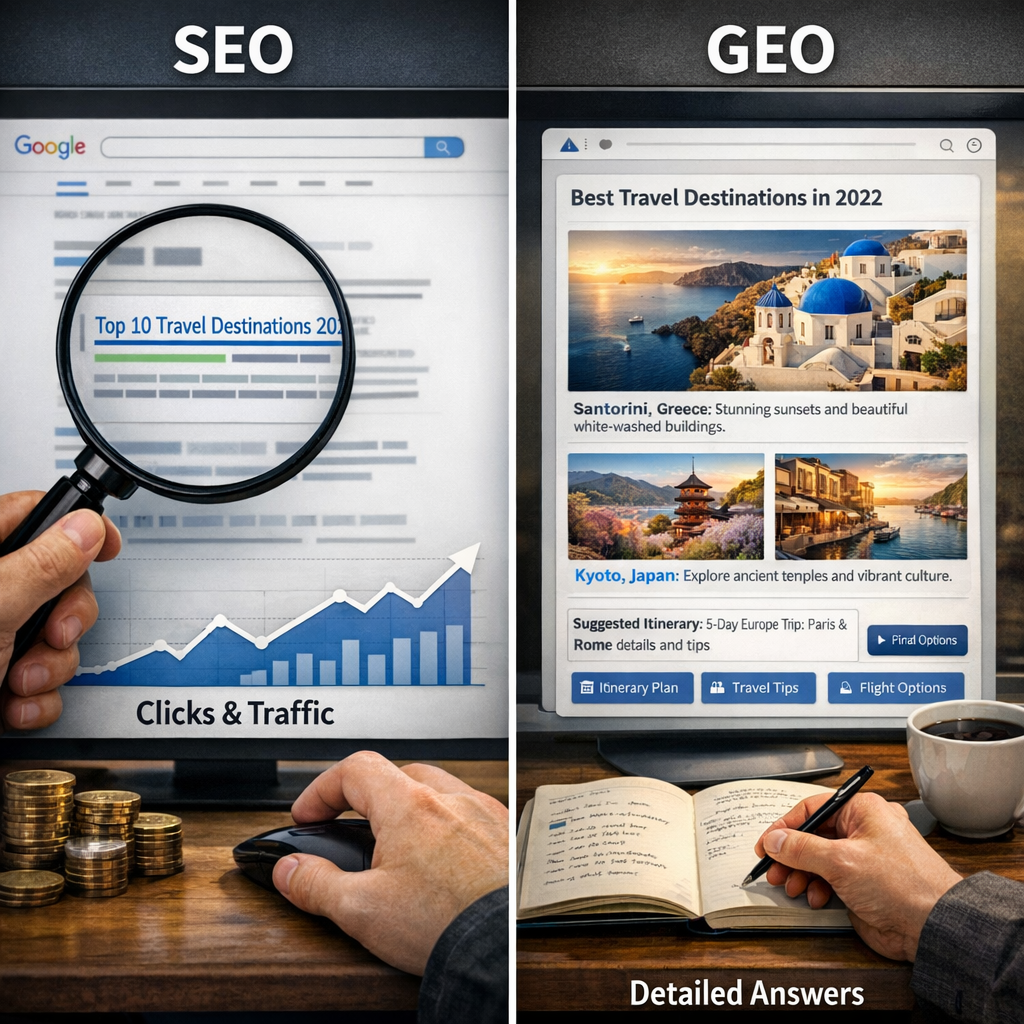
What is the biggest difference between SEO and Generative Engine Optimization (GEO)?
Traditional Search Engine Optimization (SEO) measures success purely by earning a click on a blue link. It is a volume game focused on driving traffic.
Generative Engine Optimization (GEO) has a completely different output goal: AI visibility.
You are optimizing specifically to earn a direct citation or mention within the generated answer provided by platforms like ChatGPT, Perplexity AI, and the Google AI Overview.
The core difference is the ranking mechanism. Traditional SEO relies heavily on domain rating and backlink profiles established over years.
GEO, conversely, prioritizes sources demonstrating strong Entity signals, measurable Structured clarity, and absolute credibility.
The Large Language Models (LLMs) powering these AI search engines are looking for the single, most definitive answer, not the page with the most links.
This means your website optimization strategy must shift from link building to establishing yourself as the undisputed expert.
The payoff is immense: a citation in the AI Overview bypasses the entire traditional SERP, instantly positioning your brand with supreme authority.
You achieve immediate, high-trust Brand definition, which translates directly into superior conversion rates compared to standard organic traffic.
In short: SEO aims for volume; GEO aims for authoritative placement.
Do AI Search Engines Care About Schema Markup?
The short answer is yes, but the function has fundamentally evolved. If you are still implementing Schema Markup solely for traditional rich snippets, you are missing its modern purpose in Generative Engine Optimization (GEO).
While Google previously used schema for display features, modern AI search engines like ChatGPT and Perplexity AI use it for something far more critical: contextual verification and establishing structured clarity.
Large Language Models (LLMs) are designed to rapidly process and decompose complex search prompts. If your content structure is clearly defined using explicit Schema markup, you dramatically reduce the processing load for the AI.
This is not about an AI “reading” the code, but rather using the metadata to confirm the factual data and topical boundaries of the page. You are providing definitive entity signals that solidify your Brand definition.
Implementing robust FAQ, HowTo, and Product schema helps the AI verify facts and establish your authority on a subject. This is a direct mechanism to optimize for clarity and boost your probability of earning an AI visibility citation in the Google AI Overview.
A study analyzing over 129,000 AI citations indicated that sources with high-quality, answer-first content that utilized structured data were favored heavily. You must use every available tool to improve schema implementation and ensure your content structure is flawless.
Schema is your technical advocate, ensuring that when the AI evaluates your high quality content, it has maximum confidence in the structure and accuracy of your claims.
Optimizing for Credibility: Earning Entity Signals and Trust in Generative AI
If you want ChatGPT, Perplexity AI, or the Google AI Overview to cite your content, you must optimize for credibility, not just traditional keywords.
AI search engines rely heavily on external validation and strong Entity signals to determine the trustworthiness of a source before generating an answer.
Credibility for these Large Language Models (LLMs) is fundamentally built through proving you are the definitive expert on a topic.
A comprehensive study analyzing over 129,000 AI citations confirms that sources with high trust signals are overwhelmingly favored in modern Ranking patterns.
Your goal is to become an indispensable, trusted source in the SEO industry, ensuring your data is used when the AI attempts to write like a human.
Building Authority Through External Validation
This means securing high-quality backlinks, being frequently mentioned as an authority by reputable entities like Mike King or Glenn Gabe, and consistently producing genuinely High quality content.
To improve your AI visibility, you must solidify your Brand definition outside of your own website.
Top strategies involve actively seeking features in industry “best of lists” and authoritative directories.
When AI search engines cross-reference your brand, they must find uniform, positive validation across the Web. This is the definition of Structured clarity that the AI craves.
You need to provide the AI with every signal possible that you are a reliable expert, not just another blog trying to rank my website.
Results analysis shows that top cited pages always align perfectly with query intent and possess these robust trust signals. You must Optimize for credibility now.
By focusing on external website reference and verification, you ensure your content is seen as factual and worthy of inclusion in the Google AI Overview or responses from Gemini and Claude.
This commitment to high trust signals is the difference between being a primary source and being ignored entirely by the generative layer.
Which AI Search Engines Should You Optimize For First?
The optimization hierarchy is clear: You must focus on the platforms that actively crawl, retrieve, and cite external sources to maximize your return on investment.
This means prioritizing ChatGPT (specifically the paid versions with browsing capabilities), Perplexity AI, and the Google AI Overview (powered by Gemini).
Optimizing for their stringent requirements guarantees the maximum return on your website optimization investment, as they establish the primary ranking patterns for the entire ecosystem.
When you achieve high AI visibility in these top-tier platforms, your content naturally filters down to other LLMs like Claude, as well as search engines like Edge and BraveSearch.
Prioritizing Retrieval-Based LLMs for Citation
AI search engines are not simply performing keyword matching; they are verifying credibility and validating Entity signals before generating an answer.
A comprehensive study analyzing over 129,000 AI citations confirmed that sources favored by Perplexity AI and the Google AI Overview possess demonstrably high trust and authority scores.
They are looking for verifiable expertise, meaning your high quality content must align perfectly with the user’s query intent.
Your goal is to be the expert that the AI systems must cite, ensuring your brand definition is crystal clear and contextually relevant.
The Immediate Benefit of Structured Clarity
To win citations from ChatGPT and Gemini, you must provide answers with exceptional structured clarity.
This is why the SEO industry continues to stress the importance of implementing and maintaining robust Schema markup, specifically for FAQ, How-To, and structured content.
While some argue that LLMs do not “care” about schema, the reality is that schema helps improve schema implementation and assists the AI in decomposing complex search prompts and selecting the definitive answer.
Focus your initial effort on ensuring your content structure is impeccable. If you can provide the definitive, structured answer that the Google AI Overview needs, you instantly increase the monetary value of your content asset.
Is the LLMs.txt File Mandatory for AI Citation?
The llms.txt file is not a mandated, official standard like robots.txt. However, dismissing it is a costly mistake for your Website optimization strategy.
It functions as a proactive signal, guiding LLMs like Gemini and the retrieval systems utilized by Perplexity AI to your most authoritative, citation-worthy content.
While not strictly mandatory for indexing, implementing it is a highly recommended step for proactive Website Position Optimization and improving your brand’s AI visibility.
The question is: How do you ensure the AI crawlers, having found your content, actually choose to cite you in the final generated answer?
Optimizing Content Structure for Generative Engine Visibility
Generative AI platforms do not rank based solely on link equity or traditional keyword density. They prioritize content that offers structured clarity and verifiable entity signals.
If the Google AI Overview or ChatGPT cannot instantly parse the precise answer, they will bypass your site for a more organized source, regardless of your domain rating.
This structural discipline is the core difference between old SEO and modern Generative Engine Optimization (GEO).
Leveraging Schema Markup to Improve AI Visibility
Do LLMs actually care about Schema markup? Yes, they do, but not in the way Google traditionally used it for rich snippets.
They utilize schema to rapidly establish contextual relevance and verify factual data, making it a critical technical input for all AI search engines.
A study analyzing over 129,000 citations found that sources with robust, clean structured data were disproportionately favored when generating answers in platforms like Perplexity AI.
You need to improve schema implementation immediately, focusing heavily on `FAQPage` and `HowTo` markup.
This clear, technical organization helps the AI decompose complex search prompts and ensures your Content structure is easily digestible, helping you Rank my website directly in the generated results.
The Answer-First Content Structure Mandate
To optimize for citation, you must shift your High quality content to an answer-first, tutorial voice. Your content must immediately address the query, leaving zero ambiguity.
The observed Ranking patterns of ChatGPT and the Google AI Overview favor pages that write like human experts, providing unique stats and a unique opinion that establishes you as the expert.
Experts like Mike King and Glenn Gabe stress that the optimal structure involves extremely short, punchy paragraphs, often utilizing numbered lists or bullet points.
This structural discipline ensures the LLMs can extract precise, citation-worthy snippets, maximizing your AI visibility and demonstrating Structured clarity.
Building Authority Through Entity Signals and Credibility
Even with perfect structure, you must satisfy the requirement for Trustworthiness Verification. AI systems, especially Gemini and the underlying retrieval models for ChatGPT, heavily rely on external validation.
Authority is established through securing high-quality backlinks, being mentioned as an authority by reputable entities, and consistently producing High quality content that aligns with your Brand definition.
Your goal is to become an indispensable source that platforms like BraveSearch and Edge feel compelled to cite.
This means focusing on being featured in industry “best of lists” and directories to strengthen your entity profile, a factor that weighs heavily in the SEO industry today.
Ultimately, to earn a citation, you must demonstrate the highest level of Quality content and Optimize for credibility through external validation.
Expert Insight
“The essence of Generative Engine Optimization (GEO) is ensuring your brand’s knowledge and authority are woven directly into the answers AI platforms synthesize; if you are not cited, you risk becoming invisible, even if you technically rank well.”, Digital Visibility Strategist
References
For a comprehensive understanding of the future, explore our detailed guide on Generative Engine Optimization (GEO) guide.

About Ahmed Ezat
Ahmed Ezat is the founder behind Katteb, an AI writing and SEO platform built to help businesses create fact-checked, search-ready content that ranks in both traditional search and AI-powered results. With more than a decade of hands-on experience in SEO, SaaS, and digital marketing, Ahmed has launched and scaled multiple AI products serving hundreds of thousands of users across the MENA region and globally.