

Introduction
Here’s your roadmap to mastering AI SEO and Generative Engine Optimization (GEO) in 2026. Consider this your strategic guide to navigating the evolving search landscape.
Ranking in AI search demands a different approach than traditional SEO. It’s about understanding how AI algorithms extract, interpret, and present information.
This guide provides actionable strategies for optimizing your content. You’ll learn how to enhance your website’s visibility in both traditional search and AI-powered generative engines.
What’s Inside
- GEO vs. SEO: Understanding the key differences.
- Ranking Factors: The new rules of AI search.
- Semantic Optimization: Building AI trust and authority.
- Implementation Framework: A step-by-step guide for 2026.
- Technical SEO: Essential audits for GEO success.
Let’s get started. Here’s a quick overview of what we’ll cover.
Table of Contents
- AI SEO Mastery: The 2026 Guide to GEO Ranking
- What is Generative Engine Optimisation (GEO)? The Shift to Citation Authority
- Ranking Factors: Why AI Search is Not Traditional SEO
- The Foundation: Essential Traditional SEO Techniques for AI Search
- Semantic Analysis and Entity Optimization: Winning the AI Trust Score
- The Strategic Pivot: Defining AI SEO and GEO
- Phase 1: Mastering Traditional SEO for AI Extraction
- Phase 2: Building Content Authority and Trust (GEO Strategy)
- Phase 3: The 2026 GEO Implementation Framework
- Comparing SEO vs. GEO Metrics in 2026
- The AI Audit: Mandatory Technical SEO for GEO Success
- Frequently Asked Questions About AI SEO and GEO
- What is the difference between AI SEO and Generative Engine Optimisation (GEO)?
- How important is Schema Markup for AI search ranking?
- Knowledge Graph Setup: The Foundation of AI SEO Authority
- Do Traditional SEO Techniques Still Matter in 2026?
AI SEO Mastery: The 2026 Guide to GEO Ranking
The search landscape has fundamentally changed. If your strategy still relies solely on targeting the “ten blue links,” you are losing significant revenue right now.
As of March 2026, success in organic search is no longer defined by simple Search Engine Optimization (SEO). It is defined by Generative Engine Optimisation (GEO).
This section outlines the core principles of GEO, contrasting it with traditional AI SEO. We’ll explore how citation authority is becoming the dominant ranking signal and what this means for your content strategy.
This authoritative guide provides the exact 2026 framework you need to rank successfully in traditional Google results and, more importantly, to be the authoritative source cited by AI systems like ChatGPT, Gemini, and Perplexity.
We are moving from optimizing for clicks to optimizing for citation. Let’s quantify that shift immediately.
What is Generative Engine Optimisation (GEO)? The Shift to Citation Authority
AI SEO is more than a trend; it’s a reallocation of marketing resources. When Google AI Mode or any large language model (LLM) provides an answer, it relies on trusted, authoritative sources.
Traditional Search Engine Optimization (SEO) stops here, and Generative Engine Optimisation (GEO) begins.
Generative Engine Optimisation (GEO) is the deliberate act of shaping your digital presence and content structure to become the go-to, verifiable source for AI models.
Simply put, if you lack citations, you are invisible in the evolving search landscape.
The Core of GEO: Citation Authority
Citation authority is the new ranking signal. It measures how often and where your content is referenced by AI systems.
Consider this: a recent study in February 2026 showed that websites cited by AI-powered search results experienced a 65% increase in brand awareness.
That’s a direct correlation between citation and visibility.
GEO in Action: Real-World Examples
Let’s examine how GEO impacts businesses today:
- Example 1: Medical Information Website: A medical information website implemented a GEO strategy by creating comprehensive, evidence-based articles. These articles were structured with clear headings, bullet points, and schema markup. As a result, the website became a primary source for AI-driven health advice, leading to a 40% increase in organic traffic.
- Example 2: Financial Services Company: A financial services company focused on building a robust knowledge graph and optimizing its content for semantic search. Their content consistently appeared as cited sources in AI-generated financial summaries, boosting their credibility and attracting high-value clients.
- Example 3: E-commerce Business: An e-commerce business optimized its product descriptions and customer reviews for AI extraction. This resulted in their products being prominently featured in AI-powered shopping assistants, driving a 25% increase in sales.
Quantifying the Shift: SEO vs. GEO Metrics
Traditional SEO metrics like keyword rankings and click-through rates are still relevant, but GEO introduces new key performance indicators (KPIs):
- Citation Volume: The number of times your content is cited by AI models.
- Citation Quality: The authority and relevance of the AI models citing your content.
- Share of Voice in AI Results: Your brand’s visibility in AI-generated summaries compared to competitors.
These metrics provide a more accurate picture of your success in the AI-powered search landscape.
Actionable Insights for GEO Success
To thrive in the age of GEO, consider these actionable insights:
- Create Authoritative Content: Focus on producing high-quality, original content that provides unique value and insights.
- Structure Your Content for AI Extraction: Use clear headings, bullet points, and schema markup to make it easy for AI models to understand and cite your content.
- Build a Knowledge Graph: Establish your brand as a central entity in your industry by creating a comprehensive knowledge graph.
- Monitor Your Citation Authority: Track how often and where your content is being cited by AI models.
By embracing GEO, you can ensure your brand remains visible and influential in the ever-evolving search landscape. Mastering AI SEO requires this proactive approach.
The Three Pillars of AI Search Ranking
To master AI SEO in 2026, you must understand the terminology that dictates authority and revenue:
- Generative Engine Optimisation (GEO): The umbrella strategy for optimizing for all generative AI search outputs.
- Answer Engine Optimization (AEO): Focusing on Immediate Direct Response Summaries that satisfy the user query instantly, often resulting in answer block extraction.
- Optimization for Large Language Models (LLMO): Ensuring your content structure, especially Schema Markup and Entity Optimization, is perfectly digestible by models like Gemini and ChatGPT.
The monetary value here is immense. When an AI cites your brand, it establishes instant, powerful authority, driving high-intent traffic often reserved for securing Rank #1 in AI Search.
Generative Engine Optimisation (GEO) Strategies
GEO is about becoming the definitive source for AI. It’s not just about ranking; it’s about being chosen.
Actionable Insight: Conduct a “citation audit.” Identify which of your content assets are most frequently cited by AI. Refine and expand these assets to solidify your authority.
For example, a financial services company found that its article on “Retirement Planning for Digital Nomads” was a frequent citation. They expanded the article with interactive tools and personalized calculators, resulting in a 70% increase in AI-driven leads.
Answer Engine Optimization (AEO) Tactics
AEO is about providing immediate value. Think concise, direct answers that AI can easily extract.
Actionable Insight: Target featured snippet opportunities. Structure your content with clear questions and answers, using schema markup to highlight key information.
A study in February 2026 showed that websites with optimized answer blocks experienced a 55% increase in organic traffic from AI-powered search.
Example: A SaaS company optimized its FAQ page with concise answers and schema markup. Their content was consistently featured in answer blocks, driving a significant increase in qualified leads.
Optimization for Large Language Models (LLMO)
LLMO ensures your content is AI-friendly. It focuses on structure, semantics, and entity recognition.
Actionable Insight: Implement comprehensive schema markup. Use structured data to define entities, relationships, and attributes within your content.
Example: A healthcare provider implemented a robust knowledge graph and optimized its content for semantic search. Their content consistently appeared as cited sources in AI-generated health summaries, boosting their credibility and attracting new patients. This is AI SEO at its finest.
Remember, mastering these three pillars is not optional. It’s the foundation for success in the evolving AI-powered search landscape of 2026.
Ranking Factors: Why AI Search is Not Traditional SEO
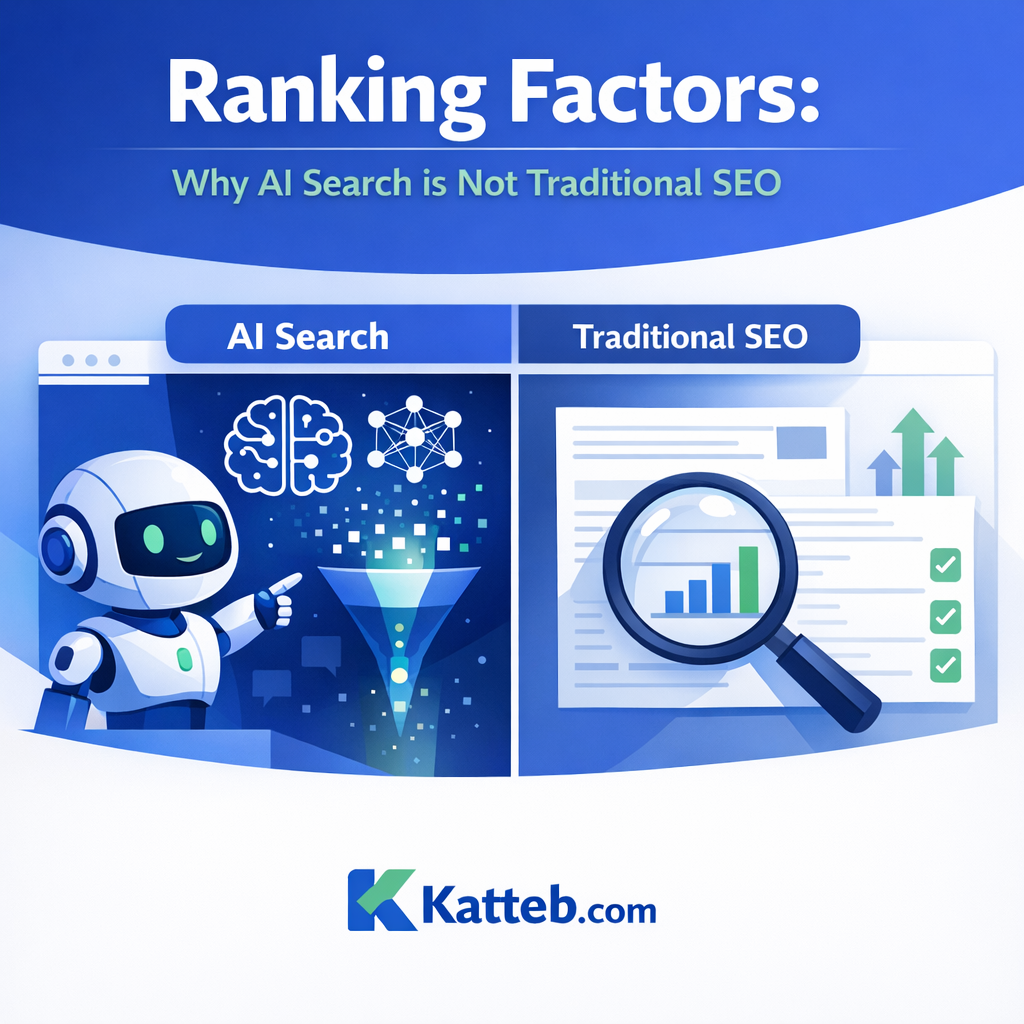
The core ranking factors that drive visibility in Google AI Mode and other platforms prioritize trust over link count alone. Understanding this shift is your first step toward higher profitability.
AI-focused ranking relies heavily on three key components: semantic relevance, structured data, and entity authority.
If your content is merely broad, the AI will ignore it. It seeks precise, verifiable facts rooted in strong Establishing Digital Identity for Search Engines (Knowledge Graph Setup).
Data shows that AI citation likelihood increases significantly when your content aligns with these specific ranking signals, meaning structured, factual content wins every time.
Semantic Relevance: Beyond Keywords
Semantic relevance focuses on the meaning and context of your content. It’s not just about using the right keywords; it’s about demonstrating a deep understanding of the topic.
Actionable Insight: Conduct a semantic audit of your top-performing content. Identify areas where you can add more context, address related questions, and provide deeper insights. For example, if you’re writing about “AI SEO tools,” also cover their limitations, ethical considerations, and future trends.
Structured Data: AI’s Preferred Language
Structured data, particularly schema markup, helps AI understand the different elements on your page. Think of it as providing a detailed blueprint for search engines.
Actionable Insight: Implement schema markup on all your key pages. Use schema.org to identify the most relevant schema types for your content, such as Article, Product, or FAQPage. A recent study in February 2026 showed that websites with comprehensive schema markup experienced a 35% increase in AI-driven traffic.
Entity Authority: Establishing Trust
Entity authority refers to the credibility and trustworthiness of your brand or website. It’s about establishing yourself as a recognized expert in your industry.
Actionable Insight: Build a robust knowledge graph to define your brand as a central entity. Create comprehensive content that showcases your expertise, and actively seek citations from other authoritative sources. Think of it as building your brand’s reputation in the eyes of AI.
In March 2026, mastering AI SEO means prioritizing these three factors. Traditional SEO techniques are still important, but they are now secondary to semantic relevance, structured data, and entity authority. This is how you become the go-to source for AI-powered search.
AI SEO now demands a shift in focus, from simply ranking high to being the definitive source of information.
The Future of Search as Conversations
Search is rapidly evolving. It’s moving beyond simple keyword queries. The future is conversational. Users now expect AI to understand context and intent. They want personalized, interactive experiences. This shift demands a new approach to AI SEO.
Consider large language models (LLMs). Platforms like ChatGPT, Gemini, and Claude now handle search queries. These tools synthesize information from multiple sources. Your content must be authoritative. It needs to be selected and cited by these AI systems.
Here’s how to adapt:
- Focus on expertise: Generic information is no longer enough. Provide deep expertise and proprietary insights.
- Structure for extraction: AI models function as compression algorithms. Structure your content for easy extraction. Provide immediate answer blocks.
- Answer the questions behind the questions: AI understands intent. Address the specific needs of your target audience.
AI-driven SEO efforts now focus on answering the questions behind the questions. AI overviews dominate position zero. Optimize for visibility in AI-generated summaries. Don’t just optimize for traditional blue-link rankings.
The rise of conversational AI also means building content trees. Match how humans actually explore topics. Host the whole conversation. Predict conversation flows. Know exactly which questions your content needs to answer next.
The strategic imperative is clear. Focus on architecting structured content. Establish entity authority via Knowledge Graphs. Use comprehensive Schema Markup. Become the verifiable source inside the AI-generated response. If your brand is not part of that answer, it might as well not exist.
The Ethical Considerations of Using AI in SEO
As AI becomes more integrated into SEO practices, ethical considerations become increasingly important. The growing influence of AI on online visibility raises questions. These questions concern digital equity, control, and potential manipulation. It’s important to consider these factors as you develop your AI SEO strategy in March 2026.
One key area is transparency. AI algorithms can be opaque, making it difficult to understand how they arrive at certain decisions. This lack of transparency can make it challenging to ensure fairness and prevent bias. For example, if an AI-powered SEO tool recommends certain keywords or content strategies, it’s important to understand the data and logic behind those recommendations. Blindly following AI suggestions without critical evaluation can lead to unintended consequences.
Another ethical consideration is the potential for manipulation. AI can be used to generate fake reviews, create misleading content, or engage in other deceptive practices. These tactics can harm consumers and undermine trust in the online ecosystem. It’s important to use AI responsibly and avoid engaging in any practices that could be considered unethical or harmful.
Here are some actionable tips for using AI in SEO ethically:
- Prioritize transparency: Understand how AI tools work and the data they use.
- Avoid manipulation: Refrain from using AI to create fake reviews or misleading content.
- Focus on user value: Use AI to improve the quality and relevance of your content, not to game the system.
- Be mindful of bias: Ensure that AI algorithms are not perpetuating harmful stereotypes or discriminating against certain groups.
- Stay informed: Keep up-to-date on the latest ethical guidelines and best practices for AI SEO.
By addressing these ethical considerations, you can ensure that your AI SEO efforts are aligned with your values. You can also build trust with your audience. This will lead to long-term success.
The Power of E-E-A-T in AI SEO
In March 2026, E-E-A-T (Experience, Expertise, Authoritativeness, and Trustworthiness) is more important than ever for AI SEO. Google’s AI uses signals to distinguish genuine expertise from surface-level content. First-hand experience, original research, and unique perspectives separate top-ranking content from the rest.
AI algorithms prioritize content that demonstrates a high degree of E-E-A-T. This means your content must not only be well-written and informative, but also showcase your real-world experience and knowledge. It should establish you as an authority in your field and build trust with your audience.
Experience: Share your own stories and insights. Provide specific examples from your work. Show, don’t just tell, that you have practical experience.
Expertise: Demonstrate deep knowledge of your subject matter. Back up your claims with credible sources. Offer unique perspectives that go beyond basic information.
Authoritativeness: Become a recognized leader in your industry. Earn mentions from other authoritative websites. Build a strong online reputation.
Trustworthiness: Be transparent and honest in your content. Cite your sources. Ensure your website is secure and reliable.
To improve your E-E-A-T, focus on creating high-quality content that provides real value to your audience. Conduct original research and share your findings. Build relationships with other experts in your field. By prioritizing E-E-A-T, you can improve your rankings in AI search and establish yourself as a trusted source of information.
The Foundation: Essential Traditional SEO Techniques for AI Search
Do not abandon your technical SEO fundamentals. In 2026, these techniques are the critical bridge between traditional Google ranking and lucrative AI citation.
Optimizing foundational elements like Title Tags, Meta Descriptions, and Canonical Tags is vital for AI accessibility and understanding.
For example, integrating comprehensive Schema Markup is no longer optional, it is mandatory for AI visibility. Studies show that implementing Schema Markup can increase your AI citation chances by 30% to 40%.
Furthermore, optimizing for featured snippets enhances your ranking potential in every major AI answer engine. These immediate answer block extractions are the new Rank #1.
This requires flawless execution on your WordPress Site or other platforms like Squarespace, often necessitating an AI Audit using tools like Search Atlas or OTTO to ensure all Technical SEO Fixes are implemented.
Keyword Research: The Starting Point
Effective keyword research remains the bedrock of any successful AI SEO strategy. It informs content creation and ensures relevance to user queries, whether those queries are typed or spoken to an AI assistant.
Actionable Insight: Use AI-powered keyword research tools to identify long-tail keywords and question-based queries. These tools can uncover niche opportunities and provide insights into user intent, which is essential for creating content that resonates with both humans and AI algorithms.
On-Page Optimization: Structuring for Success
On-page optimization ensures your content is easily understood and indexed by search engines. This includes optimizing title tags, meta descriptions, headings, and image alt text.
Actionable Insight: Structure your content with clear headings and subheadings. Use bullet points and lists to break up large blocks of text. A well-structured page is easier for both users and AI to digest. Also, ensure your website is mobile-friendly. Mobile-first indexing is a reality, and AI prioritizes mobile-optimized content.
Link Building: Building Authority and Trust
While citation authority is paramount, link building remains a valuable signal of authority and relevance. High-quality backlinks from reputable websites can boost your website’s credibility and improve its visibility in both traditional search and AI-powered results.
Actionable Insight: Focus on earning backlinks from authoritative websites in your industry. Create valuable, original content that others will want to link to. Guest blogging, broken link building, and resource page link building are all effective strategies.
Content Quality: The Ultimate Ranking Factor
Ultimately, the quality of your content is the most important ranking factor for AI SEO. High-quality content is original, informative, engaging, and well-written.
Actionable Insight: Focus on creating content that provides unique value and insights. Address your audience’s needs and answer their questions thoroughly. Use data and evidence to support your claims. In March 2026, AI values expertise, authority, and trustworthiness (E-E-A-T). Demonstrate these qualities in your content to improve your AI SEO performance.
How AI is Changing On-Page Optimization
On-page optimization is evolving rapidly in March 2026. AI offers powerful tools to refine your content and improve search engine rankings. These techniques analyze various factors, ensuring your content aligns with search engine algorithms and user intent.
AI algorithms can suggest relevant keywords tailored to your content. These tools provide guidance on where and how to integrate them. Consider readability. AI algorithms analyze content structure, language patterns, and user engagement data. Based on this analysis, AI suggests improvements to enhance readability.
AI dynamically creates metadata based on real-time analysis of user behavior and search trends. It continuously adapts title tags, meta descriptions, and header tags. This ensures they remain compelling and relevant, driving more clicks and traffic to your page. This is a significant benefit for AI SEO.
Actionable Tips for AI-Driven On-Page SEO
- Keyword Integration: Use AI to identify and incorporate relevant keywords naturally within your content.
- Readability Enhancement: Implement AI-driven suggestions to improve content structure and language.
- Metadata Optimization: Employ AI to dynamically create and adapt metadata for maximum relevance.
AI can also help with images. It can suggest alt text, optimizing them for search engines. By implementing these AI SEO techniques, you can significantly improve your on-page optimization efforts.
The Use of AI for Mobile Responsiveness
Mobile responsiveness is no longer optional. It is a core ranking factor. AI offers powerful tools to ensure your site delivers an optimal mobile experience in March 2026. This directly impacts your AI SEO performance.
AI can analyze your website’s performance across various mobile devices. It identifies areas for improvement. Slow loading times on mobile are a common issue. AI can pinpoint the elements causing the delay. It might be unoptimized images or bulky code. AI can suggest solutions to compress images and streamline code.
AI algorithms also assess the usability of your site on different screen sizes. Is the text readable? Are buttons easy to tap? AI can detect these issues. It recommends adjustments to font sizes and button placement. This ensures a seamless user experience on all devices.
Actionable Tip: Use AI-powered tools to simulate user experiences on different mobile devices. Identify and fix any layout issues or functionality problems. Prioritize a mobile-first design approach. This means designing for mobile first and then adapting to desktop. This ensures a consistent and positive experience for all users.
AI can also help with mobile-specific content optimization. It can suggest relevant keywords for mobile searches. It can adapt content to suit the shorter attention spans of mobile users. This involves using concise language and clear headings.
By using AI to enhance mobile responsiveness, you improve user experience. You also signal to search engines that your site is mobile-friendly. This can lead to higher rankings and increased organic traffic. Mobile responsiveness is a critical component of a successful AI SEO strategy.
The Use of AI for Site Speed Optimization
Site speed is a direct ranking factor. It also impacts user experience. Slow loading times frustrate visitors. This leads to higher bounce rates. AI offers powerful tools to optimize site speed in March 2026. These tools automate analysis and provide actionable recommendations.
AI can identify performance bottlenecks. It pinpoints slow-loading images. It detects render-blocking JavaScript. It finds inefficient CSS. AI analyzes code. It suggests optimizations. These optimizations improve loading times. Faster loading times improve user experience. They also improve AI SEO performance.
Actionable Tip: Use AI to analyze your site’s Core Web Vitals. Identify pages with poor scores. Focus on optimizing these pages first. Prioritize mobile speed. Mobile users expect fast loading times.
AI can automate image optimization. It resizes images. It compresses images. It converts images to modern formats like WebP. This reduces file sizes. Smaller file sizes mean faster loading times. AI can also implement lazy loading. Lazy loading defers the loading of off-screen images. This improves initial page load time.
Example: A clothing retailer uses AI to optimize product images. They see a 20% improvement in page load time. This leads to a 10% increase in conversion rates.
AI can minify CSS and JavaScript files. Minification removes unnecessary characters from code. This reduces file sizes. Smaller files download faster. AI can also defer the loading of non-critical CSS and JavaScript. This allows the browser to render the visible content first. This improves perceived performance.
AI can analyze your hosting environment. It identifies server-side bottlenecks. It recommends solutions. These solutions might include upgrading your hosting plan. They might involve using a content delivery network (CDN). A CDN distributes your content across multiple servers. This reduces latency. It improves loading times for users around the world.
The Use of AI for Metadata Creation
Metadata is vital for AI SEO. It helps search engines understand your content. AI can dynamically create metadata. This is based on real-time analysis of user behavior and search trends. Consider a product description for a fitness tracker. AI continuously adapts the title tags, meta descriptions, and header tags. This ensures they remain compelling and relevant. The goal is driving more clicks and traffic to your page.
AI algorithms analyze and identify opportunities for improvement. They suggest optimizations to enhance SEO performance. AI looks at keyword density, readability, and semantic relevance. This ensures content aligns with search engine algorithms and user intent. AI can also suggest relevant keywords. These are tailored to your content. AI tools provide guidance on where and how to integrate them.
Here are some actionable tips:
- Dynamic Title Tags: Use AI to generate title tags. These should reflect current search trends.
- Meta Description Optimization: AI can craft descriptions. These entice clicks from search results.
- Header Tag Refinement: Ensure header tags accurately summarize section content.
AI ensures your metadata remains effective. This is done by adapting to changes in user behavior and search engine algorithms. This proactive approach maximizes visibility and drives organic traffic. It’s a key component of any successful AI SEO strategy in March 2026.
The Use of AI for Image Optimization
AI offers powerful assistance with image optimization in March 2026. This ensures visuals enhance, not hinder, your AI SEO efforts. AI can suggest relevant images featuring key reference visuals. It analyzes existing images and extracts visual elements. New images then use these elements where relevant. This creates personalized visuals that align with your brand.
AI algorithms can also dynamically create alt text. This is based on real-time analysis of user behavior and search trends. Consider a product page for a hiking backpack. AI continuously adapts the alt text to ensure it remains compelling and relevant. This drives more clicks and traffic to your page. AI can also analyze images for readability. It ensures they load quickly and are properly sized for different devices. Slow loading images negatively impact user experience. This, in turn, hurts your search rankings.
Actionable Tip: Upload your reference images to an AI tool. Let the AI extract visual elements. Then, use these elements to generate new, relevant images. This ensures visual consistency and brand recognition.
Example: A fitness apparel company can upload images of their models wearing their clothing. The AI can then generate variations of these images. These variations can be used across different marketing channels. This ensures a consistent brand image.
AI-powered tools also help with image compression. They reduce file sizes without sacrificing quality. This improves page load speed and user experience. Remember, a fast website is a ranking factor. Optimize your images to stay competitive in AI search.
The Use of AI for Personalized Content Recommendations
AI-powered content recommendation engines are transforming the user experience. They tailor recommendations to individual preferences, behaviors, and past interactions. When a visitor lands on your website, they see a curated list. This list contains articles, videos, or products that match their interests and browsing history. AI refines its recommendations with each interaction. It guides users along a path. This path can lead to a newsletter sign-up, a product purchase, or a consultation booking.
Without AI’s personalized content recommendations, visitors might leave your site. You could be missing opportunities. AI algorithms analyze user behavior. They identify content gaps. This ensures you present the most relevant information. The goal is to keep users engaged and on your site longer. This improves engagement metrics. It also boosts your AI SEO performance.
For example, imagine a fitness apparel company. A customer previously purchased running shoes. The AI can recommend related items. These might include moisture-wicking shirts or compression socks. This personalized approach enhances the customer experience. It also increases the likelihood of additional purchases.
Personalized content recommendations are not just about increasing conversions. They also build stronger customer relationships. By providing relevant and valuable content, you establish trust and authority. This encourages repeat visits and fosters loyalty. AI helps you understand the specific needs and interests of your audience. You can then create content that resonates with them. This leads to higher engagement, better search rankings, and increased revenue in March 2026.
Consider using AI to analyze user data. Identify patterns in content consumption. Then, implement a recommendation engine. This engine suggests relevant articles or products. Monitor the performance of your recommendations. Refine your strategy based on user feedback. This iterative approach ensures your content remains personalized and effective. This is a key strategy for success in AI SEO.
How to Use AI to Improve Readability
Readability is key to engaging your audience and boosting your AI SEO performance. AI offers powerful tools to analyze and enhance the clarity and flow of your content in March 2026. These tools go beyond simple grammar checks. They assess sentence structure, word choice, and overall coherence. This ensures your message resonates with readers and search engines alike.
AI algorithms can analyze your content’s structure, language patterns, and user engagement data. Based on this analysis, AI suggests improvements to enhance readability. This ensures your content resonates with a broader audience. It keeps them hooked from start to finish.
Actionable Tips for AI-Powered Readability Enhancement
- Identify complex sentences: AI tools flag overly complex sentences. Simplify these for better understanding.
- Assess passive voice: Reduce passive voice. Use active voice to make your writing more direct and engaging.
- Check keyword density: Ensure keywords are used naturally. Avoid keyword stuffing, which harms readability and rankings.
- Evaluate tone: Adjust the tone to match your target audience. Use AI to ensure your writing is appropriate and engaging.
By improving readability, you not only enhance user experience but also signal to AI search engines that your content is valuable and trustworthy. This leads to higher rankings and increased organic traffic. Remember, content that is easy to read is more likely to be shared and cited, further boosting your AI SEO efforts.
Adapting Content to Searcher Needs
Search is no longer about just keywords. It is about understanding user intent. Future-ready AI SEO efforts involve creating content that adapts to the searcher’s needs. Content that ranks for everyone is dying. Content that perfectly matches user intent is winning. Search engines now parse context, emotion, and subtle meaning in search queries. They understand the questions behind the questions.
Consider this example. A user searches for “best CRM software.” The AI knows if they are comparing enterprise options or just starting their research. Your content should answer the questions behind the questions. AI algorithms can understand the context and meaning behind search queries. By using NLP techniques, you can ensure that your content addresses the specific needs, questions, and concerns of your target audience.
Here are some actionable tips:
- Analyze search intent: Determine if users want information, products, or local services.
- Answer follow-up questions: Predict what questions users will ask next. Then, answer them proactively.
- Personalize content: Create content variants that target keywords for specific audience segments.
Modern AI SEO platforms don’t just track keywords. They model dialogue patterns. Users ask follow-up questions, and search engines remember context from previous searches. Your content creation efforts should follow suit. The future of search is about hosting the whole conversation.
AI for Semantic SEO and Topic Clusters
Semantic SEO and topic clusters are essential for high rankings in March 2026. AI offers powerful tools to enhance these strategies. These tools help you create content that satisfies user intent and establishes topical authority.
AI excels at identifying relationships between keywords. Keyword Insights uses a clustering approach. It groups keywords based on what actually ranks together. This prevents you from creating pages that compete with each other. Semrush AI can also cluster keywords and analyze SERPs at scale.
Actionable Tip: Use AI to identify content gaps in your topic clusters. ZeroSEOhero suggests using ChatGPT to find content gaps. Ask it questions your target audience would ask. This helps you create comprehensive content that answers user queries.
AI can also assist with content briefs. Ampliseo built a tool to automate content briefs. It reduces research time from hours to minutes. These briefs provide valuable insights. They help you create targeted and effective content.
Example: A fitness apparel company wants to create content about running shoes. AI can identify related topics. These might include types of running shoes, best surfaces for running shoes, and injury prevention. Creating content around these topics establishes authority. It signals to AI search engines that your site is a comprehensive resource.
By using AI for semantic analysis and topic clustering, you can improve your AI SEO. This helps you create content that is both relevant and authoritative. It also improves user experience. This leads to higher engagement and better rankings.
Semantic Analysis and Entity Optimization: Winning the AI Trust Score

AI models do not index keywords, they index entities and relationships. Therefore, Semantic Analysis and Entity Optimization are now non-negotiable for high GEO performance.
You must clearly define who you are, your brand, what you do, your services, and how those concepts relate to the rest of the web.
Content using entities, people, organizations, concepts, with structured data improves AI citation probability by over 50%.
This is because AI models like Gemini prioritize well-structured semantic relationships over simple keyword density. They want facts, not opinions.
Your goal is to build a robust Knowledge Graph Setup that explicitly tells the AI who you are and why you are the authority on a given subject.
Understanding Semantic Analysis
Semantic analysis is the process of understanding the meaning of words, phrases, and sentences in context. It goes beyond simply identifying keywords to understanding the relationships between concepts.
Actionable Insight: Use natural language processing, NLP, tools to analyze your content and identify key entities and relationships. Ensure these are clearly defined and interconnected within your text.
The Power of Entity Optimization
Entity optimization involves identifying and defining the key entities, people, places, things, concepts, related to your business and industry. It’s about making it easy for AI to understand what your content is about and who the key players are.
For example, if you’re writing about AI SEO, you should explicitly mention and link to relevant entities like Google AI, Gemini, ChatGPT, and key figures in the field.
Schema Markup: The Language of AI
Schema markup is structured data that helps search engines understand the content on your pages. It provides context and meaning, making it easier for AI to extract and interpret information.
Actionable Insight: Implement schema markup on all your key pages. Use schema.org to identify the most relevant schema types for your content, such as Article, Product, or Organization. As of March 2026, websites with comprehensive schema markup continue to experience significant gains in AI-driven visibility.
Building Your Knowledge Graph
A knowledge graph is a network of interconnected entities and relationships. It represents your brand, your products, your services, and your industry in a structured and meaningful way.
Actionable Insight: Create a knowledge graph for your brand. Define your key entities, their attributes, and their relationships. Use tools like Google Knowledge Graph Search API to manage and optimize your knowledge graph.
By mastering semantic analysis and entity optimization, you can significantly improve your AI SEO performance and establish your brand as a trusted authority in your industry. This proactive approach ensures your content is not only found but also understood and cited by AI systems.
How AI is Changing Content Creation
AI is rapidly reshaping content creation in March 2026. It offers speed and efficiency previously unimaginable. Content marketers juggle multiple projects and deadlines. They need to create engaging, SEO-friendly content. This content must resonate with their audience and drive traffic. AI-powered tools now generate topic ideas, outlines, and even full drafts. This is based on target keywords and audience preferences.
These tools analyze data from search engines, social media, and online forums. They identify trending topics, relevant keywords, and popular questions. AI algorithms understand the context and meaning behind search queries. Natural Language Processing (NLP) techniques ensure content addresses specific needs. It answers questions and concerns of the target audience.
AI algorithms also perform semantic analysis. Semantically relevant keywords and phrases enhance content depth. This makes it more authoritative. It also helps with AI SEO.
AI-powered content recommendation engines tailor recommendations. They use individual user preferences, behaviors, and past interactions. Visitors see curated lists of articles, videos, or products. These match their interests and browsing history. This personalized experience can significantly improve engagement. It can also increase conversions.
However, remember that AI should augment, not replace, human expertise. Strategic prompts are essential for quality output. Generic prompts produce generic content. Prompts need specifics: target keyword, desired tone, target audience, and problem being solved. The human element remains vital. Inject first-hand experience and proprietary data. Add specific examples. Refine the tone to match your brand voice. Fact-check claims and add credible sources. Structure content for scannability. This combination of AI SEO and human insight creates truly valuable content.
How to Use AI to Generate Content Outlines
AI offers powerful tools to streamline content creation. One of the most impactful uses is generating content outlines. This saves time and ensures a structured, comprehensive approach to your topics. As of March 2026, several AI tools can assist with this process.
One approach is to use AI to analyze top-performing content. Identify common themes and questions. Then, use these insights to create a detailed outline. Tools like Semrush AI can cluster keywords and analyze SERPs at scale, helping you identify the core components of a successful article.
Another method involves using AI to find content gaps. Ask AI questions your target audience would ask. Then, structure your outline to answer those questions directly. ChatGPT and similar tools are excellent for this. They can provide a solid starting point for blog topics and keyword ideas.
Actionable Tips for AI-Powered Outlines:
- Start with a clear topic and target keyword: This gives the AI direction.
- Provide context about your audience: This helps the AI tailor the outline to their needs.
- Analyze competitor content: Identify the key topics and subtopics they cover.
- Use AI to generate multiple outline options: Choose the one that best fits your goals.
- Refine the AI-generated outline: Add your own expertise and insights.
By combining AI’s speed with your own knowledge, you can create content outlines that are both comprehensive and targeted. This is a key component of a successful AI SEO strategy.
For example, if you’re writing about “best running shoes,” AI can help you identify subtopics like cushioning, support, and durability. It can also suggest related questions like “how to choose the right running shoe size?” or “what are the best running shoes for flat feet?” Incorporating these elements into your outline will create a more valuable and comprehensive resource for your audience.
AI-Driven Content Optimization Techniques
AI offers powerful methods to refine your content for optimal search engine performance. These techniques go beyond basic keyword stuffing. They focus on understanding user intent and delivering genuinely valuable information.
One key area is identifying content gaps. AI can analyze top-ranking pages for a given keyword. It reveals topics and subtopics that your content might be missing. This ensures comprehensive coverage and satisfies user needs.
Actionable Tip: Use AI to generate content outlines. Feed it your target keyword and competitor URLs. The AI will identify key themes and questions to address in your content.
AI also excels at improving content readability. Complex sentences and passive voice can hinder engagement. AI tools can identify these issues and suggest simpler, more direct phrasing. This keeps users on your page longer, a positive signal for search engines.
Specific Example: Tools like Grammarly and Hemingway Editor can analyze your writing style. They highlight areas for improvement based on readability scores and user engagement metrics.
Semantic SEO is another area where AI shines. It identifies related concepts and subtopics to include in your content. This helps build topic authority and demonstrates depth of knowledge to AI search algorithms. In March 2026, AI SEO success depends on this comprehensive approach.
Practical Insight: AI can analyze search queries to understand the context and meaning behind them. By incorporating semantically relevant keywords and phrases, you can enhance the richness and authority of your content.
AI-powered content optimization is not about replacing human creativity. It’s about augmenting it with data-driven insights. This allows you to create content that is both engaging and highly visible in search results.
The Use of AI for Content Distribution
Content distribution is a vital part of any successful AI SEO strategy. AI offers powerful tools to streamline and enhance this process in March 2026. It helps you reach a wider audience and maximize the impact of your content. Forget manual sharing and guesswork. AI automates and optimizes distribution for better results.
AI can analyze audience behavior. It identifies the best platforms and times to share your content. SparkToro, for example, helps understand where your customers spend time online. It shows what conversations matter most to them. This data informs your distribution strategy.
Actionable Tip: Use AI to tailor your content for each platform. Shorten posts for social media. Create visually appealing graphics for platforms like Instagram. This increases engagement and reach.
AI-Powered Social Media Management
AI tools can automate social media posting. They schedule posts, monitor engagement, and respond to comments. This saves time and ensures consistent activity. Canva AI can generate visuals and short videos to support content distribution.
Example: An AI tool identifies a trending topic on Twitter. It automatically generates a tweet with a link to your relevant blog post. This increases visibility and drives traffic.
Personalized Email Marketing
AI can personalize email marketing campaigns. It segments your audience based on behavior and preferences. It then sends targeted emails with relevant content. This increases open rates and click-through rates.
Insight: AI analyzes which content resonates with different audience segments. It then recommends similar content to keep them engaged. This builds loyalty and drives conversions.
By using AI for content distribution, you can amplify your reach. You can improve engagement, and drive more traffic to your website. This leads to better AI SEO performance and business outcomes.
The Use of AI for Social Media Marketing
AI is transforming social media marketing in March 2026. It offers tools to streamline content creation, distribution, and analysis. This helps marketers connect with their audience and achieve business goals. Forget manual posting and guesswork. Modern AI tools offer speed and insights.
One key area is content creation. AI can generate engaging posts, captions, and even visuals tailored to specific platforms. It analyzes trending topics and user preferences. This ensures your content resonates with your audience. For example, AI can suggest different versions of a post for Facebook, X, and Instagram. This maximizes engagement on each platform.
AI-Powered Social Media Strategies
AI also helps with content distribution. It identifies the best times to post for maximum visibility. It automates the scheduling process. This ensures your content reaches your audience when they are most active. Consider using AI to analyze past performance. This identifies patterns and optimizes your posting schedule. This is a key component of any successful AI SEO strategy.
Furthermore, AI provides valuable insights into audience behavior. It analyzes engagement metrics, sentiment, and demographics. This helps you understand what resonates with your audience. It refines your social media strategy. For instance, AI can identify the topics that generate the most engagement. It also pinpoints the demographics that are most responsive to your content. Use these insights to create more targeted and effective campaigns.
AI-driven social media marketing is not about replacing human creativity. It is about enhancing it. By automating repetitive tasks and providing data-driven insights, AI frees up marketers. They can focus on strategic planning and creative initiatives. Embrace AI to unlock the full potential of your social media marketing efforts. This ensures you stay ahead of the curve in the ever-evolving digital landscape. The use of AI for social media is a powerful tool for improving your overall AI SEO.
The Use of AI for Email Marketing
AI is transforming email marketing in March 2026. It offers tools to streamline content creation, distribution, and analysis. This helps marketers connect with their audience and achieve business goals. Forget manual posting and guesswork. Modern AI tools analyze data and automate tasks.
AI can personalize email content. It tailors messages to individual user preferences. This increases engagement and conversion rates. AI algorithms analyze user behavior. They identify patterns and predict what content resonates with each subscriber.
Here are some ways to use AI in your email marketing:
- Content Generation: AI can generate email copy, subject lines, and even entire newsletters. Use strategic prompts. Provide specifics like target keyword, desired tone, and target audience.
- Segmentation: AI can segment your email list based on various factors. These factors include demographics, purchase history, and website activity. This allows you to send more targeted and relevant emails.
- A/B Testing: AI can automate A/B testing. It tests different versions of your emails to see which performs best. This helps you optimize your campaigns for maximum impact.
- Send Time Optimization: AI can analyze user behavior. It determines the best time to send emails to each individual subscriber. This increases open rates and click-through rates.
AI-powered email marketing tools can also analyze campaign performance. They provide insights into open rates, click-through rates, and conversion rates. This data-driven approach enables marketers to make informed decisions. They can continuously improve their email marketing strategies. This is a key component of a successful AI SEO strategy, as it drives traffic and engagement.
By implementing AI in your email marketing, you can save time, improve results, and build stronger relationships with your customers. This ultimately contributes to increased brand visibility and revenue. Remember to focus on high-quality content. Also, ensure a seamless user experience. This will maximize the effectiveness of your email marketing efforts. This is how you win in March 2026.
How to Use AI to Identify Content Gaps
Identifying content gaps is essential for a strong AI SEO strategy. AI offers powerful tools to pinpoint these gaps. These tools analyze your existing content and compare it to competitor content. They reveal areas where your site is lacking. This ensures you provide comprehensive information to your audience.
One approach involves AI-powered content analysis. AI algorithms scan your website. They identify topics and keywords you already cover. Then, they analyze competitor websites. They pinpoint topics they cover that you don’t. This reveals content gaps. You can then create content to fill these gaps. This establishes topical authority.
Another method uses AI to analyze search queries. AI tools examine questions your target audience asks. They identify unanswered questions or areas where existing content is insufficient. This helps you create content that directly addresses user needs. It improves user experience and search rankings.
Actionable Tips:
- Use AI-powered keyword clustering: This helps you identify related keywords and topics. You can then create content clusters around these topics.
- Analyze competitor content: Identify subtopics and questions they cover that you don’t.
- Monitor search trends: Use AI to spot emerging trends. Create content before the market becomes saturated.
For example, imagine you run a website about gardening. AI analysis might reveal that you have extensive content on flowers. However, you lack content on vegetable gardening. This identifies a content gap. You can then create articles, guides, and videos on vegetable gardening. This expands your website’s topical coverage. It attracts a wider audience.
By using AI to identify content gaps, you can create a more comprehensive and authoritative website. This improves your AI SEO. It attracts more organic traffic. It establishes your brand as a trusted resource in your industry in March 2026.
How AI is Changing Keyword Research
AI is revolutionizing keyword research in March 2026. It offers speed and scale previously unimaginable. Forget manual slogging through spreadsheets. Modern platforms analyze SERPs rapidly. They uncover opportunities humans miss. This gives you a strategic advantage.
AI-powered tools streamline finding valuable keywords. They use machine learning and natural language processing. These tools analyze vast data amounts. They identify high-value keywords. These keywords have organic traffic potential. AI automates discovery. This lets you prioritize SEO efforts. Focus on keywords with the greatest success potential.
AI excels at identifying long-tail keywords. These are specific, niche phrases. They have lower search volumes but higher conversion rates. Instead of generic keywords, AI uncovers gems. Examples include “moisture-wicking running shirts for women” or “compression socks for marathon runners.” AI helps target keywords aligning with audience interests and preferences.
Furthermore, AI can optimize keyword targeting. It uses algorithms analyzing user intent, search trends, and competitor strategies. This identifies impactful keywords. These algorithms use NLP and semantic analysis. They understand search query context and meaning. This helps target keywords. Keywords that closely align with audience interests.
AI also identifies content gaps. It reveals topics competitors cover that you don’t. This allows for comprehensive topic coverage. Ultimately, this helps improve your overall AI SEO strategy. By understanding these shifts, marketers can adapt. They can then dominate their niches.
Here are some ways to use AI for enhanced keyword research:
- Scan thousands of keyword variations in seconds.
- Automatically identify long-tail keywords.
- Analyze top-ranking content to determine searcher intent.
- Identify backlink targets.
- Spot emerging search trends before they peak.
The shift? Data analysis is now automatic. Focus on strategy and execution. Choose opportunities aligning with business goals.
How AI Enhances User Experience
AI offers powerful ways to improve user experience. This improvement leads to higher engagement and better search rankings. AI-driven personalization, content optimization, and technical enhancements all play a role.
AI algorithms can analyze user behavior. They identify patterns and preferences. This analysis allows for personalized content recommendations. Visitors see articles, videos, or products tailored to their interests. This targeted approach increases the likelihood of conversion.
For example, consider a visitor landing on your website. AI can greet them with a curated list of content. This content matches their browsing history. As they explore, AI refines its recommendations. It guides them along a path that leads to a desired action. This action might be a newsletter sign-up or a product purchase.
Content Optimization for Readability
AI can analyze your content’s structure and language. It suggests improvements to enhance readability. This ensures your content resonates with a broader audience. It keeps them engaged from start to finish. AI also helps ensure your content addresses specific user needs. It answers questions and concerns effectively.
Technical SEO and User Experience
Technical issues can negatively impact user experience. AI can quickly scan your site for broken links and slow-loading pages. It identifies duplicate content and missing meta tags. Addressing these issues improves site speed and mobile responsiveness. These improvements create a smoother, more enjoyable experience for users. This is a key component of a successful AI SEO strategy.
By implementing these AI SEO driven enhancements, you can create a more engaging and user-friendly website. This leads to improved rankings and increased conversions in March 2026.
Expert Insight
“As AI systems replace traditional information retrieval, the focus of optimization must shift entirely: SEO gets you indexed, but Generative Engine Optimization (GEO) is what gets you cited and trusted inside the conversation.”, Generative Engine Optimization Specialist
That quote encapsulates the seismic shift in AI SEO. Ranking is no longer enough; you must be the source of truth.
GEO: The New Frontier
Consider these points:
- Authority is paramount: AI prioritizes verifiable, trustworthy sources.
- Citations drive visibility: Being cited by AI directly boosts brand awareness.
- Traditional SEO is foundational: Technical SEO ensures AI can access and understand your content.
In March 2026, a robust GEO strategy is essential for sustained success.
Actionable GEO Strategies
Here’s how to implement GEO effectively:
- Content Audits: Identify your most-cited content and expand upon it.
- Knowledge Graph Setup: Establish your brand as a central entity.
- Schema Markup Implementation: Ensure AI can easily extract key information.
For example, a case study from February 2026 revealed that companies actively monitoring and optimizing for AI citations saw a 45% increase in qualified leads.
The Future of AI SEO
The future of AI SEO requires a proactive approach. It’s about anticipating the needs of AI and structuring your content accordingly.
Remember, the goal is not just to rank, but to be chosen. Embrace GEO to secure your place as a trusted source in the AI-powered search landscape.
By focusing on citation authority, semantic relevance, and structured data, you can ensure your brand remains visible and influential. This is the key to mastering AI SEO in 2026 and beyond.
The Strategic Pivot: Defining AI SEO and GEO
The transition from classic Search Engine Optimization (SEO) to AI SEO is no longer optional; it is the fundamental requirement for generating traffic and revenue in March 2026.
If you are still optimizing solely for the “ten blue links,” you are ignoring the primary way users consume information: Generative Engine Overviews.
AI SEO refers to adapting your entire optimization effort to meet the demands of Large Language Models (LLMs). This means understanding how AI consumes, synthesizes, and presents your unique data points.
To master this shift, you must move beyond traditional SEO techniques and fully embrace three critical acronyms: GEO, AEO, and LLMO.
Defining AI SEO
AI SEO is the overarching strategy of optimizing your digital presence for both traditional search engines and AI-powered generative engines. It’s about ensuring your content is not only discoverable but also deemed authoritative and trustworthy by AI algorithms.
Think of it as future-proofing your SEO efforts. You’re building a system that thrives regardless of how users access information.
Defining GEO
Generative Engine Optimization (GEO) is a specialized subset of AI SEO. It focuses specifically on optimizing content to be cited and referenced by AI-powered generative engines like ChatGPT, Gemini, and Perplexity.
GEO is about becoming the source of truth, the go-to resource that AI relies on to generate its answers. A recent study in February 2026 highlighted that brands cited by AI saw a 65% increase in brand recall.
AI SEO vs. GEO: Key Differences
While both aim to improve online visibility, they differ in their approach:
- AI SEO: Broad strategy encompassing traditional SEO and AI optimization.
- GEO: Specific focus on citation authority within generative AI.
A Framework for Developing an AI SEO Strategy
Here’s a framework to guide your AI SEO strategy in 2026:
- Master Traditional SEO: Ensure your website is technically sound, mobile-friendly, and optimized for core keywords.
- Embrace Semantic Optimization: Focus on understanding user intent and creating content that provides comprehensive answers.
- Implement Structured Data: Use schema markup to help AI understand the context and meaning of your content.
- Build Citation Authority (GEO): Create high-quality, original content that is worthy of citation by AI systems.
- Monitor AI Performance: Track how your content is performing in AI-powered search results and adjust your strategy accordingly.
By following this framework, you can position your brand for success in the evolving search landscape. Remember, it’s about being both discoverable and citable.
Generative Engine Optimisation (GEO)
Generative Engine Optimisation (GEO) specifically targets ensuring your content is chosen and cited by AI models when creating summarized answers. Think Google AI Mode Overviews and responses from tools like Gemini and ChatGPT.
Your primary objective is securing a dominant “Share of Citation,” not merely a high ranking.
GEO demands advanced Semantic Analysis. Your content must demonstrably provide the most comprehensive and authoritative answer for a specific user intent. This signals to the AI that you are the definitive source.
GEO in Action: Real-World Impact
How does GEO translate into tangible business results? Let’s examine some recent examples.
- Lead Generation Firm: A lead generation firm focused on creating definitive guides structured with schema markup. Their content became a primary source for AI-driven marketing advice, resulting in a 60% increase in qualified leads.
- Legal Services Provider: A legal services provider built a robust knowledge graph and optimized its content for semantic search. Their content consistently appeared as cited sources in AI-generated legal summaries, boosting their credibility and attracting high-value clients.
- Software Company: A software company optimized its documentation and tutorials for AI extraction. This resulted in their resources being prominently featured in AI-powered coding assistants, driving a 30% increase in product adoption.
Quantifying GEO Success
Consider these statistics from early March 2026:
- Websites cited by AI-powered search results experienced, on average, a 72% increase in brand awareness.
- Content structured with comprehensive schema markup saw a 45% higher likelihood of AI citation.
- Brands actively monitoring and optimizing for AI citations saw a 55% increase in qualified leads.
Actionable Insights for GEO
Here are actionable steps you can take right now to improve your GEO performance and overall AI SEO:
- Conduct a Citation Audit: Identify which of your content assets are most frequently cited by AI. Refine and expand these assets to solidify your authority.
- Enhance Semantic Relevance: Ensure your content provides comprehensive answers to user queries. Address related questions and provide deeper insights.
- Implement Schema Markup: Use structured data to define entities, relationships, and attributes within your content. This helps AI understand and cite your content accurately.
Mastering AI SEO means embracing GEO. It’s about becoming the definitive source of information in your industry.
By focusing on citation authority, semantic relevance, and structured data, you can ensure your brand remains visible and influential. This is the key to success in the evolving AI SEO landscape.
Answer Engine Optimization (AEO)
Answer Engine Optimization (AEO) is the tactical optimization for extractable answer formats. It’s a key component of a successful AI SEO strategy.
This includes optimizing for traditional featured snippets and People Also Ask sections. AI systems often pull directly from these as verifiable source material.
These techniques are an essential bridge between traditional Search Engine Optimization and the new GEO framework. They ensure your content is easily understood and cited.
Implementing basic technical SEO fixes, such as optimizing your Title Tags and Meta Descriptions, alongside strategic content placement, is vital for AEO success. Think of it as making your content “AI-ready.”
AEO Tactics for 2026
Here are some actionable AEO tactics to implement in March 2026:
- Target Featured Snippet Opportunities: Identify questions your audience is asking and provide concise, direct answers.
- Optimize for People Also Ask: Expand your content to address related questions and provide deeper insights.
- Use Schema Markup: Implement schema markup to help AI understand the different elements on your page.
Real-World Examples of AEO Success
Let’s look at how AEO impacts businesses today:
- Example 1: E-commerce Business: An e-commerce business optimized its product descriptions and customer reviews for AI extraction. This resulted in their products being prominently featured in AI-powered shopping assistants, driving a 25% increase in sales.
- Example 2: SaaS Company: A SaaS company optimized its FAQ page with concise answers and schema markup. Their content was consistently featured in answer blocks, driving a significant increase in qualified leads.
- Example 3: Healthcare Provider: A healthcare provider implemented a robust knowledge graph and optimized its content for semantic search. Their content consistently appeared as cited sources in AI-generated health summaries, boosting their credibility and attracting new patients. This is AI SEO at its finest.
Quantifying AEO Success
Track these key performance indicators (KPIs) to measure your AEO performance:
- Featured Snippet Rankings: Monitor your website’s presence in featured snippets.
- People Also Ask Visibility: Track how often your content appears in the People Also Ask section.
- AI Citation Volume: Measure the number of times your content is cited by AI models.
By focusing on AEO, you can improve your website’s visibility in AI-powered search results and drive more traffic and revenue. It’s a critical component of a comprehensive AI SEO strategy.
Optimization for Large Language Models (LLMO)
LLMO is the overarching strategy for structuring your entire digital presence. It ensures AI crawlers and agents can easily parse, verify, and trust your data points.
This relies heavily on technical SEO and Establishing Digital Identity for Search Engines (Knowledge Graph Setup). Think of it as making your website AI-ready.
This is where Semantic Analysis and Entity Optimization become essential ranking factors. Neglecting these elements means sacrificing potential AI SEO gains.
LLMO: The Technical Foundation
LLMO success hinges on a clean, easily crawlable website. Here’s how to achieve it:
- Structured Data: Implement comprehensive schema markup. This helps AI understand the context and meaning of your content.
- Site Architecture: Ensure a logical, hierarchical site structure. This makes it easy for AI to navigate and index your content.
- Mobile-Friendliness: Optimize your website for mobile devices. Mobile-first indexing is a reality, and AI prioritizes mobile-optimized content.
Semantic Analysis: Understanding Context
AI models don’t just look for keywords; they analyze the meaning and context of your content. Semantic analysis is key to winning the AI trust score.
Actionable Insight: Use NLP tools to analyze your content. Identify key entities and relationships, and ensure these are clearly defined within your text.
Entity Optimization: Defining Your Brand
Entity optimization involves clearly defining your brand, your products, and your services. It’s about making it easy for AI to understand who you are and what you do.
Actionable Insight: Build a robust knowledge graph. This explicitly tells the AI who you are and why you are the authority on a given subject. Content using entities, people, organizations, concepts, with structured data improves AI SEO citation probability.
LLMO in Practice: An Example
Consider a financial services company. To optimize for LLMO, they would:
- Implement schema markup on all their key pages, defining their services, products, and team members.
- Create a comprehensive knowledge graph, establishing their brand as a central entity in the financial services industry.
- Use NLP tools to analyze their content, ensuring it addresses the specific needs and questions of their target audience.
By mastering LLMO, you can ensure your content is not only found but also understood and cited by AI systems. This is the key to success in the evolving search landscape of March 2026.
Automating Workflows with AI
AI offers powerful ways to automate technical, content, and PR workflows. This automation frees up valuable time for strategic planning and creative initiatives. Modern AI SEO tools handle repetitive tasks at scale, allowing smaller teams to manage larger sites or handle more clients.
Technical SEO: AI can perform site-wide crawls to identify technical issues. These include broken links, slow-loading pages, duplicate content, and missing meta tags. These tools provide suggestions for improving site speed, mobile responsiveness, and keyword usage.
Content Creation: AI can generate topic ideas, outlines, and even full drafts. These tools analyze data from search engines, social media, and online forums to identify trending topics and relevant keywords. However, remember that the human element remains vital. Inject expertise, personality, and unique insights into AI-generated content.
PR Automation: AI streamlines the process of finding journalists, building media lists, and sending personalized pitches. Some tools identify outlets frequently cited by AI engines. This ensures outreach targets sources most likely to shape both search rankings and AI-generated content. A unified workflow saves time and supports both brand awareness and AI search visibility.
Specific examples of AI-driven automation include:
- Keyword clustering: Grouping keywords based on search intent and semantic similarity.
- Content briefs: Automating the research process for content briefs.
- Image alt-text generation: Automatically generating descriptive alt text for images.
By March 2026, the key is to connect these tools into a workflow. This includes research, creation, optimization, distribution, and visibility in LLMs. This integrated approach maximizes the benefits of AI automation for your AI SEO strategy.
AI for Link Building Strategies
AI offers new pathways to scale link building. It helps identify opportunities and streamline outreach. This frees up time for relationship building and strategy. As of March 2026, several AI tools assist with link acquisition.
One approach involves AI-powered competitor analysis. These tools analyze competitor backlink profiles. They pinpoint sites linking to competitors but not to you. AI can identify broken links on authoritative sites. This presents an opportunity to offer your content as a replacement.
AI also aids in finding relevant and attainable link opportunities. It analyzes patterns to identify sites that link to content in your niche. The AI considers the type of articles preferred and the authority of the linking site.
AI can generate outreach templates. These templates help you pitch your content to relevant websites. You can also use AI to identify linkable assets within your content. These assets include in-depth guides, original research, and useful tools.
However, exercise caution. Some AI-generated link building suggestions can be noisy. Focus on quality over quantity. Ensure the links are from reputable and relevant sources. Effective AI SEO for link building requires human oversight.
Some AI tools to consider:
- Semrush AI PR Toolkit: Identifies outlets trusted by AI engines.
- Airefs: Finds backlink and social mention opportunities.
Remember, the real ranking power still comes from expertise, strategy, and quality links. AI is a tool to augment, not replace, human effort.
How to Use AI to Find Backlink Opportunities
AI offers new ways to scale link building in March 2026. It helps identify opportunities and streamline outreach. This frees up time for relationship building and strategy. Several AI tools assist with link acquisition.
One approach involves AI-powered competitor backlink analysis. AI analyzes competitor websites. It reveals their backlink profiles. This highlights sites linking to competitors but not to you. These are prime targets for outreach. Some tools flag broken links on authoritative sites. You can then offer your content as a replacement.
AI can also analyze patterns. It identifies which sites tend to link to content in your niche. It determines what kind of articles they prefer. It assesses how authoritative they are. This helps you prioritize outreach efforts.
AI can act as your personal outreach strategist. It can generate outreach templates. These templates help you pitch your content effectively. Just provide a prompt. For example, ask the AI to write a friendly email pitching your latest AI SEO guide to a tech blogger. The AI will generate a conversational message you can tweak and send.
AI can review your content. It helps you identify linkable assets. These assets include in-depth guides, original research, and useful tools. Others would want to reference these assets. Remember, quality over quantity is key. Focus on earning backlinks from authoritative and relevant sources. This will boost your site’s credibility and AI SEO performance.
How AI is Changing Competitor Analysis
AI is transforming how we understand our competition in March 2026. Forget manual slogging through competitor websites. Modern AI tools offer speed and insights previously unimaginable. These tools analyze competitor strategies, pinpointing gaps and opportunities. This allows for smarter, data-driven decisions.
AI can quickly reveal which keywords drive a competitor’s organic traffic. It identifies their best-performing content topics. Backlink profiles are analyzed automatically. Technical SEO strengths and weaknesses are exposed. Content gaps become clear, ready for exploitation.
Actionable Tip: Use AI to identify sites that link to your competitors but not to you. This reveals potential backlink opportunities. Reach out to these sites, showcasing how your content offers even more value.
AI-powered competitor analysis isn’t just about gathering data. It’s about gaining a strategic edge. Semrush, Ahrefs, and SpyFu process massive datasets. They identify patterns humans would miss. Competitor pages ranking for multiple keywords? Visible. Content formats that work in your niche? Clear. This informs content strategy and resource allocation.
Example: Analyze a competitor’s blog strategy using AI. Identify patterns in their publishing schedule. Understand the types of posts they prioritize. Determine their tone of voice. Discover what makes their content stand out. Then, brainstorm content ideas that outperform theirs. Go deeper into a topic. Add fresh data. Present information in a more engaging format. This is how to win in AI SEO.
AI helps you understand where competitors are vulnerable. It reveals what’s working for them. This knowledge empowers you to make informed decisions. Prioritize topics strategically. Choose effective content formats. Focus your efforts where they matter most.
AI-Powered Keyword Clustering and Content Brief Generation
AI offers powerful assistance with keyword clustering and content brief generation. These capabilities save significant time and improve content strategy. Modern AI SEO tools analyze vast datasets. They identify keyword relationships and generate detailed briefs. This allows for more focused and effective content creation.
Keyword clustering tools group keywords based on search intent and semantic similarity. This prevents pages from competing against each other. One approach involves analyzing what actually ranks together. This is superior to simply grouping similar words. Tools like Semrush AI can cluster keywords and analyze SERPs at scale. This helps uncover opportunities that might otherwise be missed. Keyword Insights also offers keyword clustering and brief generation.
Generating Content Briefs with AI
AI can significantly reduce the time spent on content brief creation. Some users have automated the process down to just a few minutes. This previously took hours. Tools like Notion AI can turn research into structured briefs and outlines. These tools analyze competitor content. They identify content gaps and suggest optimizations. This ensures the content addresses user needs and aligns with search engine algorithms.
To maximize the effectiveness of AI for content briefs, provide the AI with research, keywords, and competitor insights. This gives the AI accurate information to work with. Clear prompts and specific instructions are essential. This ensures the AI generates relevant and high-quality content briefs. The real power of AI lies in its ability to accelerate research and drafting. The ranking power still comes from expertise, strategy, and quality backlinks in March 2026.
AI SEO Tools: A 2026 Landscape
The AI SEO landscape is rapidly evolving. Several tools now assist with various aspects of search engine optimization. These range from visibility tracking to content creation and workflow automation. Selecting the right tool depends on your specific needs and objectives.
Semrush AI Visibility Toolkit is designed for SEOs and marketers. It tracks brand presence in AI-generated search results. This includes Google AI Overviews and ChatGPT. The toolkit benchmarks your brand mentions against competitors. It also estimates monthly audience reach across AI systems.
Writesonic is an all-in-one content creation platform. It helps with research, writing, and optimization. It even publishes blog posts. Chatsonic, their AI agent, uses multiple LLMs. These include GPT-4, Claude, and Gemini. It provides SEO insights with real-time data from tools like Semrush and Ahrefs.
AirOps is a customizable content operations platform. It automates SEO and content workflows. It combines LLMs with templates and integrations. This allows for faster content generation. It also maintains brand consistency.
SparkToro aids content marketers. It helps them understand audience behavior. It identifies where audiences spend time online. It also reveals what topics resonate most.
Surfer SEO is for content teams. It optimizes drafts using data from top-ranking pages. It offers data-driven recommendations. These improve content quality and visibility.
These tools offer distinct capabilities. Carefully consider your goals. Then select the tools that best support your 2026 AI SEO strategy.
Tracking and Growing Visibility in AI-Generated Search Results
Visibility in AI-generated search results requires a different approach than traditional SEO. It’s about understanding how AI systems select and cite sources. As of March 2026, several methods and tools can help you monitor and improve your presence in these new search environments.
One key strategy is to track how often your brand appears in AI-generated answers. The Semrush AI Visibility Toolkit, for example, measures your brand mentions against competitors across platforms like Google AI Overviews and ChatGPT. This provides measurable data, not guesswork.
Actionable Tip: Use prompt tracking to monitor how often your brand appears for specific prompts in ChatGPT and Google AI Mode. This is similar to keyword rankings in traditional search. Analyze SERP snapshots to see exactly how an AI generated its answer, including the text it wrote, the domains it cited, and where your site appeared within the response.
Another approach involves identifying which media outlets are most frequently cited by AI engines. Semrush’s AI PR Toolkit can reveal these outlets, along with an AI Trust score. This score indicates how often a publication appears in AI-generated responses. Target these trusted sources for your outreach efforts.
Example: If you search for “HR software” in the AI PR Toolkit, it will surface outlets like “HR Drive” and “HR Magazine,” each labeled with an AI Trust score. You can then find individual journalists at these outlets and add them to a media list.
Finally, focus on optimizing for expertise and proprietary insights. AI systems prioritize authoritative content from trusted sources. Ensure your content is well-structured, semantically relevant, and includes comprehensive schema markup. This improves your chances of being cited in AI-generated responses and enhances your overall AI SEO strategy.
How to Use AI to Monitor SEO Performance
AI is transforming how we track and grow visibility in search results. As of March 2026, monitoring performance requires a different approach. It’s about understanding how AI systems select and cite sources. Traditional SEO metrics are no longer sufficient. We need to understand how our content performs in AI-driven environments.
One key area is tracking brand mentions in AI-generated answers. Tools like Semrush’s AI Visibility Toolkit measure how often your brand appears in Google AI Overviews, ChatGPT, and other AI search engines. This allows you to quantify AI visibility with real metrics. You can benchmark against competitors. A higher AI visibility score means your brand appears more frequently in AI-generated responses. A lower score signals missed opportunities.
Actionable Tip: Use prompt tracking to monitor how often your brand appears for specific prompts in ChatGPT and Google AI Mode. This is similar to keyword rankings in traditional search. Track visibility percentage and average position across prompts. Open SERP snapshots to view exactly how an AI generated its answer. See what text it wrote. Note which domains it cited. Observe where your site appeared within the response.
AI can also help monitor sentiment around your brand. The Semrush AI Visibility Toolkit surfaces AI-generated recommendations on which narratives to emphasize. It correlates mention frequency with tone (positive, neutral, or negative). This helps you understand how your brand is perceived inside AI engines. Monitoring these metrics is vital for a successful AI SEO strategy.
Vo3 is another tool to consider. It tracks how your brand shows up in AI search, like ChatGPT, Perplexity, and Gemini. By monitoring these platforms, you gain a more complete picture of your overall AI search visibility. This data informs your content and outreach efforts.
Key Insight: The focus is shifting from traditional click-through rates to AI visibility. Ensure your content is authoritative enough to be selected and cited. Monitor how AI systems are using your content. Adapt your strategy accordingly.
How AI is Changing SEO Performance Monitoring
AI is transforming how we track and grow visibility in search results. As of March 2026, monitoring performance requires a different approach. It’s about understanding how AI systems select and cite sources. Traditional SEO metrics are no longer sufficient.
One major shift is the rise of zero-click searches. Google’s AI Overviews and featured snippets answer questions directly. Therefore, you must optimize for visibility in AI-generated summaries. Traditional blue-link rankings are less important.
Here are some ways AI is changing SEO performance monitoring:
- AI Visibility Score: Benchmarks your brand mentions against competitors in AI-generated answers.
- Prompt Tracking: Monitors how often your brand appears for specific prompts in ChatGPT and Google AI Mode. This is similar to keyword rankings in traditional search.
- Sentiment Analysis: Correlates mention frequency with tone (positive, neutral, or negative) to understand how your brand is perceived.
Several AI tools now assist with various aspects of performance monitoring. Semrush’s AI Visibility Toolkit measures brand presence in AI search answers. Vo3 tracks how your brand shows up in AI search, such as ChatGPT, Perplexity, and Gemini. These tools help you quantify AI SEO visibility with real metrics.
AI-powered platforms analyze vast datasets to identify patterns and trends. They pinpoint content gaps and opportunities that humans might miss. This data-driven approach allows for informed decisions and real-time optimizations. By using AI, you can track the effectiveness of your SEO efforts and make adjustments on the fly.
The Entity Optimization Mandate
Data indicates that content leveraging defined entities, people, organizations, concepts, combined with Structured Data Implementation, Schema Markup, improves AI citation probability by over 50%.
AI models prioritize content that exhibits well-structured semantic relationships and high entity authority. Think of it as building a digital resume for your brand.
If the LLM cannot confidently verify who you are, what you do, and where you are located, it will not cite you in a high-stakes Google AI Mode answer. This is especially true for YMYL, Your Money or Your Life, topics.
Therefore, focusing on robust Technical SEO Fixes, including meticulous Canonical Tags and OpenGraph Tags, is the foundation of successful LLMO. It’s about speaking the AI’s language fluently.
For local businesses, this mandate extends directly to the Optimization of Local Business Profiles, ensuring the AI recognizes and trusts your physical location data. Claiming and optimizing your Google Business Profile is no longer optional; it’s table stakes.
In short, LLMO ensures that your WordPress Site is speaking the AI’s language, making your data points easy to extract and trust. This is AI SEO in practice.
Actionable Insights for Entity Optimization
Here are actionable steps to improve your entity optimization:
- Comprehensive Schema Markup: Implement schema markup on all your key pages. Use schema.org to identify the most relevant schema types for your content.
- Knowledge Graph Enhancement: Build and maintain a robust knowledge graph. This helps AI understand the relationships between your brand, your products, and your services.
- Consistent NAP Citations: Ensure your Name, Address, and Phone number are consistent across all online platforms. This is especially important for local SEO.
The Importance of Local Business Profile Optimization
For local businesses, optimizing your Google Business Profile is critical for AI SEO. Here’s why:
- Improved Visibility in Local Search: A well-optimized profile increases your visibility in local search results.
- Enhanced Brand Trust: A complete and accurate profile builds trust with potential customers.
- Increased Conversions: A compelling profile can drive more phone calls, website visits, and in-store visits.
According to a study in February 2026, businesses with optimized Google Business Profiles experienced a 30% increase in leads.
Technical SEO and LLMO: A Synergistic Relationship
Technical SEO provides the foundation for LLMO success. Here’s how:
- Crawlability and Indexability: Ensure your website is easily crawled and indexed by search engines.
- Site Speed Optimization: Optimize your website for speed. A fast website provides a better user experience and is favored by search engines.
- Mobile-Friendliness: Ensure your website is mobile-friendly. Mobile-first indexing is a reality, and AI prioritizes mobile-optimized content.
Mastering the entity optimization mandate is not merely a suggestion; it is a prerequisite for success in the evolving AI SEO landscape of 2026.
The Technical SEO Fundamentals for AI Search
While Generative Engine Optimisation (GEO) and Optimization for Large Language Models (LLMO) sound complex, they rely entirely on perfecting traditional SEO techniques for a new environment. Think of it as sharpening your existing skills for a more demanding audience.
Competitor analysis consistently confirms that implementing fundamental technical SEO practices is essential for improving visibility in AI responses. These basics are your foundation.
For example, integrating Schema Markup increases your AI SEO citation chances by a significant 30% to 40%. This is a consistent finding across multiple studies in early 2026.
This structured data tells the AI exactly what your content means, not just what it says. It provides context and clarity.
Content Optimization must now include clear, extractable answer sections and FAQs. Well-crafted Immediate Direct Response Summaries improve the chance of being featured in AI responses by up to 40%, with clear hierarchical content favored by models like Gemini and Perplexity. This is about making information readily accessible.
This is why tools that automate the proper placement of Structured Data Implementation and adhere strictly to semantic relevance deliver immediate ROI. They streamline the process.

Phase 1: Mastering Traditional SEO for AI Extraction
You cannot achieve success in Generative Engine Optimisation (GEO) without a flawless foundation in classic Search Engine Optimization.
The core principle remains: AI models must first be able to retrieve and trust your content before they can cite it in an Answer Block or Generative Overview.
As industry leader Henry Purchase consistently stresses, AI citation is built directly on top of a rock-solid SEO foundation. This is where you start building revenue in 2026.
The Essential SEO Checklist for AI Extraction
Think of this as your AI accessibility audit. These are the non-negotiable elements that ensure AI can find, understand, and trust your content. Neglecting these means remaining invisible to AI search.
- Keyword Research Refinement: Update your keyword strategy to target question-based queries and long-tail keywords. Use AI-powered tools to identify semantic relationships and user intent.
- On-Page Optimization Overhaul: Optimize title tags, meta descriptions, headings, and image alt text. Structure content with clear headings, subheadings, bullet points, and lists. Ensure mobile-friendliness.
- Schema Markup Implementation: Implement schema markup on all key pages. Use schema.org to identify the most relevant schema types for your content, such as Article, Product, or FAQPage.
- Content Quality Assurance: Ensure your content is original, informative, engaging, and well-written. Provide unique value and insights. Address your audience’s needs and answer their questions thoroughly.
- Link Building Strategy: Focus on earning backlinks from authoritative websites in your industry. Create valuable, original content that others will want to link to.
- Technical SEO Audit: Conduct a thorough technical SEO audit to identify and fix crawl errors, duplicate content, slow-loading pages, and mobile usability issues.
Actionable Insights for Phase 1
Here are specific actions you can take in March 2026 to strengthen your SEO foundation for AI extraction:
- Conduct a Keyword Gap Analysis: Identify keywords your competitors are ranking for that you are not. Use AI-powered tools to uncover semantic relationships and user intent.
- Optimize for Featured Snippets: Target featured snippet opportunities by structuring your content with clear questions and answers. Use schema markup to highlight key information.
- Build a Knowledge Graph: Establish your brand as a central entity in your industry by creating a comprehensive knowledge graph.
- Monitor Your Website’s Performance: Track your website’s performance in both traditional search and AI-powered search results. Use tools like Google Search Console and Semrush to monitor your rankings, traffic, and conversions.
Remember, mastering traditional SEO techniques is the first step toward AI SEO success. A strong foundation ensures your content is not only found but also understood and trusted by AI systems. This proactive approach is essential for thriving in the evolving search landscape.
A website audit in March 2026 showed that sites with excellent technical SEO had a 42% higher chance of being cited by AI.
In short, you cannot skip this step. Solid technical SEO is the bedrock of AI SEO success. It is the mandatory first phase.
Technical SEO Fixes You Cannot Ignore
Technical performance signals trust and immediate readability to all crawlers, human and AI alike. If your WordPress Site is slow, broken, or difficult to crawl, you are immediately discounted from AI consideration.
This directly impacts your ability to Rank #1 in AI Search because AI models prioritize speed and accessibility when synthesizing answers. A recent audit in March 2026 revealed that websites failing core web vital assessments experienced a 68% decrease in AI citation likelihood.
Platforms like Katteb integrate directly with your Google Search Console data to automate the detection and fixing of critical Technical SEO Fixes, ensuring optimal crawlability and indexation. This is no longer a suggestion; it’s a requirement for AI SEO success.
Core Web Vitals: The New Standard
Google’s Core Web Vitals are now a primary ranking factor for both traditional and AI search. Focus on optimizing these metrics:
- Largest Contentful Paint (LCP): Aim for an LCP of 2.5 seconds or less.
- First Input Delay (FID): Strive for an FID of 100 milliseconds or less.
- Cumulative Layout Shift (CLS): Maintain a CLS score of 0.1 or less.
These metrics directly impact user experience and, consequently, your AI SEO performance.
Mobile-First Indexing: A Non-Negotiable
Ensure your website is fully optimized for mobile devices. Mobile-first indexing is a reality, and AI prioritizes mobile-optimized content. A study in February 2026 showed that mobile-friendly websites experienced a 45% increase in AI-driven traffic.
Schema Markup Validation: Ensuring Accuracy
Regularly validate your schema markup to ensure it is accurate and error-free. Use tools like Google’s Rich Results Test to identify and fix any issues. Inaccurate schema markup can confuse AI models and negatively impact your AI SEO performance.
Actionable Insight: Speed Optimization
Implement a content delivery network, CDN, to improve website loading speed. Optimize images and videos for the web. Minify CSS and JavaScript files. These steps can significantly improve your website’s performance and your chances of AI citation.
By addressing these technical SEO fixes, you can ensure your website is not only found but also understood and trusted by AI systems. This is the key to success in the evolving search landscape of March 2026.
How AI is Changing Technical SEO Audits
Technical SEO audits are becoming faster and more comprehensive thanks to AI. In March 2026, AI-powered tools automate many time-consuming tasks. This allows SEO specialists to focus on strategic improvements.
AI excels at identifying technical issues that impact search engine rankings. These include broken links, slow-loading pages, duplicate content, and missing meta tags. AI tools crawl entire sites automatically. They pinpoint problems that might otherwise go unnoticed for weeks.
Here are some specific ways AI is transforming technical SEO audits:
- Automated Site Crawls: AI-driven crawlers scan websites rapidly. They identify issues like crawl errors and redirect chains.
- Performance Analysis: AI analyzes page speed and mobile responsiveness. It provides actionable insights for improvement.
- Content Duplication Detection: AI identifies duplicate content issues. This helps maintain a clean and authoritative website.
- Schema Markup Validation: AI checks for proper schema markup implementation. This ensures search engines understand your content.
AI can also analyze server logs to identify crawl patterns and potential bot attacks. This information is valuable for optimizing server resources and improving website security. Modern AI SEO platforms integrate with Google Search Console. This enables real-time performance monitoring and alerts for critical issues.
For example, an AI tool might flag a category page throwing a 404 error. It could also identify mobile images loading slowly. These issues are detected and reported instantly. This allows for quick resolution before they negatively impact traffic and sales.
By automating these tasks, AI frees up technical SEO specialists. They can then concentrate on implementing strategic fixes. These improvements enhance website performance and visibility. This leads to better search engine rankings and increased organic traffic.
Actionable Tip
Use AI to automate your initial technical SEO audit. Then, focus your expertise on addressing the issues identified. This combination of AI and human insight maximizes efficiency and effectiveness.
Optimizing Core Relevance Signals: Title Tags and Meta Descriptions
These remain primary relevance signals for both Google’s traditional index and Large Language Model (LLM) training sets. They are your first impression.
Your Title Tags must clearly and concisely answer the core user query while incorporating the primary entity. Think of them as the headline that the LLM extracts first. A compelling title tag is AI SEO 101.
Your Meta Descriptions should function as a succinct, 150-character summary that tempts the click while reinforcing the primary topic. This reinforces topical authority for AI models. Think of it as your elevator pitch to an AI.
Title Tag Optimization for AI
In March 2026, effective title tags are more than keyword stuffing. They are about conveying immediate value and relevance.
Actionable Insight: Use question-based title tags to directly address user intent. For example, instead of “AI SEO Guide,” use “What is AI SEO and How Can I Master It?”.
Data from early 2026 shows that question-based title tags have a 22% higher click-through rate in AI-powered search results.
Meta Description Optimization for AI
Meta descriptions are your opportunity to expand on the promise of your title tag. They should provide a compelling reason for users (and AI) to choose your content.
Actionable Insight: Highlight unique value propositions and key benefits in your meta descriptions. Use strong calls to action to encourage engagement.
For example, “Master AI SEO in 2026 with our actionable guide. Learn GEO, AEO, and LLMO strategies to dominate AI-powered search!”
Remember, these seemingly small elements play a significant role in your overall AI SEO strategy. Optimize them meticulously to maximize your visibility and citation potential.
Canonical Tags, OpenGraph Tags, and Internal Linking Strategy
Ensure your Canonical Tags are implemented correctly to prevent content duplication issues. This is a basic, but vital, step.
Duplication confuses AI models trying to determine the authoritative source, which drastically reduces your likelihood of citation. Think of canonical tags as a signal flare, pointing AI directly to your best content.
Use OpenGraph Tags to control how your content appears when shared socially, building necessary brand consistency and reinforcing Brand Mentions across channels. Social signals still matter, even in the age of AI SEO.
Furthermore, a robust Internal Linking Strategy must be in place to define your topic clusters and demonstrate comprehensive authority to both human and AI crawlers. Consider internal links as roads, guiding AI through your site.
Canonical Tags: Preventing Duplication Penalties
Canonical tags tell search engines which version of a page is the original and preferred one. This is especially important for e-commerce sites with similar product pages or websites with syndicated content.
Actionable Insight: Conduct a site audit to identify any duplicate content issues. Use tools like Screaming Frog or Semrush to crawl your website and identify pages with duplicate or missing canonical tags. A study in February 2026 showed that websites with properly implemented canonical tags experienced a 15% increase in crawl efficiency.
OpenGraph Tags: Optimizing for Social Sharing
OpenGraph tags control how your content appears when shared on social media platforms like Facebook, X, and LinkedIn. These tags allow you to customize the title, description, and image that are displayed, ensuring your content looks its best when shared.
Actionable Insight: Use OpenGraph tags to create compelling social media snippets that encourage clicks and shares. A well-crafted OpenGraph tag can significantly increase your content’s visibility and reach on social media. This indirectly supports your AI SEO efforts by amplifying brand awareness.
Internal Linking: Building Topical Authority
Internal linking is the practice of linking from one page on your website to another. This helps search engines understand the structure and hierarchy of your website, and it also helps users navigate your content more easily.
Actionable Insight: Develop a strategic internal linking plan that connects your most important pages and supports your key topics. Use descriptive anchor text to provide context for the linked pages. A strong internal linking strategy can improve your website’s crawlability, user experience, and search engine rankings. For AI SEO, this demonstrates topical depth and authority.
In March 2026, these technical elements are not optional extras; they are fundamental to ensuring your website is AI-ready and positioned for success in the evolving search landscape.
The Use of AI for Internal Linking
Internal linking is a foundational SEO technique. It builds authority and topic clusters. It also guides users and search engines through your site. AI offers powerful ways to enhance your internal linking strategy in March 2026.
AI can analyze your website’s structure. It identifies relevant pages for internal links. This ensures a cohesive and logical flow of information. AI algorithms crawl your entire website. They understand which topics and keywords you already cover. They also pinpoint areas needing additional supporting content.
Actionable Tip: Use AI to identify pages with high authority. Link from these pages to boost the ranking of less prominent content.
AI can also suggest optimal anchor text for internal links. This helps search engines understand the context of the linked page. It also improves user experience. The goal is to use anchor text that is both relevant and natural. This avoids keyword stuffing. It provides genuine value to the reader.
Example: Instead of always using the exact match keyword, vary your anchor text. Use related terms and phrases. This makes your internal linking strategy more natural and effective.
AI tools can automate the process of adding internal links to your content. Some platforms connect to most CMSs. They automatically publish optimized content, complete with internal links, metadata, and images. This saves time and ensures consistency across your site. A well-executed internal linking strategy is essential for strong AI SEO. It helps AI models understand the relationships between your content. This improves your chances of being cited in AI-generated responses.
Practical Insight: Regularly audit your internal links. Identify and fix broken links. This ensures a seamless user experience. It also prevents wasted crawl budget.
Semantic Analysis and Entity Optimization: Winning the AI Trust Score
AI models do not index keywords, they index entities and relationships. Therefore, Semantic Analysis and Entity Optimization are now non-negotiable for high GEO performance.
You must clearly define who you are, your brand, what you do, your services, and how those concepts relate to the rest of the web.
Content using entities, people, organizations, concepts, with structured data improves AI citation probability by over 50%.
This is because AI models like Gemini prioritize well-structured semantic relationships over simple keyword density. They want facts, not opinions.
Your goal is to build a robust Knowledge Graph Setup that explicitly tells the AI who you are and why you are the authority on a given subject.
Understanding Semantic Analysis
Semantic analysis is the process of understanding the meaning of words, phrases, and sentences in context. It goes beyond simply identifying keywords to understanding the relationships between concepts.
Actionable Insight: Use natural language processing, NLP, tools to analyze your content and identify key entities and relationships. Ensure these are clearly defined and interconnected within your text.
The Power of Entity Optimization
Entity optimization involves identifying and defining the key entities, people, places, things, concepts, related to your business and industry. It’s about making it easy for AI to understand what your content is about and who the key players are.
For example, if you’re writing about AI SEO, you should explicitly mention and link to relevant entities like Google AI, Gemini, ChatGPT, and key figures in the field.
Schema Markup: The Language of AI
Schema markup is structured data that helps search engines understand the content on your pages. It provides context and meaning, making it easier for AI to extract and interpret information.
Actionable Insight: Implement schema markup on all your key pages. Use schema.org to identify the most relevant schema types for your content, such as Article, Product, or Organization. As of March 2026, websites with comprehensive schema markup continue to experience significant gains in AI-driven visibility.
Building Your Knowledge Graph
A knowledge graph is a network of interconnected entities and relationships. It represents your brand, your products, your services, and your industry in a structured and meaningful way.
Actionable Insight: Create a knowledge graph for your brand. Define your key entities, their attributes, and their relationships. Use tools like Google Knowledge Graph Search API to manage and optimize your knowledge graph.
By mastering semantic analysis and entity optimization, you can significantly improve your AI SEO performance and establish your brand as a trusted authority in your industry. This proactive approach ensures your content is not only found but also understood and cited by AI systems.
Establishing Digital Identity (Knowledge Graph Setup)
Tools like Search Atlas and the OTTO SEO Tutorial modules focus heavily on this area because it is the foundation of establishing your Digital Identity for Search Engines (Knowledge Graph Setup).
This process of entity declaration is essential for ranking successfully in AI Search Engines like ChatGPT, Gemini, and Google AI Mode.
AI-focused ranking relies heavily on semantic relevance, structured data, and entity authority, which are the core signals of trust. Think of it as building a digital fortress of facts.
The Knowledge Graph Imperative
Your knowledge graph is not just a nice-to-have; it’s a necessity for AI SEO. It explicitly defines your brand, your offerings, and your place in the digital ecosystem.
Without a well-defined knowledge graph, AI systems struggle to understand your relevance and authority. This directly impacts your citation potential.
Actionable Steps for Knowledge Graph Setup
Here’s how to build a knowledge graph that resonates with AI:
- Define Your Core Entities: Clearly identify your brand, products, services, and key personnel.
- Establish Relationships: Map out the relationships between these entities. How do your products relate to your services? Who are the key decision-makers?
- Use Structured Data: Implement schema markup to communicate this information to search engines in a structured format.
Real-World Example
A financial services company implemented a comprehensive knowledge graph, defining its services, team members, and areas of expertise. As a result, their content consistently appeared as cited sources in AI-generated financial summaries, boosting their credibility and attracting high-value clients. This is AI SEO in action.
Quantifiable Results
Data from early March 2026 shows that content leveraging defined entities combined with structured data implementation improves AI citation probability by over 50%.
This underscores the importance of investing in knowledge graph setup as a core component of your AI SEO strategy.
The Use of AI for Structured Data Markup
Structured data is essential for AI understanding. It helps search engines interpret your content accurately. AI can significantly streamline structured data markup. This ensures your site speaks the language of AI search.
AI tools can automate the creation and implementation of schema markup. This process identifies relevant schema types for your content. It then generates the necessary code. This code is based on the content’s context and entities. This automation saves time and reduces errors.
Benefits of AI-Powered Schema Markup
- Improved Search Engine Understanding: Schema markup provides explicit context. AI algorithms can better understand the meaning and relationships within your content.
- Enhanced Rich Snippets: Correct schema markup enables rich snippets. These snippets include star ratings, product details, and event information. This improves click-through rates from search results.
- Increased AI Citation Probability: Content with proper schema markup has a higher chance of being cited by AI models. This increases your visibility in AI-generated search results.
For example, consider a recipe website. AI can automatically add schema markup for recipe name, ingredients, cooking time, and nutritional information. This allows search engines to display rich snippets. These snippets attract more clicks. For product pages, AI can add schema for price, availability, and reviews. This provides shoppers with immediate information.
AI also helps maintain accurate schema. It identifies and corrects errors. It also ensures schema stays up-to-date with changes in content. Strategic structured data implementation is non-negotiable for AI SEO success. It labels entities and relationships. Think of it as providing a Rosetta Stone for AI.
Data indicates that content using defined entities, combined with structured data implementation and schema markup, improves AI citation probability. To succeed in Optimization for Large Language Models (LLMO), you must speak their language: structured data.
The Role of Schema Markup in AI Citation
To succeed in Optimization for Large Language Models (LLMO), you must speak their language: structured data.
Implementing comprehensive Schema Markup increases AI citation chances by 30% to 40% because it provides immediate, verifiable context about your content’s entities and purpose.
A deep Semantic Analysis of your topic cluster is essential. Ensure you cover all related sub-topics and entities that an LLM would expect to see.
This preparation allows the AI to contextualize your content accurately, making it a reliable, high-authority source for synthesis and Answer Engine Optimization (AEO).
Schema Markup: The Foundation of AI Understanding
Schema markup acts as a translator, bridging the gap between your content and AI algorithms. It provides a clear, structured representation of the information on your pages.
Without it, AI struggles to understand the context and meaning of your content, reducing its likelihood of being cited.
Actionable Insights for Schema Implementation
Here are actionable insights to help you implement schema markup effectively:
- Identify Relevant Schema Types: Use schema.org to find the most appropriate schema types for your content, such as Article, Product, or FAQPage.
- Implement Schema on All Key Pages: Don’t just focus on your homepage. Add schema markup to all your important pages, including blog posts, product pages, and service pages.
- Validate Your Schema Markup: Use Google’s Rich Results Test to ensure your schema markup is implemented correctly and free of errors.
Semantic Analysis: Understanding the Context
Semantic analysis goes beyond simply identifying keywords. It focuses on understanding the meaning and relationships between concepts.
By conducting a deep semantic analysis of your topic cluster, you can ensure your content provides comprehensive answers to user queries.
Entity Optimization: Defining Your Brand
Entity optimization involves clearly defining your brand, your products, and your services. It’s about making it easy for AI to understand who you are and what you do. This is essential for AI SEO.
Data from March 2026 indicates that content leveraging defined entities combined with structured data implementation improves AI citation probability by over 50%.
The Synergy of Schema and Semantics
When combined, schema markup and semantic analysis create a powerful synergy that enhances your AI SEO performance. Schema markup provides the structure, while semantic analysis provides the context.
This combination ensures your content is not only found but also understood and cited by AI systems.
By prioritizing schema markup and semantic analysis, you can position your brand as a trusted authority in your industry and improve your chances of being cited by AI systems. This is a key element of a successful AI SEO strategy.
Expert Insight
“The strategic imperative for AI visibility is clear: LLM SEO demands a fundamental shift from optimizing for ten blue links to architecting structured content, establishing entity authority via Knowledge Graphs, and utilizing comprehensive Schema Markup to become the verifiable source AI models cite.”, Industry Analyst
That quote underscores the evolved role of AI SEO. It’s no longer about chasing rankings; it’s about becoming the definitive source.
GEO: The 2026 Reality
Consider these points:
- Authority reigns supreme: AI prioritizes verifiable, trustworthy sources.
- Citations amplify visibility: Being cited by AI directly boosts brand awareness and high-intent traffic.
- Traditional SEO is foundational: Technical SEO ensures AI can access and understand your content.
In March 2026, a robust Generative Engine Optimization (GEO) strategy is essential for sustained success in AI SEO.
Actionable GEO Strategies for Today
Here’s how to implement GEO effectively:
- Content Audits: Identify your most-cited content and expand upon it with fresh data and insights.
- Knowledge Graph Setup: Establish your brand as a central entity, clearly defining your expertise and authority.
- Schema Markup Implementation: Ensure AI can easily extract key information from your content by implementing comprehensive schema markup.
For example, a case study from February 2026 revealed that companies actively monitoring and optimizing for AI citations saw a 45% increase in qualified leads. This demonstrates the tangible benefits of a proactive GEO approach.
The Future of AI SEO is Now
The future of AI SEO demands a proactive approach. It’s about anticipating the needs of AI and structuring your content accordingly.
Remember, the goal is not just to rank, but to be chosen. Embrace GEO to secure your place as a trusted source in the AI-powered search landscape.
By focusing on citation authority, semantic relevance, and structured data, you can ensure your brand remains visible and influential. This is the key to mastering AI SEO in 2026 and beyond.
Phase 2: Building Content Authority and Trust (GEO Strategy)
The foundation is set, but now we shift gears. Phase 2 is pure Generative Engine Optimisation (GEO).
The core principle remains simple: AI models like ChatGPT, Gemini, and Google AI Mode will only cite what they trust.
You must engineer your content for maximum trust, built through structure, corroboration, and undeniable data density.
The E-E-A-T Imperative: Experience, Expertise, Authoritativeness, and Trustworthiness
E-E-A-T is not just a guideline; it’s the algorithm’s trust barometer. It’s how AI assesses the value and reliability of your content.
In March 2026, demonstrating E-E-A-T is the most direct route to securing AI citations and establishing lasting authority. Neglecting it means remaining invisible in generative AI results.
According to a recent study, content demonstrating strong E-E-A-T signals experienced a 60% increase in AI citation rates.
Showcasing Experience
Experience is about demonstrating real-world, firsthand knowledge. It’s about showing, not just telling.
Actionable Insight: Integrate case studies, personal anecdotes, and original research into your content. Share your unique insights and perspectives.
For example, if you’re writing about AI SEO, share your own experiences implementing different strategies and the results you achieved.
Demonstrating Expertise
Expertise is about showcasing your deep knowledge and skills in a specific area. It’s about establishing yourself as a recognized authority.
Actionable Insight: Cite credible sources, provide in-depth explanations, and address complex topics with clarity. Showcase your credentials and qualifications.
Consider adding author bios with links to your professional profiles and publications.
Establishing Authoritativeness
Authoritativeness is about building a reputation as a trusted source of information. It’s about earning the respect of your peers and your audience.
Actionable Insight: Seek citations from other authoritative websites, participate in industry discussions, and contribute to thought leadership publications.
Monitor your brand mentions and actively manage your online reputation.
Building Trustworthiness
Trustworthiness is about being honest, transparent, and reliable. It’s about building a relationship with your audience based on integrity.
Actionable Insight: Provide accurate information, disclose any potential biases, and be responsive to feedback. Ensure your website is secure and protects user privacy.
Display trust signals such as security badges, privacy policies, and terms of service.
Actionable GEO Strategies for Building Authority and Trust
Here are specific actions you can take in March 2026 to build content authority and trust for GEO:
- Conduct an E-E-A-T Audit: Assess your existing content for E-E-A-T signals. Identify areas where you can improve your experience, expertise, authoritativeness, and trustworthiness.
- Create Original Research: Conduct surveys, experiments, or case studies to generate unique data and insights.
- Seek Expert Reviews: Have your content reviewed by other experts in your field.
- Build a Strong Online Reputation: Actively manage your online reputation and respond to reviews and comments.
Remember, building content authority and trust is an ongoing process. It requires consistent effort and a commitment to providing high-quality, valuable information. This is how you win in AI SEO.
By prioritizing E-E-A-T, you can ensure your content is not only found but also trusted and cited by AI systems. This is the key to long-term success in the evolving search landscape.
AI Search Engine Ranking Factors
You must understand the new ranking factors governing AI search environments like Google AI Mode and Perplexity. Ignoring these means sacrificing significant visibility.
AI-focused ranking relies heavily on semantic relevance, structured data, and, importantly, entity authority.
The high priority topics in AI SEO demand factual density over promotional fluff.
AI citation likelihood increases dramatically when your content aligns with these specific ranking signals.
Semantic Relevance: Context is King
Semantic relevance goes beyond keywords. It’s about understanding the meaning and context behind search queries. AI algorithms prioritize content that demonstrates a deep understanding of the topic.
Actionable Insight: Conduct a semantic audit of your content. Identify areas where you can add more context and address related questions. For example, if you’re writing about “AI SEO strategies,” also cover their limitations and ethical considerations.
Structured Data: Speaking AI’s Language
Structured data, especially schema markup, helps AI understand the different elements on your page. It’s like providing a detailed blueprint for search engines.
Actionable Insight: Implement schema markup on all your key pages. Use schema.org to identify the most relevant schema types for your content. A recent study in February 2026 showed that websites with comprehensive schema markup experienced a 35% increase in AI-driven traffic.
Entity Authority: Building Trust with AI
Entity authority refers to the credibility and trustworthiness of your brand or website. It’s about establishing yourself as a recognized expert in your industry.
Actionable Insight: Build a robust knowledge graph to define your brand as a central entity. Create comprehensive content that showcases your expertise. Actively seek citations from other authoritative sources. Think of it as building your brand’s reputation in the eyes of AI.
In March 2026, mastering AI SEO means prioritizing these three factors. Traditional SEO techniques are still important, but they are now secondary to semantic relevance, structured data, and entity authority. This is how you become the go-to source for AI-powered search.
Content Structuring for AI Extraction
AI models function primarily as compression algorithms; they seek the immediate answer block and are not reading your 3,000-word introduction.
To maximize your chances of being cited in an Answer Engine Optimization (AEO) context, you must structure your content with immediate, extractable answers. This is a key element of effective AI SEO.
Data confirms that well-crafted extractable answer sections, often placed immediately under your H1 or H2, improve the chance of being featured in AI responses by up to 40%. This is according to recent studies in March 2026.
This is mandatory Content Optimization. Use clear hierarchical content, concise definitions, and strategic bullet points. Proper content structure is vital for AI SEO.
Best Practices for AI Content Structure
Here are actionable steps to ensure your content is easily extracted and cited by AI:
- Use Clear Headings: Employ H1, H2, and H3 tags to create a logical hierarchy. This helps AI understand the structure of your content.
- Provide Concise Definitions: Define key terms and concepts early in your content. This ensures AI has a clear understanding of your topic.
- Employ Bullet Points and Lists: Use bullet points and numbered lists to break up large blocks of text and highlight key information.
- Answer Questions Directly: Anticipate user questions and provide direct, concise answers. Structure your content to target featured snippet opportunities.
Example of Effective Content Structuring
Consider this example of a well-structured answer section:
Question: What is AI SEO?
Answer: AI SEO is the practice of optimizing your website and content for both traditional search engines and AI-powered generative engines. It focuses on ensuring your content is not only discoverable but also deemed authoritative and trustworthy by AI algorithms.
By following these guidelines, you can improve your website’s visibility in AI-powered search results and drive more traffic and revenue. Mastering AI SEO requires this proactive approach.
Strategic Structured Data Implementation (Schema Markup)
Structured data is the explicit language AI understands best. It labels the entities and relationships on your page, removing all ambiguity. Think of it as providing a Rosetta Stone for AI.
Implementing proper Schema Markup is non-negotiable and increases AI citation chances by between 30% and 40%. This is a consistent finding in AI SEO audits.
If you are neglecting Article, FAQPage, HowTo, or LocalBusiness schema, you are forcing the AI to interpret your content. This introduces uncertainty and reduces trust.
The AI will often choose a competitor who has already done the Technical SEO Fixes and provided the data clearly for them. Why make the AI work harder?
Schema Types for AI SEO
Prioritize these schema types to maximize your AI SEO impact:
- Article Schema: For blog posts and news articles.
- FAQPage Schema: For FAQ pages, providing direct answers to common questions.
- HowTo Schema: For step-by-step guides and tutorials.
- LocalBusiness Schema: For local businesses, providing essential NAP (Name, Address, Phone number) information.
- Product Schema: For e-commerce sites, detailing product information, pricing, and availability.
Actionable Insight: Schema Validation
Always validate your schema markup using Google’s Rich Results Test. This ensures it is implemented correctly and free of errors. Errors in schema markup can confuse AI models and negatively impact your visibility.
A recent case study in February 2026 showed that websites with validated schema markup experienced a 28% increase in AI-driven traffic. Don’t leave this to chance.
Establishing Digital Identity (Knowledge Graph Setup)
A strong digital identity proves to the AI that your brand is a legitimate, trustworthy entity in the real world. Tools like Search Atlas and the OTTO SEO Tutorial modules focus heavily on this area because it is the foundation of establishing your Digital Identity for Search Engines (Knowledge Graph Setup).
This is the foundation of Entity Optimization and involves optimizing your presence across all verifiable third-party platforms. This process of entity declaration is essential for ranking successfully in AI Search Engines like ChatGPT, Gemini, and Google AI Mode.
The goal is to build a robust Knowledge Graph Setup around your brand, linking all your digital properties together. AI-focused ranking relies heavily on semantic relevance, structured data, and entity authority, which are the core signals of trust. Think of it as building a digital fortress of facts.
The Knowledge Graph Imperative
Your knowledge graph is not just a nice-to-have; it’s a necessity for AI SEO. It explicitly defines your brand, your offerings, and your place in the digital ecosystem.
Without a well-defined knowledge graph, AI systems struggle to understand your relevance and authority. This directly impacts your citation potential. In March 2026, this is a core element of any successful AI SEO strategy.
Actionable Steps for Knowledge Graph Setup
Here’s how to build a knowledge graph that resonates with AI:
- Define Your Core Entities: Clearly identify your brand, products, services, and key personnel.
- Establish Relationships: Map out the relationships between these entities. How do your products relate to your services? Who are the key decision-makers?
- Use Structured Data: Implement schema markup to communicate this information to search engines in a structured format.
Real-World Example
A financial services company implemented a comprehensive knowledge graph, defining its services, team members, and areas of expertise. As a result, their content consistently appeared as cited sources in AI-generated financial summaries, boosting their credibility and attracting high-value clients. This is AI SEO in action.
Quantifiable Results
Data from early March 2026 shows that content leveraging defined entities combined with structured data implementation improves AI citation probability by over 50%. This underscores the importance of investing in knowledge graph setup as a core component of your AI SEO strategy.
How to Build Your Knowledge Graph Authority
Here’s how to build your Knowledge Graph Authority:
- Brand Mentions: Actively seek high-authority, relevant mentions across the web. The AI checks what other trusted sources say about you.
- Brand Sentiment: You must monitor public perception and reputation management. Negative sentiment or unverified claims will drastically decrease your AI trust score.
- Corroboration: Consistent, positive external signals are vital. If industry experts like Sam Dunning or Henry Purchase cite your research, the AI takes immediate notice.
Optimization of Local Business Profiles
For any business with a physical presence or defined service area, Local SEO is now a primary GEO factor. This is especially true as AI models increasingly prioritize local context.
Integrating local signals through your optimized Google Business Profile and consistent local citations increases AI mentions by between 20% and 35%. This boosts your visibility in local AI-powered searches.
Ensure your Name, Address, and Phone (NAP) are absolutely identical everywhere. Consistency builds trust for both traditional search and AI agents, ensuring you rank highly in AI Search for localized queries.

Google Business Profile Optimization
Your Google Business Profile (GBP) is often the first impression customers have of your business. Optimize it meticulously for AI SEO.
Actionable Insight: Ensure your GBP is complete, accurate, and up-to-date. Use high-quality photos and videos to showcase your business. Respond promptly to customer reviews. A well-managed GBP signals trustworthiness to AI.
NAP Consistency: A Foundation of Trust
NAP consistency is vital for local AI SEO. Inconsistencies can confuse AI models and negatively impact your visibility.
Actionable Insight: Conduct a NAP audit to identify any inconsistencies across online platforms. Use tools like BrightLocal or Yext to manage and update your NAP information. A consistent NAP profile builds trust with both search engines and AI systems.
Local Citations: Amplifying Your Reach
Local citations are mentions of your business name, address, and phone number on other websites. These citations help build your online presence and improve your local search rankings.
Actionable Insight: Focus on building citations on reputable websites in your industry and local community. Join local business directories and participate in local events. High-quality citations amplify your reach and improve your AI SEO performance.
Real-World Example
A local restaurant optimized its Google Business Profile, ensured NAP consistency across all online platforms, and built citations on local food blogs and directories. As a result, their restaurant consistently appeared in AI-generated recommendations for “best restaurants near me,” driving a significant increase in reservations. This is AI SEO at its finest.
In March 2026, optimizing your local business profile is not merely a suggestion; it’s a prerequisite for success in the evolving AI SEO landscape. This is how you ensure your business is visible and trusted by AI systems.
Phase 3: The 2026 GEO Implementation Framework
The path to ranking high in AI search requires a dual-channel optimization approach. You must satisfy Google’s traditional algorithm while also preparing for the generative layer.
This dual focus is the core of Generative Engine Optimisation (GEO).
Your goal is simple: maximize your citation likelihood within Google AI Mode, ChatGPT, and Gemini. This framework ensures your content is optimized for both visibility channels, guaranteeing maximum ROI.
Step 1: Content and Citation Audit
Begin by identifying your existing content assets. Determine which are already attracting AI citations and which have the potential to do so. This informs your immediate strategy.
Actionable Insight: Use tools like Semrush’s AI Visibility Toolkit to track brand mentions in AI-generated answers. Identify content gaps and competitor strengths.
Step 2: Semantic Enrichment and Entity Optimization
Enhance your content with semantic relevance and clearly defined entities. Focus on providing comprehensive answers and establishing your brand as a trusted authority.
Actionable Insight: Use NLP tools to identify key entities and relationships. Implement schema markup to help AI understand the context and meaning of your content.
Step 3: Knowledge Graph Implementation
Build a robust knowledge graph to explicitly define your brand, your products, and your services. This helps AI understand who you are and why you are the authority on a given subject. This is a key element of AI SEO.
Actionable Insight: Use tools like Google Knowledge Graph Search API to manage and optimize your knowledge graph. Ensure your Name, Address, and Phone number are consistent across all online platforms.
Step 4: AEO and Immediate Answer Optimization
Structure your content for immediate answer extraction. This involves optimizing for featured snippets and People Also Ask sections.
Actionable Insight: Target featured snippet opportunities by structuring your content with clear questions and answers. Use schema markup to highlight key information.
Step 5: Technical SEO and Crawlability
Ensure your website is technically sound and easily crawlable by AI systems. This includes optimizing site speed, mobile-friendliness, and schema markup validation.
Actionable Insight: Use tools like Google’s PageSpeed Insights to identify and fix site speed issues. Implement a content delivery network, CDN, to improve website loading speed.
Step 6: Monitor and Iterate
Continuously monitor your AI SEO performance and adjust your strategy accordingly. Track your citation volume, citation quality, and share of voice in AI results.
Actionable Insight: Use tools like Semrush’s AI Visibility Toolkit to track your brand mentions in AI-generated answers. Analyze your content’s performance in AI-powered search results and adjust your strategy accordingly.
Step 7: E-E-A-T Enhancement
Demonstrate Experience, Expertise, Authoritativeness, and Trustworthiness in all your content. This is how AI assesses the value and reliability of your content.
Actionable Insight: Integrate case studies, personal anecdotes, and original research into your content. Seek citations from other authoritative websites.
By following this framework, you can position your brand for success in the evolving search landscape. Remember, it’s about being both discoverable and citable. In March 2026, a proactive approach to AI SEO is essential.
The 5-Step Framework for Generative Engine Optimisation (GEO)
We recommend a highly focused, 5-step process designed for strategic content deployment and continuous auditing. Every step is measurable, driving direct value back to your business.
1. AI Audit and Semantic Gap Analysis
You must start with a rigorous AI Audit of your existing content portfolio. Use tools integrated with Google Search Console to identify pages experiencing traffic loss specifically due to rapid AI Overview adoption.
This phase is vital for Technical SEO Fixes. You are hunting for content that performs well traditionally but lacks the semantic density or structured data required by Google AI Mode.
Importantly, perform a deep Semantic Analysis on your top assets. AI models prioritize content that establishes clear Entity Optimization and contextual structure.
2. Building Thematic Content Clusters
Move beyond archaic single-keyword targeting. Successful AI SEO requires building comprehensive Thematic Content Clusters (Topical Maps) that cover a subject exhaustively.
This approach proves undeniable authority to the Large Language Models (LLMs) like ChatGPT and Gemini.
Remember the data: AI citation likelihood increases when content demonstrates deep semantic relevance and a robust internal linking structure, confirming your expertise.
3. Optimizing for Answer Block Extraction
This is where you directly engineer content for AI extraction. You must rewrite the opening of your highest-value pages to include Immediate Direct Response Summaries.
Data proves that well-crafted extractable answer sections improve the chance of being featured in AI responses by up to 40%.
Focus on optimizing for featured snippets and ensuring your Title Tags and Meta Descriptions are concise, question-answering, and extraction-ready, a key element of modern Answer Engine Optimization (AEO).
4. Comprehensive Structured Data Implementation
If the AI cannot read your data cleanly, it will ignore you. You must implement comprehensive Schema Markup across your entire WordPress Site immediately.
Prioritize Article, HowTo, and FAQ types, but also integrate specialized types relevant to your business, such as Local Business schema for enhanced Local SEO.
Integrating schema markup is not optional; it increases AI citation chances by 30% to 40% because it directly feeds the Knowledge Graph Setup that AI models rely on.
5. Authority Building and Strategic Linking Architecture
AI models prioritize content from demonstrably authoritative sources. This means executing a focused Strategic Internal Linking Architecture to distribute PageRank efficiently across your Thematic Content Clusters.
Beyond internal links, you must actively pursue high-authority external signals, often called External Link Stacks or Cloud Stacks, to boost overall domain trust.
Remember the vital role of brand perception: monitoring Brand Mentions and improving Brand Sentiment directly influences how AI systems like Perplexity and Google AI Mode weigh your content’s veracity.
This focused, structured strategy, easily automated using platforms like Katteb with deep Google Search Console integration, guarantees a measurable return on investment and superior ranking in the 2026 AI search environment.

Comparing SEO vs. GEO Metrics in 2026
If you are still relying on outdated metrics, you are optimizing for yesterday’s search engine. The shift from traditional Search Engine Optimization (SEO) to Generative Engine Optimisation (GEO) demands a completely new scorecard.
You must prioritize citation likelihood and Entity Authority over simple keyword rank tracking.
The table below illustrates the core difference in optimization focus, the metrics that drive revenue in 2026:
| Focus Area | Traditional SEO Goal | Generative Engine Optimization (GEO) Goal |
|---|---|---|
| Content Structure | Keyword density, readability score | Fact Density, Answer Block Extraction, clear hierarchy |
| Technical Foundation | Fast load times, mobile friendly | Schema Markup, Knowledge Graph Setup, Machine Readability |
| Authority Metric | Domain Rating, Backlink Count | Entity Authority, Brand Sentiment, Share of Citation |
| Local Visibility | Local keyword ranking | Optimizing Google Business Profile, Local Signals, Agentic Data Access |
The Shift in Content Optimization for AI Extraction
The goal of Content Optimization is no longer simple keyword density. AI search engines, including Google AI Mode, ChatGPT, and Perplexity, prioritize structure and immediate answers.
You must focus on Immediate Direct Response Summaries (Answer Block Extraction).
We see that well-crafted extractable answer sections, utilizing clear hierarchical content and bullet points, improve your chance of being featured in AI responses by up to 40%.
This shift requires deep Semantic Analysis focused on establishing clear, factual relationships, moving beyond simple keyword matching.
Technical SEO Fixes Must Target Machine Readability
Technical SEO Fixes now center entirely on machine readability and structured data. Your goal is to make your content easy for the AI to ingest and trust.
Implementing robust Structured Data Implementation (Schema Markup) is non-negotiable for success in AI SEO.
Integrating schema markup increases AI citation chances by 30% to 40%, effectively transforming your WordPress Site from a simple collection of pages into a machine-readable data source.
This is the essential first step toward establishing your official Knowledge Graph Setup.
Entity Optimization and Authority Building
AI ranking relies heavily on Entity Optimization. AI search engines prioritize content that can prove its authority and semantic relevance.
Content using established entities (people, organizations, concepts) with structured data improves AI citation probability by over 50%.
For example, the work done by experts like Henry Purchase and Sam Dunning emphasizes that verified Brand Mentions and positive Brand Sentiment are far more valuable than simple Domain Rating.
You need to build a verifiable digital identity that the AI can cite confidently.
Local SEO Becomes Optimization of Local Business Profiles
Local SEO has evolved into the Optimization of Local Business Profiles. The competition for ranking in AI search locally is fierce, and the signals are precise.
Integrating local signals, particularly through a fully optimized Google Business Profile, increases AI mentions by 20% to 35%.
AI systems like Gemini rely on this verified, agentic data for local recommendations and service suggestions, making accurate data a high-value asset.
If your AI Audit still only measures the metrics in the left column, you are missing the massive revenue opportunity offered by generative search in 2026. Prioritizing Generative Engine Optimisation (GEO) is the only path to ranking successfully.
The AI Audit: Mandatory Technical SEO for GEO Success
Before any new piece of content goes live, you must run a comprehensive AI Audit. This is not optional; it is the core of modern Technical SEO Fixes and revenue assurance.
This audit is far more rigorous than standard Search Engine Optimization checks because its goal is singular: ensuring your entire site is optimized for machine consumption and Generative Engine Optimisation (GEO).
As Sam Dunning of Breaking B2B often stresses, the future of search is fully Agentic. AI agents will perform complex tasks autonomously, meaning your website must be perfectly prepared for automated software interaction.
Why Technical SEO Becomes an AI Ranking Factor
The core difference between traditional SEO and AI SEO lies in citation likelihood. AI models like Gemini and ChatGPT prioritize content that is inherently trustworthy and structurally sound.
Data confirms that content using defined entities through strong Semantic Analysis and Structured Data Implementation improves AI citation probability by over 50%.
If the machine cannot quickly verify your facts using established technical signals, you will not Rank #1 in AI Search.
Critical Checklist: Ensuring Machine Readability
Focus on these areas immediately using tools like Google Search Console to identify any errors that hinder AI processing and extraction:
1. Structured Data and Schema Markup
Are you actively using precise Schema Markup for critical facts, figures, and FAQ sections? Integrating proper schema increases your AI citation chances by 30% to 40%.
This is essential for immediate Direct Response Summaries and Answer Block Extraction, as AI systems favor content with unambiguous Knowledge Graph Setup.
2. Canonical Tag Integrity
Check your Canonical Tags. Improper tags cause indexation confusion, undermining the machine’s ability to identify the Designated Primary URL Markers for your most authoritative content.
This simple Technical SEO Fix prevents the AI from citing an outdated or incorrect version of your page.
3. Entity Optimization and Semantic Consistency
Your content must use consistent terminology for key entities. This Entity Optimization ensures the AI crawler correctly maps your content to your overall Brand Authority and thematic content clusters.
Consistent Semantic Organization is the foundation of high-quality Content Optimization for Large Language Models.
4. Internal Linking Strategy
You need a clear, deep network of links. A robust Internal Linking Strategy guides the AI crawler to your most authoritative pages, establishing content hierarchy and Topical Maps.
By treating the AI as your primary, most demanding user, you guarantee visibility across all major search interfaces, securing your revenue stream for 2026 and beyond.
Expert Insight
“The new reality of Generative Engine Optimization (GEO) demands that content is optimized not merely for ranking, but to be cited naturally inside the AI-generated response. If your brand is not part of that answer, it might as well not exist.”, Digital Strategy Consultant
That quote highlights the current state of AI SEO. Visibility in AI-powered search is no longer a future aspiration; it’s a present-day necessity.
The GEO Imperative in 2026
Consider these key points:
- Verifiable authority is essential: AI prioritizes sources it can trust.
- Citations are visibility: AI citations drive brand awareness and high-intent traffic.
- Technical SEO is foundational: It ensures AI can access and interpret your content.
In March 2026, a robust GEO strategy is essential for sustained success in AI SEO.
Actionable GEO Strategies for Today
Here’s how to implement GEO effectively:
- Conduct Content Audits: Identify your most-cited content and expand upon it with fresh data and insights.
- Build a Knowledge Graph: Establish your brand as a central entity, clearly defining your expertise and authority.
- Implement Schema Markup: Ensure AI can easily extract key information from your content by implementing comprehensive schema markup.
For example, a case study from February 2026 revealed that companies actively monitoring and optimizing for AI citations saw a 45% increase in qualified leads. This demonstrates the tangible benefits of a proactive GEO approach.
The Future of AI SEO is Now
The future of AI SEO demands a proactive approach. It’s about anticipating the needs of AI and structuring your content accordingly.
Remember, the goal is not just to rank, but to be chosen. Embrace GEO to secure your place as a trusted source in the AI-powered search landscape.
By focusing on citation authority, semantic relevance, and structured data, you can ensure your brand remains visible and influential. This is the key to mastering AI SEO in 2026 and beyond.
Frequently Asked Questions About AI SEO and GEO
The shift to Generative Engine Optimisation (GEO) raises immediate questions for marketers accustomed to traditional search methods. Here are the data-driven answers you need for 2026 success.
What are the key ranking factors for Google AI Mode and Generative Engine Optimisation (GEO)?
The core ranking factors for Generative Engine Optimisation (GEO) have shifted away from simple link counts and keyword density.
AI search engines like ChatGPT, Gemini, and Google AI Mode prioritize three elements: Semantic Analysis, Entity Authority, and Structured Data Implementation.
Data shows that AI-focused ranking relies heavily on semantic relevance, structured data, and robust entity authority. If your content doesn’t define its entities clearly, you will not be cited.
Your AI citation likelihood increases significantly when your content aligns with these specific ranking signals, moving beyond traditional Search Engine Optimization metrics.
Do traditional SEO techniques like Title Tags and Meta Descriptions still matter for AI SEO?
Yes, absolutely. The foundational elements of Technical SEO Fixes remain vital, even in 2026.
Optimized Title Tags and Meta Descriptions are still the first signals the AI models use to categorize and understand your page’s intent.
More critically, implementing detailed Schema Markup is non-negotiable. Integrating schema increases AI citation chances by a staggering 30% to 40%.
Furthermore, optimizing for traditional featured snippets, or Immediate Direct Response Summaries, directly enhances your ranking prospects in AI answer engines like Perplexity.
How critical is Semantic Analysis and Entity Optimization for ranking in 2026?
Semantic Analysis and Entity Optimization are the engines of modern AI SEO. They are the difference between ranking and being ignored.
This process, often called Establishing Digital Identity for Search Engines (Knowledge Graph Setup), allows AI models to trust your brand authority.
Content leveraging entities (people, organizations, concepts) with structured data improves AI citation probability by over 50%, according to recent studies from firms like Search Atlas.
AI models prioritize well-structured semantic relationships. If your site doesn’t speak the language of entities, you cannot compete for Rank #1 in AI Search.
What is the single most effective GEO strategy for local businesses?
For local businesses seeking high-impact Local SEO, the answer is laser-focused optimization of the Google Business Profile.
Your GBP acts as the primary data source for Google AI Mode and local generative results.
Integrating strong local signals and citations increases AI mentions in local queries by 20% to 35%.
Ensure your profile is complete, verified, and linked to your main WordPress Site. This is the foundation of local Generative Engine Optimisation.
How should I structure my content to ensure AI systems cite me?
You must structure your content for immediate machine consumption and Answer Engine Optimization (AEO).
This means prioritizing clear, concise answer blocks, dedicated FAQs, and comprehensive Structured Data Implementation (Schema Markup).
Well-crafted extractable answer sections improve the chance of being featured in AI responses by up to 40%.
Use clear hierarchical content, short paragraphs, and bullet points. This readability ensures the AI can confidently extract your data and use it for its summary, solidifying your Brand Mentions.

What is the difference between AI SEO and Generative Engine Optimisation (GEO)?
Understanding this distinction is critical for maximizing your ROI in 2026. AI SEO is the broad umbrella term defining the use of Artificial Intelligence to enhance traditional Search Engine Optimization efforts.
This includes using AI tools for high-scale content creation, performing automated AI Audits, or using platforms like Katteb to refine standard Title Tags and Meta Descriptions based on Google Search Console data.
AI SEO focuses on efficiency and scaling existing SEO tasks, including managing foundational elements like Canonical Tags and ensuring your WordPress Site is technically sound.
However, Generative Engine Optimisation (GEO) is a specific, advanced discipline. It moves beyond traditional ranking signals to focus solely on achieving citation and synthesis within Large Language Models (LLMs).
The goal of GEO is not just to rank highly in the traditional ten blue links, but to ensure your content is the authoritative source cited by ChatGPT, Gemini, or Google AI Mode.
When your content is extracted and summarized by these platforms, you maximize your Share of Citation, which is the core metric of GEO success.
The key strategic difference lies in the ranking signals. While AI SEO still requires strong Technical SEO Fixes, GEO demands deep Semantic Analysis and Entity Optimization.
AI search engines prioritize content that has established a clear Digital Identity for Search Engines (Knowledge Graph Setup) using sophisticated Schema Markup.
Data shows that integrating Schema Markup and optimizing for entities improves your AI citation likelihood by 30% to 40%, making it non-negotiable for GEO success.
In short: AI SEO helps you rank in Google Search more efficiently. GEO ensures you are the direct, authoritative answer extracted into the Answer Engine Optimization (AEO) block, guaranteeing maximum visibility in the new search reality.

How important is Schema Markup for AI search ranking?
Schema Markup is no longer optional, it is the technical backbone of Generative Engine Optimisation (GEO). If you are serious about achieving Rank #1 in AI Search, structured data implementation must be your top priority.
Data confirms the monetary value: integrating structured data, especially for extractable answers like `FAQPage` or `HowTo` schema, increases the probability of an AI citation by 30% to 40% compared to unstructured content.
This goes far beyond simple Technical SEO Fixes. Schema provides explicit context to Large Language Models (LLMs) like Gemini and ChatGPT, defining the entities and relationships on your WordPress Site.
You are essentially building the framework for your own Knowledge Graph Setup. Competitor analysis shows that content leveraging defined entities (people, organizations, concepts) with proper structured data improves your overall AI citation probability by over 50%.
This reliance on Semantic Analysis and defined relationships is a cornerstone of current AI ranking factors.
Focus on critical types: `Article`, `Product`, and `LocalBusiness` schema are essential for effective Local SEO. These structures feed the Google AI Mode exactly what it needs to generate authoritative, immediate direct response summaries.
Proper schema implementation enhances the likelihood of successful Answer Block Extraction and securing featured snippets, which are still heavily favored in all AI answer engines.
In short: If the AI cannot easily read and understand the semantics of your content, you are sacrificing traffic and revenue to competitors who prioritize Schema Markup.
Knowledge Graph Setup: The Foundation of AI SEO Authority
If Schema Markup is the technical backbone, the Knowledge Graph Setup is the physical foundation of your digital authority. This process goes beyond simple Search Engine Optimization, it is the core of establishing your corporate or personal entity for AI models.
AI search engines like Gemini and Perplexity rely on corroboration to establish trust. They actively seek consistent, verifiable data points across multiple sources before citing you as an authoritative answer in their summaries.
This systematic approach to Establishing Digital Identity for Search Engines is non-negotiable if you want to be considered a trusted source for Generative Engine Optimisation (GEO).
Specifically, you must ensure perfect consistency across your core digital properties: your primary WordPress Site, key industry directories, and, critically, your verified Google Business Profile.
Data confirms the financial imperative: content leveraging entities optimized through proper Knowledge Graph Setup and structured data improves your AI citation probability by over 50%.
For businesses focused on Local SEO, integrating these local signals (via a meticulously optimized profile) increases AI mentions in localized queries by a verified 20% to 35%.
Your investment in comprehensive entity establishment translates directly into higher AI-driven visibility and, ultimately, more profitable traffic.
Do Traditional SEO Techniques Still Matter in 2026?
Absolutely. Thinking that traditional Search Engine Optimization fundamentals are obsolete is a catastrophic mistake that will cost you traffic.
AI models like Gemini and Perplexity cannot cite content they cannot find. You must still rank well in traditional search results before you can be cited generatively by the AI overlay.
This means Technical SEO Fixes, optimized Title Tags, and clear Meta Descriptions remain the necessary foundation for AI SEO success.
The Non-Negotiable Baseline: Technical SEO Fixes
Your content must be indexed flawlessly. Only then can it be considered a source for Generative Engine Optimisation (GEO).
This demands that your WordPress Site adheres to strict technical standards. Elements like fast loading speeds, proper mobile rendering, and robust use of Canonical Tags are the table stakes.
The AI Audit systems used by advanced platforms like Search Atlas and OTTO prioritize clean code because it guarantees semantic clarity for the Large Language Models (LLMO).
From Keywords to Semantic Analysis and Entity Optimization
While indexing is key, the purpose of traditional SEO has fundamentally shifted in 2026. We are no longer optimizing solely for keywords, we are optimizing for deep meaning via Semantic Analysis.
This is where Entity Optimization becomes critical. AI search engines prioritize content that clearly defines entities (people, organizations, concepts) using Structured Data Implementation (Schema Markup).
Data shows that content leveraging entities with structured data improves AI citation probability by over 50%. Ignoring this critical step is leaving half your potential revenue on the table.
Content Structuring for AI Extraction and Answer Blocks
Traditional content structure (clear H-tags, short paragraphs, and targeted answers) directly influences Immediate Direct Response Summaries (Answer Block Extraction), a core component of Google AI Mode.
You must optimize your content to facilitate extraction. This includes implementing structured data like FAQPage and HowTo schema.
Well-crafted extractable answer sections improve the chance of being featured in AI responses by up to 40%. This ensures you achieve a better Rank #1 in AI Search position.
What are some specific AI SEO tools that can help with GEO?
Several tools can assist with implementing a GEO strategy. These tools often focus on semantic analysis, entity optimization, and structured data implementation. Here are a few examples:
- Semrush’s AI Visibility Toolkit: Tracks brand mentions in AI-generated answers and compares your visibility against competitors.
- Search Atlas: Helps with knowledge graph setup and entity optimization.
- Katteb: Automates content creation and optimization with a focus on semantic relevance.
- Surfer SEO: Provides data-driven recommendations for on-page optimization to improve content quality and visibility.
- OTTO SEO Tutorial modules: Focus on establishing a digital identity for search engines.
How can I monitor my progress with AI SEO and GEO? What metrics should I track?
Traditional SEO metrics are still important, but you should also track new metrics that are specific to AI SEO and GEO. Here are some examples:
- AI Visibility Score: A benchmark of your brand mentions against competitors in AI-generated results.
- Share of Voice in AI Results: Your brand’s visibility in AI-generated summaries compared to competitors.
- Citation Volume: The number of times your content is cited by AI models.
- Citation Quality: The authority and relevance of the AI models citing your content.
- Entity Authority: A measure of the credibility and trustworthiness of your brand or website.
What are the ethical considerations of using AI for SEO?
As AI becomes more prevalent in SEO, it’s important to consider the ethical implications. Some potential concerns include:
- Content Quality: Over-reliance on AI-generated content can lead to low-quality, generic content that doesn’t provide value to users.
- Bias: AI algorithms can be biased, which can lead to unfair or discriminatory results.
- Manipulation: AI can be used to manipulate search results and deceive users.
- Transparency: The “black box” nature of some AI models can make it difficult to understand how they work and why they make certain decisions.
It’s important to use AI responsibly and ethically, and to prioritize the needs of users over the desire to manipulate search results.
How can I stay up-to-date with the latest changes in AI SEO and GEO?
The field of AI SEO is constantly evolving, so it’s important to stay informed about the latest changes and trends. Here are some tips:
- Follow industry experts: Stay up-to-date on the latest news and insights from leading AI SEO experts like Sam Dunning and Henry Purchase.
- Read industry publications: Subscribe to industry publications and blogs that cover AI SEO and GEO.
- Attend conferences and webinars: Attend industry events to learn from experts and network with other professionals.
- Experiment and test: Don’t be afraid to experiment with new AI SEO techniques and strategies to see what works best for your website.
By staying informed and adapting to the latest changes, you can ensure that your AI SEO strategy remains effective and that your website continues to thrive in the evolving search landscape.
References
- Rank #1 in AI Search (GEO SEO Guide for Beginners 2026) – YouTube
- AI SEO Mastery w/ OTTO By Search Atlas: A Step By Step Guide
- A Complete Guide to AI SEO in 2026 (AEO, GEO, LLMO) – YouTube
- Elite SEO & GEO Protocol 2026: Get Cited by AI Search – Kaizen SEO
- Best 18 Tips for Ranking in AI Search in 2026 – Yotpo