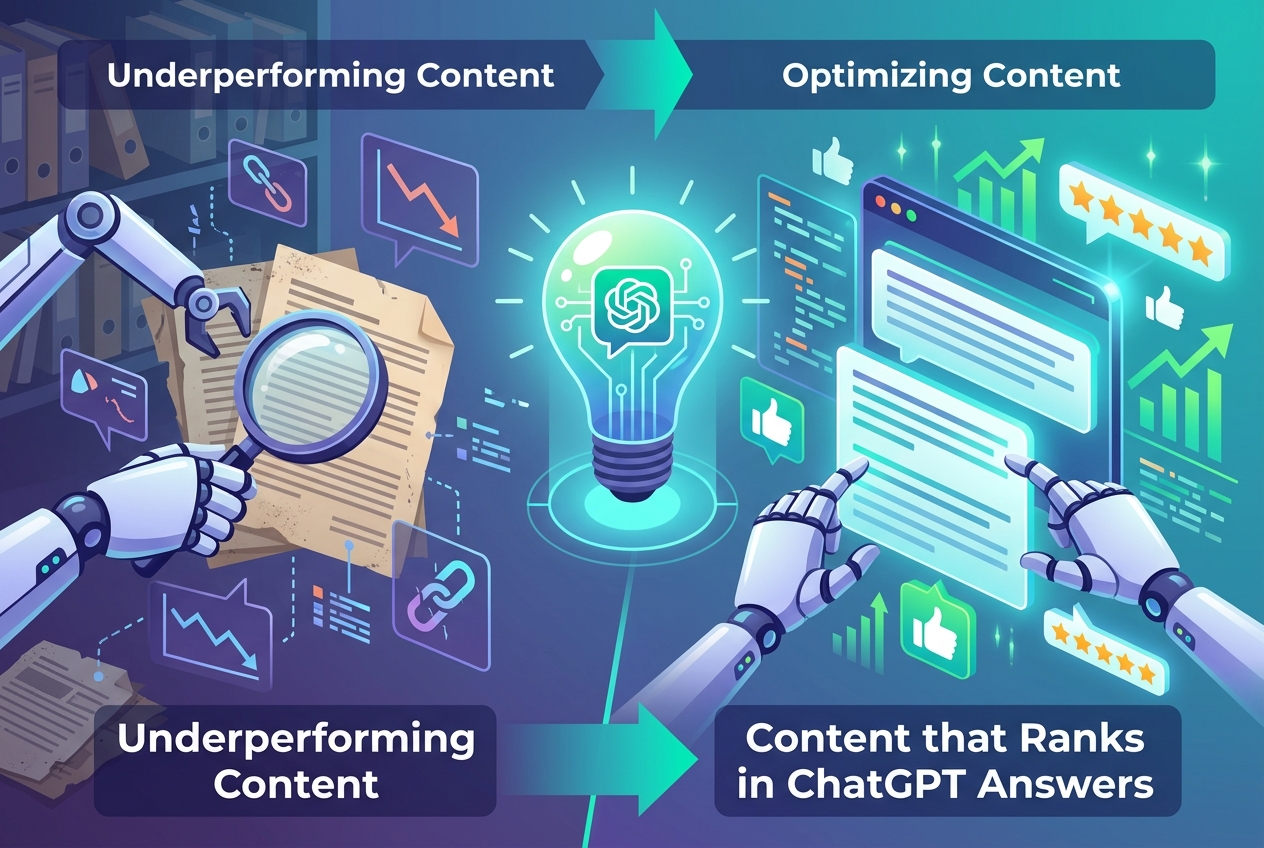


- The strategic imperative has shifted from SEO to Answer Engine Optimization (AEO), focused on earning the AI Overview (AIO) citation in the Zero Click Era (SGE).
- Content must be structured for machine extractability: prioritize the definitive answer first (Fact-First Formatting), use conversational headings, and present data in scannable lists and tables.
- Achieve Topical Authority by deploying advanced Semantic Code (Schema) (e.g., FAQ, HowTo) and ensuring technical excellence (site speed, INP) for rapid AI retrieval.
- Success is now measured by citation volume and brand authority, not just organic clicks; track how frequently generative AI models cite your content as the authoritative source.
Table of Contents
- The 2026 Content Structure for AIO Success: Winning the Zero Click Era
- The Search Evolution: Why Content Structure Defines AIO Visibility
- Pillar 1: Semantic Clarity and Entity Optimization
- Pillar 2: Conversational Content and Answer Engine Optimization (AEO)
- The Technical Checklist for AIO Retrievability
- Scaling Success: Tools and Tactics for 2026
- Measuring AIO Impact: Beyond Traditional SEO Metrics
- Your AIO Strategy: Critical Questions Answered
The 2026 Content Structure for AIO Success: Winning the Zero Click Era
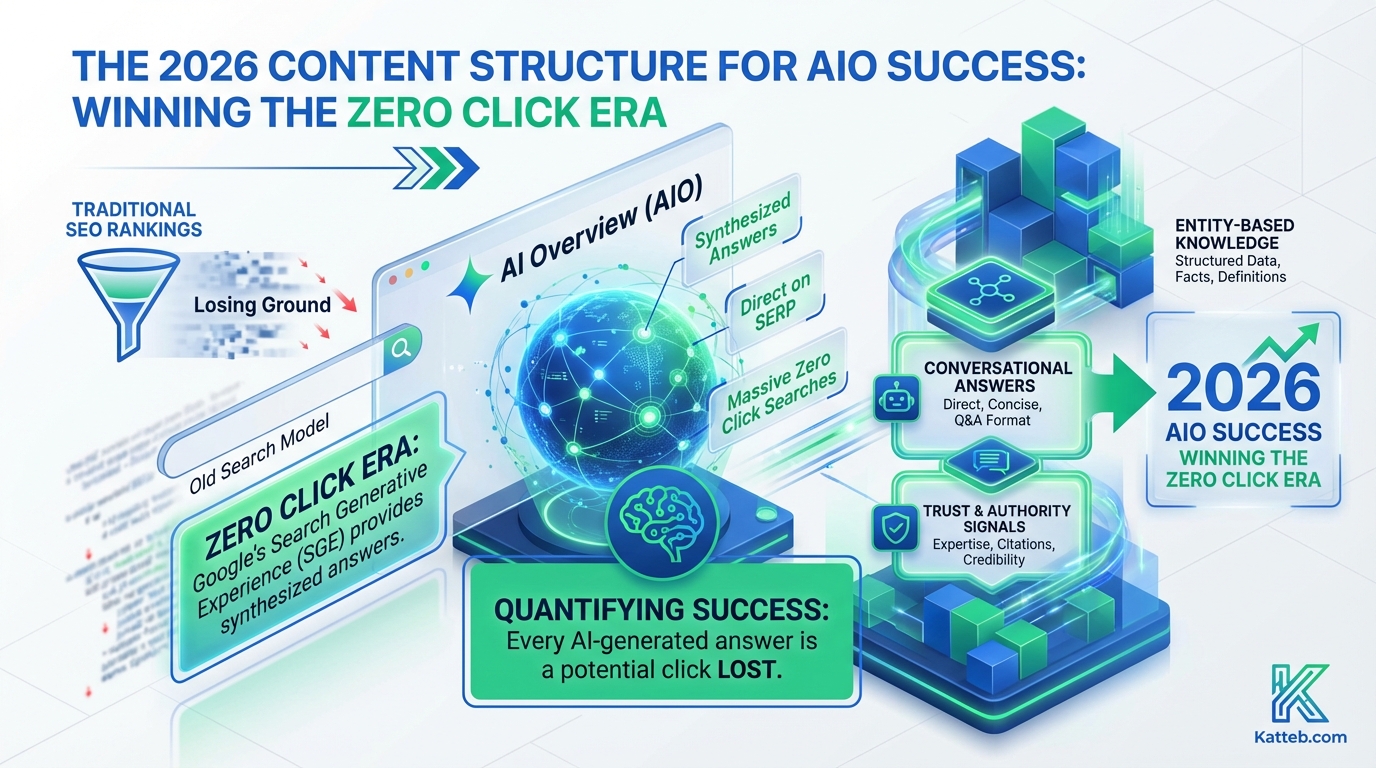
The rules of visibility have fundamentally changed. If your Digital Marketing Strategies still focus solely on traditional SEO rankings, you are losing significant ground in the battle for the AI Overview (AIO).
We are operating deep within the Zero Click Era. Google’s Search Generative Experience (SGE) now provides synthesized answers directly on the Search Results Page, driving massive Zero Click Searches.
But let’s quantify that: Every answer generated by Generative AI is a potential click lost from your site, unless you are the source cited.
To capture that essential top-of-funnel attention, your Content Strategy must shift immediately. You must structure your content not just for human readability, but for machine extractability.
This strategic shift is called Answer Engine Optimization (AEO). It is the only way to secure the lucrative featured position and drive necessary Website Traffic in 2026.
Your goal is to become the authoritative source that Google Search trusts, beating established competitors like NerdWallet and the NYTimes Wirecutter in the AI Mode.
This is the 2026 blueprint for winning visibility and ensuring your Organic Opportunities do not vanish completely due to the AI Driven Search shift.
Expert Insight
“The era of the ten blue links is fading. Answer Engine Optimization (AEO) is the strategic imperative for the zero-click economy, demanding that content shifts from being merely crawlable to being machine-extractable, vetted, and directly cited by AI Overviews to secure necessary visibility.”
The Search Evolution: Why Content Structure Defines AIO Visibility
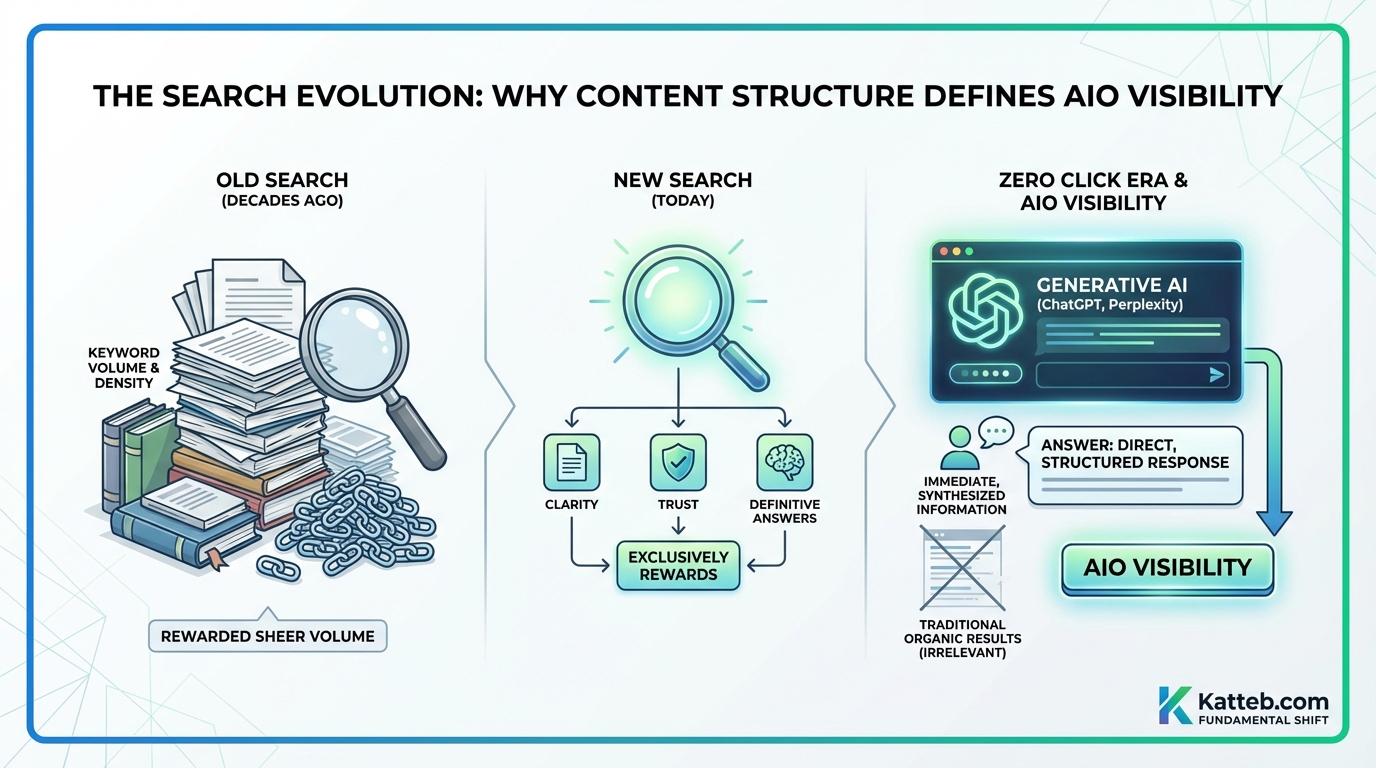
For decades, Google Search rewarded sheer volume and density of keywords. Today, it exclusively rewards clarity, trust, and definitive answers.
The emergence of Generative AI models, like ChatGPT and Perplexity, means your user base expects immediate, synthesized information, not just a list of links.
This is the core challenge of the Zero Click Era: If the AI answers the query directly, your traditional Organic Search Results become irrelevant.
This fundamental shift fundamentally changes the return on investment for your entire Content Strategy.
Experts agree: As Leila De la Fuente and Chris F. of Brandography frequently confirm, your content must be optimized for the Search Generative Experience (SGE).
In 2026, content structure is not just a technical detail; it is the new link building, determining if you earn that crucial AI Overview (AIO) citation.
If the AI cannot instantly parse and cite your unique data, your content is effectively invisible to billions of potential users operating in the AI Driven Search mode.
You must move beyond standard SEO Best Practices and embrace true Answer Engine Optimization (AEO).
Quantifying the Loss: The Cost of Poor Structure in the AI Mode
When your content lacks the proper structural signals, the Generative AI struggles to determine its core value or unique selling proposition.
This results in your brand being systematically overlooked for the AI Overview, handing high-intent Website Traffic directly to competitors who mastered AI Optimization first.
But let’s quantify that loss: A failure in Website Discovery translates immediately into lost leads, lost conversions, and ultimately, lost revenue opportunities.
Your existing Digital Marketing Strategies must adapt to this Google Search Shift now, or suffer long-term drops in Organic Opportunities and market share.
Expert Insight
“The strategic imperative has shifted from tactical SEO checklists to a diagnosis-first approach driven by revenue goals. If your content lacks the structural signals necessary for AI citation, you are systematically overlooking the funnel breakdown, trading organic visibility for lost conversions and suffering immediate drops in market share.”
Pillar 1: Semantic Clarity and Entity Optimization
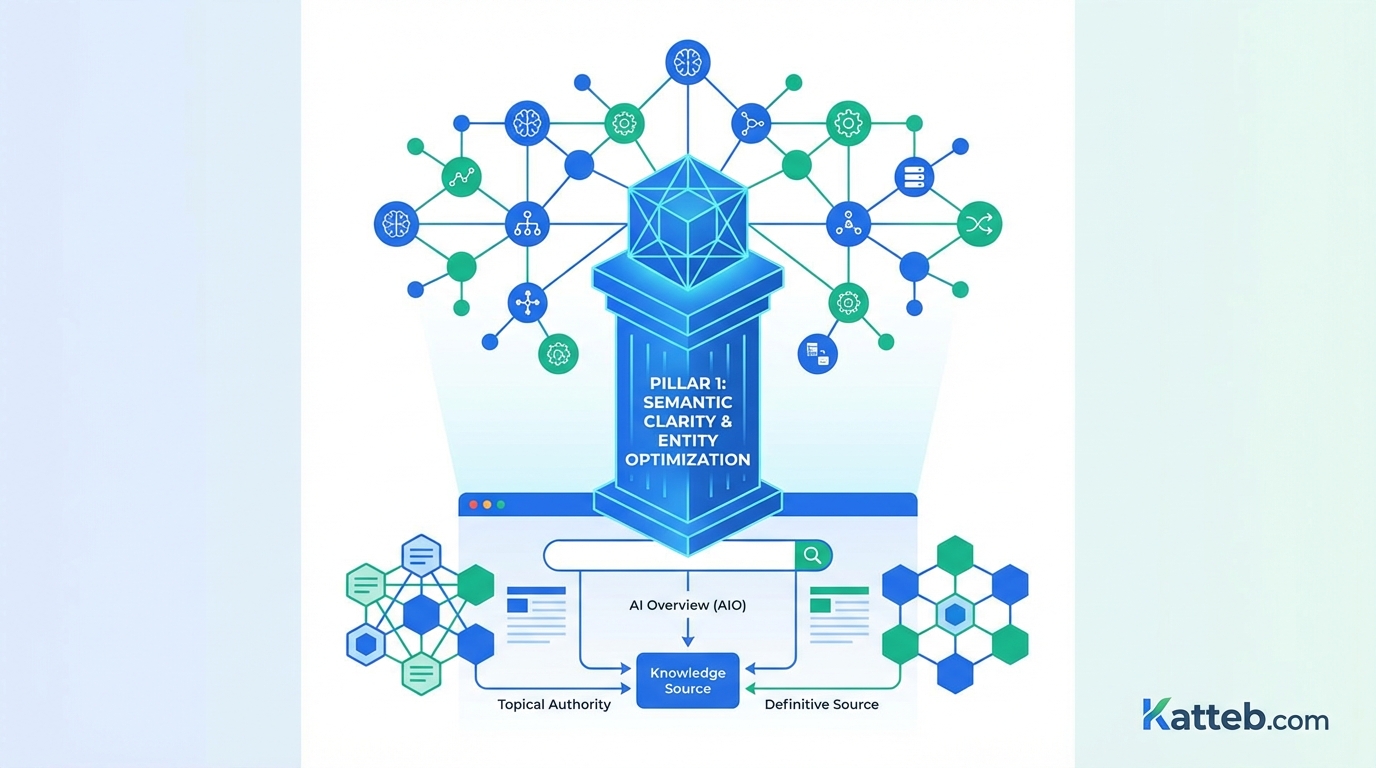
The rules governing the AI Overview (AIO) are fundamentally different from traditional SEO ranking factors.
AI models prioritize content that contributes directly to a clear knowledge graph, turning your website into a definitive source, not just a link destination.
This means you must demonstrate Topical Authority through deep, interconnected expertise if you want to capture valuable Website Traffic.
Forget single keywords; your 2026 Digital Marketing Strategies must focus on owning the entire topic cluster to succeed in the Zero Click Era.
The Authority Signal: How AI Models Evaluate Trust
AI-driven search systems, including those powering Google Search and Bing, evaluate your expertise based on structured, verifiable claims.
They are looking for signals that confirm you are as trustworthy in your niche as NerdWallet is in finance or the NYTimes Wirecutter is for product reviews.
This trust translates directly into AIO citations and increased Website Discovery.
Your content must explicitly signal its expertise using precise language and verifiable data points. How do you structure this for maximum extraction?
Three Semantic Best Practices for AIO Visibility
To ensure your content is cited by the Search Generative Experience (SGE), you need to format data for immediate extraction and relevance.
-
- Fact-First Formatting: Place the primary, definitive answer to the user’s query at the very beginning of the section, often within the first two sentences. This is critical for Answer Engine Optimization (AEO).
-
- Specific Data Points: Use exact numbers and statistics that are easy for an AI Mode to quote (e.g., “Our clients saw a 40% increase in lead generation in Q4 2025″).
-
- Entity Linking: Explicitly link relevant entities within your text. Ensure your Google Business Profile and internal authoritative pages are clearly referenced.
This structure minimizes the effort required for the Generative AI to synthesize your information, maximizing your chance of earning the citation.
Non-Negotiable: Deploying Semantic Code for Data Definition
To ensure AI understands the context and veracity of your data, you must deploy advanced structured data, the Semantic Code for Data Definition.
This is non-negotiable for achieving AI Optimization success in 2026. Without proper schema, you are asking the AI to guess the meaning of your Content Creation.
If you fail to use schema like FAQ, HowTo, or Product markup, you are leaving immediate Organic Opportunities on the table.
But let’s quantify that: How does AIO structure differ from the old chase for Organic Search Results?
| Feature | Traditional SEO (Pre-2024) | Artificial Intelligence Optimization (AIO) 2026 |
|---|---|---|
| Primary Goal | Rank #1 in organic search results | Earn the AI Overview (AIO) citation |
| Heading Style | Keyword-stuffed, often vague H2s | Conversational, question-based H2/H3s (Answer-First) |
| Key Metric | Organic Clicks and Page Rank | Citations, Mentions, and Information Queries resolved without Website Visits |
| Data Presentation | Long text paragraphs | Lists, tables, and FAQ schema for easy extraction |
The Google Search Shift is clear: Success is now measured by your ability to satisfy the query directly on the Search Results Page.
This requires a complete overhaul of your Content Strategy, focusing on extraction-friendly formats rather than dense text.
You are optimizing for a conversational, data-hungry machine, not just a list of keywords.
Expert Insight
“The rulebook for visibility has been rewritten. In the era of AI Overviews, content strategy must overhaul its focus from organic clicks to extraction-friendly formats and entity authority, because we are now optimizing for a conversational, data-hungry machine that measures success by query resolution, not website visits.”
Pillar 2: Conversational Content and Answer Engine Optimization (AEO)
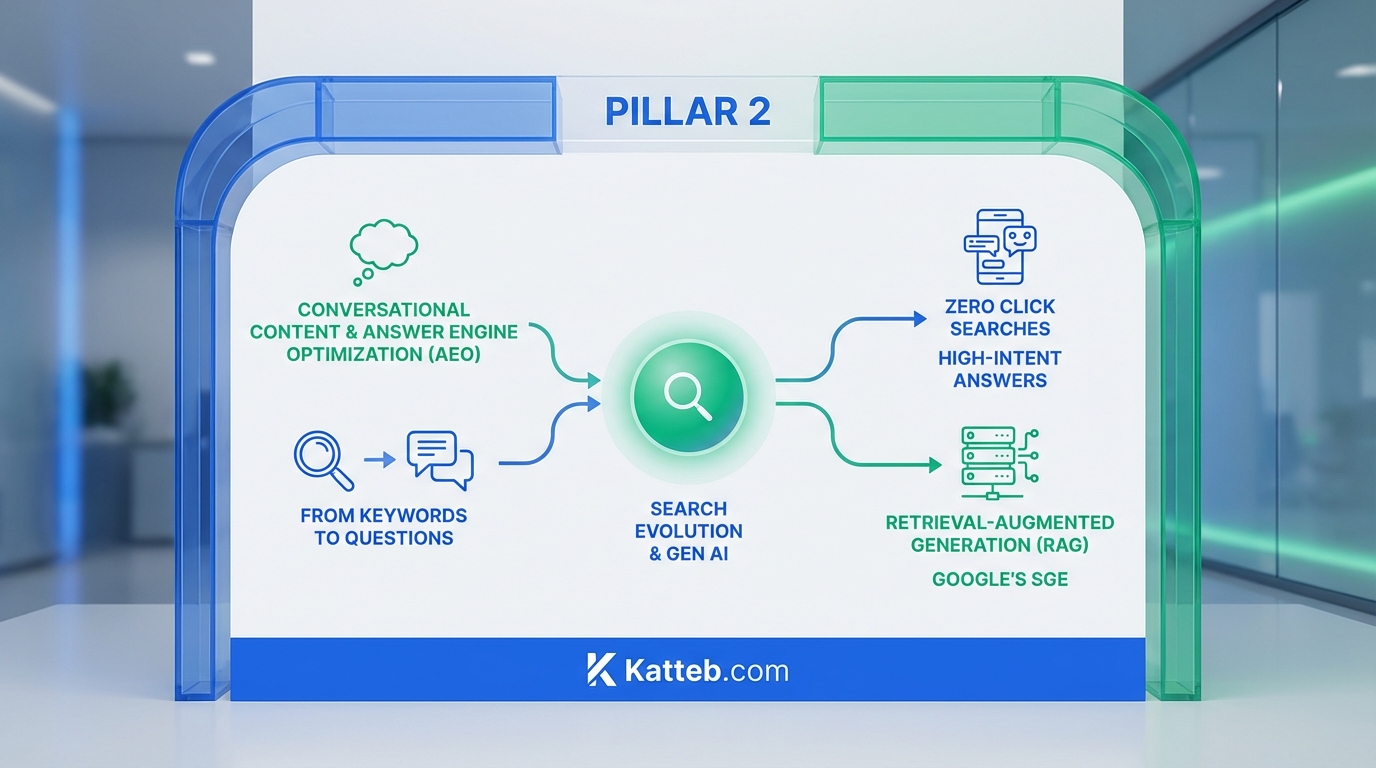
The Search Evolution driven by Generative AI means users are asking complex, conversational questions, not just typing short keywords. This demands a complete shift in your content strategy.
This is the core of Answer Engine Optimization (AEO).
You must adapt your Digital Marketing Strategies immediately to capture these high-intent Zero Click Searches that dominate the modern Google Search landscape.
Designing Content for Retrieval-Augmented Generation (RAG)
Google’s Search Generative Experience (SGE) uses sophisticated Retrieval-Augmented Generation (RAG) systems. These systems actively scan the web to retrieve specific content fragments from authoritative sources like yours.
The AI then uses those fragments to stitch together the final, authoritative AI Overview (AIO) summary.
If your content is dense, verbose, or vague, the RAG system cannot easily extract the necessary data points, costing you valuable Website Traffic and Organic Opportunities.
Your job in Content Creation is to eliminate unnecessary fluff and ensure every point is perfectly clear for the AI to retrieve.
This means prioritizing the user’s intent at every turn, mirroring the rapid information delivery of platforms like Reddit or Instagram.
How to Master Conversational Content for the AI Mode Answer Box
For your content to be selected for the AI Mode summary, every section must function as a standalone, definitive answer. This is the absolute Best Practice for AEO success.
But let’s quantify that:
1. Start with the Definitive Answer
If your H3 asks a question (e.g., “What are the key metrics for website user experience?”), the very first sentence must deliver the complete answer.
Do not bury the conclusion. The AI needs the answer immediately to validate your expertise and feature your content in the Search Results Page.
2. Use Authoritative, Definitive Language
Avoid hedging or soft language. The AI is looking for sources that speak with confidence, similar to high-ranking financial sites like NerdWallet.
Use strong, authoritative verbs and state facts. This demonstrates the Topical Authority emphasized by experts like Chris F. in the Search Evolution dialogue.
3. Structure for Lists and Scannability
Generative AI systems, including large models like ChatGPT and Perplexity, favor structured data points.
You must convert dense paragraphs into bulleted or numbered lists whenever possible.
This increases the likelihood of your content being used for the bulleted Summary generated by Artificial Intelligence within the SGE box.
4. Optimize for Zero Click Searches
The reality of the Zero Click Era is that many Information Queries resolved without Website Visits still attribute authority to your domain.
By ensuring your content answers questions perfectly, you secure that authority and ensure your website is the definitive source cited in the AI Driven Search results.
This approach significantly improves your ranking potential across all Digital Marketing channels.
The Technical Checklist for AIO Retrievability
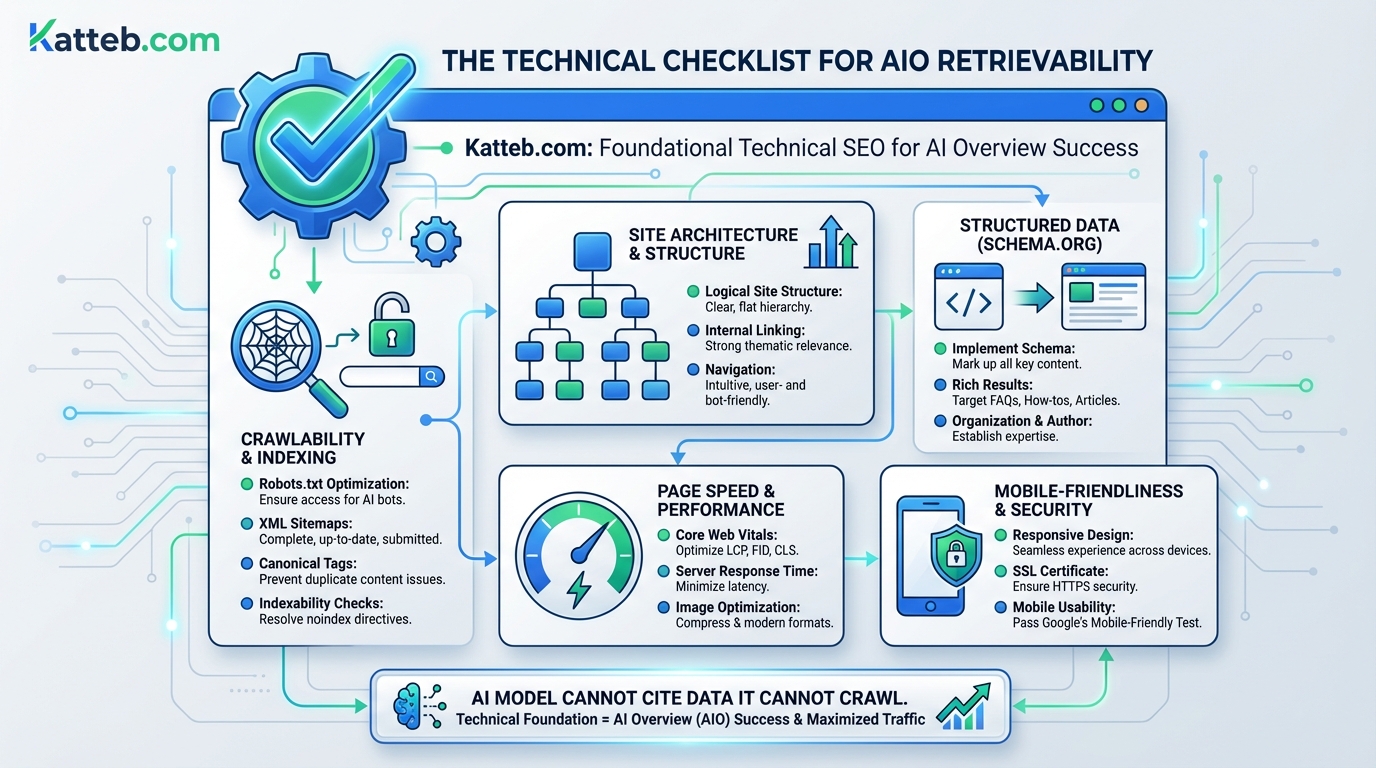
You can create the most perfect Conversational Content optimized for AEO, but it will generate zero dollars if Google Search cannot find it.
Even the sharpest Content Strategy fails instantly if your underlying technical infrastructure is weak.
Technical SEO is not just foundational for rankings anymore; it is the absolute requirement for AI Overview (AIO) success and maximizing your Website Traffic.
Remember: The AI Model cannot cite or use data that it cannot crawl quickly and efficiently.
Website Speed is AI Retrieval Speed
Generative AI relies on rapid, confident indexing. Slow loading times do not just frustrate users; they actively prevent efficient AI Driven Search retrieval.
If your site latency is high, you are effectively telling the Search Generative Experience (SGE) to cite a competitor like NerdWallet or the NYTimes Wirecutter instead of you.
You must prioritize the Improvement of Website Infrastructure immediately. This minimizes latency and validates the Attributes of Quality for Digital Information on your page.
Focus intensely on modern Key Metrics for Website User Experience, especially Interaction to Next Paint (INP).
A poor INP score directly cuts into your potential Organic Opportunities within the AIO box, resulting in lost revenue in the Zero Click Era.
Semantic Code for Data Definition
Basic schema markup is no longer enough in 2026. This is the Zero Click Era, you need to speak the AI Model’s language fluently.
You must move beyond simple organization and embrace advanced implementation of Semantic Code for Data Definition.
Use specific schema types like HowTo, FAQPage, and Product markup to explicitly define the factual attributes of your content.
This semantic layer provides the highest confidence score to Google Search Shift systems, making your content the preferred source for an Answer Generation System.
Are you defining your content, or forcing the AI to guess? The difference is measured in millions of potential visits and captured Information Queries resolved without Website Visits.
Scaling Success: Tools and Tactics for 2026
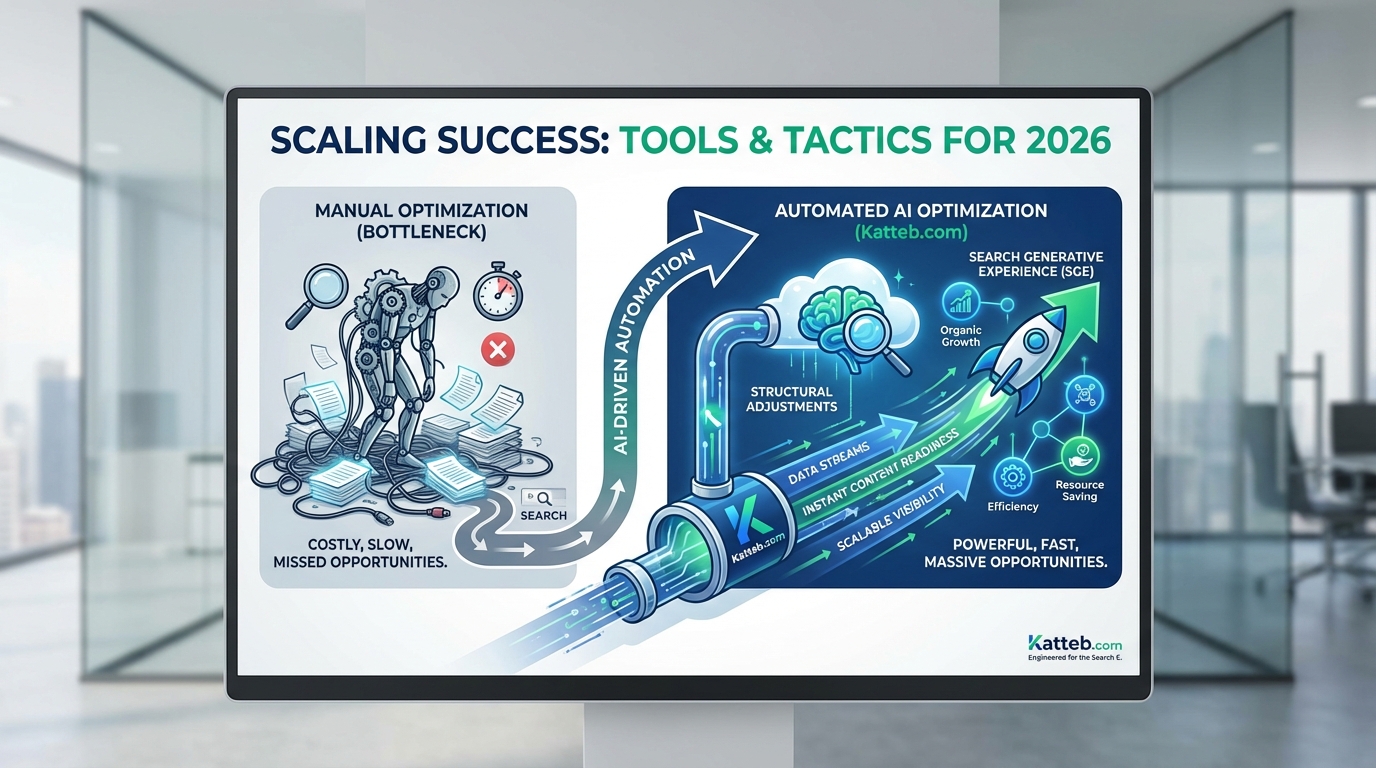
Manual optimization is a costly bottleneck in the era of AI Driven Search. Scaling your visibility in the Search Generative Experience (SGE) demands powerful automation.
If you are still optimizing content manually, you are sacrificing massive organic opportunities and wasting resources on tasks a machine handles in milliseconds.
Platforms like Katteb.com are engineered to automate the structural adjustments necessary for AI Optimization. This ensures your content is born ready for the Search Evolution.
Automation is no longer a luxury; it is the absolute requirement for maximizing Website Traffic and winning the AI Overview (AIO) snippet consistently.
Data Synthesis and Precision Targeting for AEO
Successful Content Creation in 2026 requires merging data from multiple sources. You cannot rely on guesswork to master Answer Engine Optimization (AEO).
Tools like Ahrefs and Semrush provide the competitive landscape, showing you *what* your rivals rank for and how they approach Content Strategy.
But this competitive analysis is only the starting point. You must use that intelligence to target hyper-specific, conversational long-tail queries.
These are the Information Queries resolved without Website Visits that feed the Generative AI models, including ChatGPT and Perplexity.
The goal is to provide the precise Creation of Digital Information that fills knowledge gaps the Large Language Models (LLMs) struggle with, driving true authority.
Leveraging Post-Click Data for Continuous Improvement
Your Digital Marketing Strategies must leverage real-time post-click data to stay competitive in the Zero Click Era.
Integrating tools like GA4 (Google Analytics 4) and Google Search Console is non-negotiable for high-level SEO performance.
This integration allows you to constantly refine your structure, identifying exactly which pages are being used for AEO and which need immediate structural improvement for better Answer Generation Systems.
This data-driven feedback loop is the core of modern AI Mode optimization, ensuring you maintain optimal Attributes of Quality for Digital Information as Google Search continues to evolve.
Measuring AIO Impact: Beyond Traditional SEO Metrics
If you are still only tracking organic clicks, you are measuring yesterday’s success. The rapid Search Evolution means direct Website Traffic is no longer the sole indicator of authority.
We are firmly entrenched in the Zero Click Era. If your Digital Marketing Strategies ignore citation volume, you are sacrificing massive long-term brand credibility.
The core question is: How do you quantify success when the user receives the answer directly on the Search Results Page?
Shifting Focus to Answer Engine Optimization (AEO)
Forget relying solely on traditional SEO metrics. Success in 2026 is defined by Answer Engine Optimization (AEO) and Generative Engine Optimization (GEO).
You must track how frequently your content is leveraged by Generative AI systems like Google’s SGE, ChatGPT, and Perplexity. This is the true measure of domain authority.
A high citation rate confirms your content quality and establishes you as a primary source for Google Search answers.
Actionable Tracking: Segmenting Zero Click Searches
Using robust analytics tools like GA4, you must segment your traffic to understand the full impact of Zero Click Searches.
Look for subtle shifts in user behavior after a source citation occurs in the AI Overview (AIO). Even without a click, that citation drives implicit trust.
This trust translates directly into higher long-term conversion rates and better brand recall. This is the tangible benefit of effective AI Optimization.
Your revised Content Strategy must focus on these three key metrics:
1. Brand Authority: Track your mention frequency across all major AI Driven Search platforms (e.g., Google, Bing, Perplexity).
2. Engagement Depth: Analyze the time on page and scroll depth for pages cited in the AIO. These users are highly qualified leads.
3. Conversion Origin: Identify conversions driven by long-tail, research-heavy queries, which are the hallmark of successful Conversational Content interactions.
This structured approach ensures your Digital Marketing investment captures every available Organic Opportunity in the new AI Mode of search.
Your AIO Strategy: Critical Questions Answered
AIO vs. AEO: What is the strategic difference?
AIO, or AI Optimization, is your comprehensive umbrella strategy. It covers all technical and content methods designed to maximize visibility within the AI Driven Search environments.
AEO, or Answer Engine Optimization, is the specific, actionable tactic. This involves structuring your Conversational Content so it can be instantly extracted and cited by Generative AI models like ChatGPT and Google’s Search Generative Experience (SGE).
How does AIO affect Website Traffic in 2026?
AIO fundamentally shifts your Website Traffic profile. You must accept that some informational queries will result in fewer direct organic clicks, this is the reality of the Zero Click Era and the phenomenon of Zero Click Searches.
However, successful AI Optimization drives dramatically higher quality, high-intent traffic. When Google Search cites you in the AI Overview, you gain superior brand authority and trust.
This means the traffic you *do* receive is focused on complex or transactional queries, leading directly to better conversion rates and higher long-term value for your Digital Marketing Strategies.
Should I abandon traditional SEO Best Practices for AIO?
Absolutely not. Traditional SEO is the indispensable foundation for any Digital Marketing success in 2026. AIO is the advanced layer built on top of robust SEO.
Without technical soundness, the kind of auditing you perform using tools like Ahrefs or Semrush, AI systems cannot reliably crawl and trust your data. This is essential for winning the Organic Opportunities available today.
The AI Mode relies on the authority built by strong site speed, clean data, and quality External Hyperlinks Pointing to a Website. Neglecting these Best Practices guarantees your exclusion from the Search Results Page.
How critical is my Google Business Profile for AIO?
Your Google Business Profile (GBP) is mission-critical, especially for local visibility and entity definition. This is a non-negotiable step in your Content Strategy.
Generative AI models frequently pull factual, verified data directly from your GBP. Ensure it is complete, consistent, and perfectly aligned with the entity data on your website to ensure citation.
Ignoring this step means sacrificing easy wins in local AI Optimization and allowing competitors like Brandography to dominate the local Search Generative Experience.
References
- Best Practices for AIO Success From Our Team – Brandography
- Top 10 SEO & AIO tips for 2026: What brands need to do
- The 2026 Guide to Modern Content Marketing in The Age of AI Search
- What Is AI Optimization and Why It Matters for SEO in 2026
- Best Practices for AIO Content Success – Boston Web Marketing