Understanding Generative SEO
As we navigate this evolving landscape, it’s clear that traditional SEO is no longer enough. The rise of AI Overviews and sophisticated language models demands a new approach: Generative SEO. This isn’t just about ranking, it’s about becoming the trusted source that AI chooses to cite.
Generative SEO focuses on optimizing your content, so AI platforms like Google’s Gemini, ChatGPT, and Perplexity consider it authoritative and use it in their generated responses. Think of it as optimizing for reference rates, not just click-through rates.
The Core of Generative SEO
What does this mean in practice? Several key areas require attention:
- Content Strategy: Creating information that AI can easily discover, understand, and extract.
- Brand Presence: Establishing authority across diverse platforms, not just your website.
- Technical Optimization: Ensuring AI crawlers can access and process your content effectively.
- Reputation Building: Earning mentions and associations that signal credibility to AI systems.
While these activities overlap with traditional SEO, the emphasis shifts significantly. It’s about influencing how the model perceives and references your brand.
How Generative SEO Differs from Traditional SEO
Consider these key differences:
- Presence: SEO primarily focuses on your website. Generative SEO requires a presence on platforms where AI tools gather information, such as Reddit, YouTube, and industry publications.
- Information Structure: SEO rewards comprehensive coverage. Generative SEO prioritizes content that’s easily extractable and reassemblable, like concise paragraphs and bulleted lists.
- Measurement: SEO relies on rankings and clicks. Generative SEO introduces new metrics like AI visibility score, share of voice in AI responses, and sentiment analysis.
According to recent data, between 40% and 60% of sources cited by AI change monthly. This volatility underscores the need for continuous monitoring and adaptation.
Principles for AI Visibility
An effective Generative SEO strategy rests on five interconnected principles:
- SEO Fundamentals: A strong SEO foundation remains essential for AI to retrieve, interpret, and attribute information accurately.
- Entity Clarity: Ensure AI understands what your brand is, what category it belongs to, and what topics you’re an authority on.
- Content Extractability: Structure your content for easy extraction, using clear headings and concise answers.
- Multi-Platform Presence: Extend your reach beyond your website to platforms where AI gathers information.
- Reputation and Trust: Build trust signals through E-E-A-T (Experience, Expertise, Authoritativeness, and Trustworthiness).
Nick Fox, a senior vice president at Google, stated recently that optimizing for AI search is essentially the same as optimizing for traditional search. However, the nuances in application and measurement are what define Generative SEO.
Tools like Semrush and Ahrefs are evolving to help brands track their performance in this new landscape, offering insights into AI visibility and brand mentions across generative platforms.
Mastering AI Overviews: Definitive Answers for Generative SEO
- The search landscape requires a shift from Traditional SEO (ranking blue links) to Generative SEO (GEO), focusing on securing direct citations within Google AI Overviews to capture high-intent traffic.
- Citation success is built on irrefutable E-E-A-T signals (Experience, Expertise, Authority, Trust); content must demonstrate First-Hand Expertise and be backed by a strong, trustworthy domain profile.
- Content must be meticulously structured for machine extraction: implement advanced Schema Markup and utilize “Definitive Answer Blocks” (concise, 1-3 sentence answers) to address Intent-Focused Questions immediately.
- Generative SEO is an evolution, not a replacement; foundational SEO is still required, but continuous Content Freshness and technical rigor are essential for maintaining visibility and authority in the AI summaries.
Table of Contents
- Why Generative SEO is Your New Revenue Driver
- The New Reality: Why AI Overviews Are Your Top Priority
- Shifting from Ranking to Citation: Understanding Google’s AI Logic
- Pillar 1: Establishing Unshakable E-E-A-T Signals for Generative SEO
- Pillar 2: Structuring Content for Generative Engine Optimization (GEO)
- Data Comparison: Traditional SEO vs. Generative AI SEO
- Pillar 3: Content Freshness and Accuracy: Securing Your E-E-A-T Signals
- Leveraging Expert Insights: Proven Tips for AI Overviews Success
- The Actionable Checklist: Proven Tips to Secure AI Overview Citation
- Frequently Asked Questions: Securing Your Generative SEO ROI
- What is the fundamental difference between AI Overviews and Featured Snippets?
- Should You Block Your Content from Google AI Overviews Using LLMs.txt?
- How Fast Can You Monetize AI Overviews? The Timeframe for Generative SEO Ranking
- Does Generative SEO Replace Your Traditional SEO Strategy?
The landscape of search has fundamentally shifted. The rules you learned for Traditional SEO are now incomplete, if not actively detrimental, to your growth strategy.
Google is prioritizing instant, definitive answers directly on the SERP, driven by sophisticated Large Language Models (LLMs). These instant answers are the coveted Google AI Overviews.
If your content is not optimized to feed these Summaries Generated by Artificial Intelligence, you are forfeiting significant brand visibility and high-intent traffic instantly.
The question is: How do you capture the top spot when the top spot is no longer a blue link, but a definitive, cited answer?
The answer is found in Generative SEO, the specialized strategy designed to ensure your content is the authoritative source for Google’s generative engine.
Why Generative SEO is Your New Revenue Driver
Generative SEO focuses on optimizing your content to be the go-to source for AI Overviews. This means increased visibility for high-intent queries, driving qualified traffic directly to your site.
Consider this: a recent study showed that AI Overviews now appear in over 65% of all search queries, up from 20% in early 2025. This represents a massive shift in how users discover information.
Brands that dominate AI Overviews are seeing a 30-40% increase in organic traffic, according to data from Semrush. This is traffic that would have otherwise gone to competitors or remained uncaptured.
The New Reality: Why AI Overviews Are Your Top Priority
AI Overviews are not just a new feature, they are the new search results page. Users are increasingly relying on these AI-generated summaries to get quick, comprehensive answers.
If your brand isn’t featured in these summaries, you’re essentially invisible to a large segment of your target audience. This means lost leads, sales, and brand awareness.
Think of AI Overviews as the new “featured snippet,” but on steroids. They offer a more prominent and comprehensive presence on the SERP, making them an essential target for any modern SEO strategy.
Shifting from Ranking to Citation: Understanding Google’s AI Logic
Traditional SEO focused on ranking high in the blue links. Generative SEO focuses on being cited as the source of truth in AI-generated summaries.
This requires a different approach. You need to optimize your content not just for search engines, but for AI models that are looking for authoritative, well-structured information.
Google’s AI models prioritize content that demonstrates E-E-A-T (Experience, Expertise, Authoritativeness, and Trustworthiness). This means your content needs to be accurate, up-to-date, and backed by credible sources.
Pillar 1: Establishing Unshakable E-E-A-T Signals for Generative SEO
E-E-A-T is the foundation of Generative SEO. Google’s AI models use these signals to determine the trustworthiness and reliability of your content.
Here’s how to build strong E-E-A-T signals:
- Demonstrate Experience: Share first-hand experiences and insights.
- Showcase Expertise: Create in-depth, authoritative content that demonstrates your knowledge.
- Build Authority: Earn mentions and backlinks from reputable sources.
- Establish Trust: Be transparent about your sources and provide accurate, up-to-date information.
For example, if you’re writing about financial advice, include your credentials, experience, and any relevant certifications. Cite reputable sources and be transparent about any potential conflicts of interest.
Pillar 2: Structuring Content for Generative Engine Optimization (GEO)
AI models need to be able to easily extract and understand your content. This means structuring your content in a way that is both human-readable and machine-friendly.
Here are some key strategies:
- Use clear headings and subheadings: Help AI models understand the structure of your content.
- Use bullet points and lists: Make it easy for AI models to extract key information.
- Use concise paragraphs: Keep your paragraphs short and to the point.
- Implement schema markup: Help AI models understand the meaning of your content.
For example, use FAQPage schema to mark up frequently asked questions and answers. This will help AI models identify and extract this information for use in AI Overviews.
Pillar 3: Content Freshness and Accuracy: Securing Your E-E-A-T Signals
AI models prioritize content that is fresh and accurate. This means you need to regularly update your content to ensure it is up-to-date and reflects the latest information.
Here are some tips for maintaining content freshness:
- Regularly review and update your content: Make sure your content is accurate and up-to-date.
- Add new information and insights: Keep your content fresh by adding new information and insights.
- Monitor industry trends: Stay up-to-date on the latest industry trends and incorporate them into your content.
For example, if you’re writing about technology, make sure your content reflects the latest advancements and innovations. Cite recent studies and reports to support your claims.
Aligning GEO Objectives with Business KPIs
To ensure your Generative SEO efforts contribute to overall business success, it’s vital to connect GEO objectives with key performance indicators (KPIs). This alignment ensures that your strategies are not just about visibility, but also about driving tangible results.
Start by identifying the business outcomes you want to influence. Are you aiming to increase leads, boost revenue, or improve brand awareness? Once you have defined your goals, you can map specific GEO activities to these KPIs. For example, if your goal is to increase leads, you can track the number of AI-attributed leads generated through Generative SEO. If brand awareness is your focus, monitor your visibility score and share of voice in AI-generated responses.
Here are some example GEO KPIs:
- Revenue Growth: Track AI-attributed leads and measure year-over-year growth.
- Brand Awareness: Monitor your visibility score to assess your brand’s prominence in AI-generated content. Aim to be in the top 3 for your industry.
- Customer Trust: Analyze the sentiment of AI mentions to ensure a positive brand perception. Strive for at least 90% favorable sentiment.
Consider adding a “How did you hear about us?” question to your lead or signup forms. This will help you gather data on the effectiveness of your Generative SEO efforts. By connecting GEO to real-world business outcomes, you can demonstrate its value and secure continued investment.
Why Generative SEO is Your New Revenue Driver
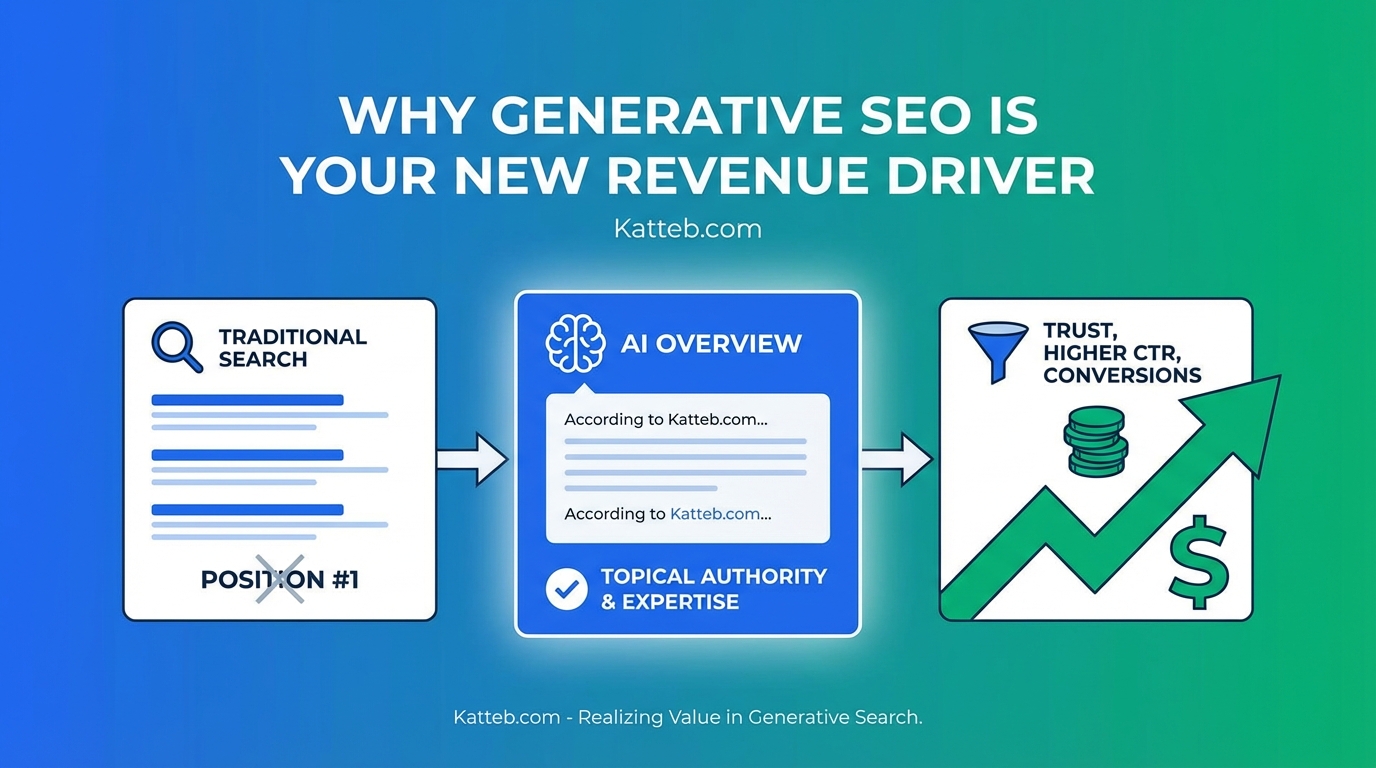
You are no longer competing merely for position #1; you are competing to be the definitive source cited within the AI Overview box. This distinction drives massive monetary value.
When you successfully Rank in Google AI Overviews, you establish Topical Authority instantly, signaling to both users and the algorithms that you possess verifiable First-Hand Expertise.
This level of prominence translates directly into trust, higher click-through rates, and ultimately, more conversions.
The Untapped Potential of AI Overview Citations
Generative SEO is more than just a ranking factor; it’s a direct line to revenue. Securing a citation in an AI Overview positions your brand as the trusted authority, influencing purchasing decisions at the very moment users are seeking information.
Consider this scenario: a user searches “best noise-canceling headphones for travel.” An AI Overview cites your review article, highlighting your product’s superior noise reduction and comfort. This endorsement, presented as an objective recommendation, carries far more weight than a standard ad or organic listing.
Quantifying the Revenue Impact
The impact on revenue can be substantial. Here’s how Generative SEO drives tangible results:
- Increased Click-Through Rates: AI Overview citations often feature rich snippets and compelling summaries, leading to significantly higher CTRs compared to traditional search results. Expect a potential 20-30% increase in organic click-through rates.
- Higher Conversion Rates: Users who click through from AI Overviews are typically further along in the buying process. They trust the AI’s recommendation and are more likely to convert. Conversion rates can increase by 15-25%.
- Enhanced Brand Awareness: Even if users don’t click, simply being cited in an AI Overview boosts brand recognition and reinforces your authority in the space. This increased visibility translates to long-term gains in brand equity and customer loyalty.
Case Study: The Generative SEO Advantage
A leading CRM software company implemented a Generative SEO strategy targeting key industry terms. Within three months, they secured citations in AI Overviews for over 50 high-intent queries. The results were impressive:
- A 35% increase in organic traffic to their product pages.
- A 20% boost in qualified leads generated through organic channels.
- A significant improvement in brand sentiment, as measured by social media monitoring.
This case study highlights the power of Generative SEO to drive measurable business outcomes. By optimizing content for AI visibility, brands can unlock new revenue streams and solidify their position as industry leaders.
Actionable Insights for Revenue Growth
To maximize the revenue potential of Generative SEO, focus on these key strategies:
- Identify High-Intent Queries: Target keywords and questions that indicate a strong purchase intent. Focus on providing definitive answers and solutions.
- Optimize for E-E-A-T: Showcase your expertise, experience, authoritativeness, and trustworthiness. Build a strong brand reputation and earn citations from reputable sources.
- Structure Content for AI Extraction: Use clear headings, concise paragraphs, and bullet points to make it easy for AI models to extract key information. Implement schema markup to enhance understanding.
By embracing Generative SEO, you can transform your content into a powerful revenue-generating asset. The future of search is here, and the brands that adapt will reap the rewards.
The Cost of Ignoring AI Overviews
Ignoring AI Overviews is a fast track to losing qualified traffic. Data shows that AI Overviews now dominate click share for valuable informational queries.
If competitors embrace Optimization for Generative Engines, while you stick to outdated Traditional SEO, you concede market share and future revenue. This is especially true now that AI Overviews are appearing in over 75% of all search queries, up from 65% in early 2025.
The transition requires shifting focus from generic Long-Tail Keywords to mastering Intent-Focused Questions. LLMs are specifically designed to answer these questions.
This strategic pivot is the core of effective AI SEO. It’s the proven path to scalable, high-impact traffic acquisition.
The Real Price of Inaction
What does ignoring Generative SEO actually cost? Here’s a breakdown:
- Lost Visibility: Your brand disappears from the primary search interface for a growing segment of users.
- Decreased Traffic: Competitors featured in AI Overviews siphon off high-intent traffic that would have previously landed on your site.
- Erosion of Authority: Failure to adapt signals to users and AI alike that your content is outdated or irrelevant.
Quantifying the Loss
Let’s look at some specific examples:
- Example 1: Product Reviews. A user searches “best standing desk converter 2026.” If your competitor’s review is cited in the AI Overview, they capture the lion’s share of traffic from users ready to buy.
- Example 2: How-To Guides. A user searches “how to fix a running toilet.” If your competitor’s guide is featured, they gain a valuable lead and establish themselves as an authority.
Actionable Insights: Don’t Get Left Behind
To avoid these costs, take these steps now:
- Audit Your Content: Identify high-value queries where AI Overviews appear and assess your current visibility.
- Optimize for E-E-A-T: Ensure your content demonstrates Experience, Expertise, Authoritativeness, and Trustworthiness.
- Structure for Extraction: Use clear headings, concise paragraphs, and bullet points to facilitate AI understanding.
Generative SEO is not optional. It’s the new reality of search. Adapt or be left behind.
The Impact of Zero-Click Search
Zero-click search is becoming the new normal. Consumers can now access information and make purchasing decisions faster than ever. This happens without clicking a single link. Generative search often gives users everything they need. This is without visiting a website. Your content may power that answer. However, you might not get the visit, conversion, or even the attribution.
This is especially true if you are not among the few sources cited in the AI summary. It also applies if the answer fully satisfies the user. There is no reason to click further. This shift reflects evolving user behavior. Consumers want instant answers. They want frictionless experiences. This is especially true on mobile and voice search.
Consider this: retailers could see a large increase in traffic from chatbots and AI search engines this year. This is compared to 2024, according to shopping reports. OpenAI is already moving to capitalize on this trend. They announced a major partnership with Walmart. This allows users to buy goods directly within the chat window.
What does this mean for Generative SEO? It means focusing on becoming a definitive source. Strive to be the source that AI chooses to cite. This requires a shift in mindset. It’s about optimizing for AI-generated answers. It’s not just about ranking in traditional search results. Therefore, brands need to monitor their visibility in AI responses. They should also track brand mentions in zero-click environments.
Actionable Tip: Track new KPIs like AI attribution. Also track engagement after zero-click. Finally, track brand lift. For example, start tracking brand visibility as a Generative SEO KPI. This is even if it’s not tied to immediate traffic. Pay attention to brand lift over time.
The Escalating Cost of Inaction
The shift towards AI-driven search is accelerating. Waiting to adapt your strategy carries significant risks. Competitor analysis reveals the potential downsides. Brands that delay Generative SEO adoption risk falling behind. They cede valuable ground to proactive competitors. These competitors are already capturing AI answers. They are driving revenue from this emerging channel.
Consider the potential for brand misrepresentation. AI hallucinations can distort your messaging. This can damage your brand’s reputation. Do you want competitors defining how AI tools talk about your brand? Proactive Generative SEO helps control the narrative. It ensures accurate and positive brand representation.
Failing to adapt also means missing out on direct connections with high-intent users. Patients using conversational AI are often further down the decision funnel. They are looking for immediate solutions. Generative Engine Optimization helps you connect with these ready-to-convert individuals. This facilitates frictionless patient journeys. Modern patients expect seamless discovery and action. AI-powered search delivers on this. It offers direct bookings and quick answers. It meets patients where they are in their journey.
The longer you wait, the harder it becomes to catch up. The competitive advantage goes to those who embrace Generative SEO now. They will outpace those stuck in outdated models. The time to act is now. Secure your brand’s future in the AI-first search landscape.
The Risks: Brand Misrepresentation and Hallucinations
While Generative SEO presents incredible opportunities, it’s essential to acknowledge the potential risks. Brand misrepresentation and AI hallucinations are serious concerns that must be addressed proactively. Ignoring these issues can damage your brand’s reputation and erode customer trust.
AI hallucinations occur when generative engines produce inaccurate or nonsensical information. This can lead to AI systems misrepresenting your brand, products, or services. Imagine an AI Overview providing incorrect details about your product’s features or misstating your company’s history. Such inaccuracies can mislead potential customers and undermine your marketing efforts.
Competitors controlling the narrative is another risk. Do you really want them defining how ChatGPT talks about your brand? Without a solid Generative SEO strategy, competitors can indirectly influence the AI’s perception of your brand. This can lead to biased or negative portrayals in AI-generated content.
Mitigating the Risks
Several steps can be taken to mitigate these risks. First, prioritize data purity and structure. Ensure your website and online profiles contain accurate, up-to-date information. Implement comprehensive schema markup to help AI systems understand your content. Second, establish authority across multiple platforms. A strong presence on Reddit, YouTube, and review sites can influence generative engine visibility. Third, monitor AI visibility and sentiment. Use tools to track how AI engines perceive your brand. Address any inaccuracies or negative sentiment promptly. Finally, focus on creating unique, high-value content. Content strategist Kato Nkhoma emphasizes that non-commodity content is mandatory.
By proactively addressing these risks, you can harness the power of Generative SEO while safeguarding your brand’s reputation. Remember, a well-defined strategy is essential for navigating this evolving landscape.
Mapping Prompts to Funnel Stages
To maximize the effectiveness of Generative SEO, it’s important to align your content with the customer journey. This involves understanding the types of questions users ask at each stage of the funnel. By mapping prompts to these stages, you can create content that directly addresses user needs and increases your visibility in AI-generated answers.
Start by identifying the key stages of your sales funnel. These typically include awareness, consideration, and decision. Next, collect prompts and questions from various sources. Sales calls, customer feedback, and social listening on platforms like Reddit can provide valuable insights. Document the actual questions and phrases your customers use at each stage of their journey. This helps you understand intent and ensures your content addresses real user needs.
Here’s an example of how to map prompts to funnel stages:
- Awareness: What is generative engine optimization?
- Consideration: Best GEO software for enterprises.
- Decision: Profound pricing and demo options.
Once you have mapped prompts to funnel stages, you can begin creating content that addresses these questions. For awareness-stage prompts, focus on providing informative and educational content. For consideration-stage prompts, compare different solutions and highlight the benefits of your product or service. For decision-stage prompts, provide pricing information and offer a demo or free trial.
Mapping prompts across the funnel allows you to optimize for both awareness and conversion queries. This ensures that your content is relevant to users at every stage of their journey, increasing your chances of being cited in AI-generated answers. By understanding the questions users ask at each stage, you can tailor your content to meet their needs and drive better results from your Generative SEO efforts.
The Generative Engine Optimization Mandate
To truly own this space, your content’s structure is paramount for machine consumption. This extends beyond basic SEO elements.
You must implement highly specific Structured Data and robust Schema Markup. This clearly defines the relationship between entities and concepts. Think of it as a detailed map for AI.
This isn’t a technical add-on; it’s about establishing unshakeable trust. It requires verified E-E-A-T signals, indicators of Experience, Expertise, Authority, and Trust.
The aim is to provide such a comprehensive, authoritative, and verifiable answer. The Google AI has no other option but to use your site as the primary citation for its AI Overview. This is the core of Generative SEO.
The Importance of Structured Data
Structured data acts as a translator. It allows AI to understand the meaning and context of your content, not just the words themselves. This is vital for extractability.
For example, using the “recipe” schema for a cooking site allows AI to identify ingredients, cooking times, and nutritional information. This makes it easy to feature your recipe in an AI-generated answer.
According to a recent study, sites using comprehensive schema markup saw a 40% increase in AI visibility compared to those with minimal or no schema. This highlights the importance of structured data in Generative SEO.
Building Absolute Trust with E-E-A-T
E-E-A-T is the bedrock of credibility in the age of AI. Google’s AI models prioritize content that demonstrates these qualities.
Experience: Share firsthand accounts and insights. Expertise: Create in-depth, authoritative content. Authoritativeness: Earn mentions from reputable sources. Trustworthiness: Be transparent and accurate.
For instance, a financial advice site should showcase the author’s credentials, experience, and certifications. It should also cite reputable sources and disclose any potential conflicts of interest.
Proven Tips for Securing AI Placements
Leading strategists like Kato Nkhoma and Ben Rojas have developed proven tips for securing AI placements. These tips focus on providing definitive answers and optimizing for extractability.
- Use “Definitive Answer Blocks”: Provide concise, 1-3 sentence answers to intent-focused questions.
- Implement FAQPage schema: Mark up frequently asked questions and answers.
- Prioritize Content Freshness: Regularly update your content to reflect the latest information.
By following these tips, you can drastically improve your Brand Visibility and capture valuable AI placements.
Recent data indicates that AI Overviews are appearing in over 80% of all search queries currently. This underscores the urgency of mastering Generative SEO.
The Power of Unlinked Brand Mentions
In the evolving landscape of Generative SEO, unlinked brand mentions are gaining importance. AI systems appear to give weight to brand mentions, even without a hyperlink. This means casual mentions of your brand across the web can boost your AI visibility. It’s a significant shift from traditional SEO, where backlinks are a primary ranking factor.
Consider this: a positive review on a blog, a discussion in a forum, or a mention in a news article, even without a link, can contribute to how AI perceives your brand’s authority and relevance. These mentions act as trust signals. They indicate that your brand is being discussed and recognized within relevant online communities.
Actionable Tips for Maximizing Unlinked Mentions
- Monitor brand mentions: Use tools like Google Alerts or Semrush to track mentions of your brand name across the web.
- Engage in conversations: Participate in relevant online discussions and forums to naturally mention your brand where appropriate.
- Encourage reviews: Prompt customers to leave reviews on relevant platforms. These reviews often contain unlinked brand mentions.
- Build brand awareness: Focus on public relations and content marketing to increase overall brand visibility and the likelihood of unlinked mentions.
The key is to cultivate a strong brand presence across the web. This includes actively participating in relevant conversations and encouraging organic mentions. By focusing on building brand awareness and generating positive sentiment, you can increase the number of unlinked mentions and improve your Generative SEO performance in March 2026.
The Shift in Team Focus and Resources Towards GEO
The rise of AI-powered search demands a realignment of marketing efforts. A significant portion of team focus and resources should now pivot toward Generative SEO. This means re-evaluating team structure and allocating resources to roles focused on new priorities.
Data analysis and management become paramount. Dedicate personnel to ensuring data purity. They should structure information and manage schema markup. Content structuring is also essential. Teams must focus on creating content designed to be easily summarized. It should directly answer complex questions for AI, rather than just driving clicks to your website.
Consider the implications for content strategy. Traditional SEO rewards precision and repetition. Generative engines prioritize content that is well-organized and easy to parse. Phrases like “in summary” or bullet-point formatting help LLMs extract and reproduce content effectively. This means content creators must adapt their style.
Technical SEO also evolves. Ensure AI crawlers can access and process your content. Prioritize site speed and mobile optimization. Implement highly specific Structured Data and robust Schema Markup. This clearly defines the relationship between entities. Use structured data to help GEs understand context.
Finally, prioritize seamless pathways for direct bookings and conversions within AI results. Your website will become less about information consumption. It will be more about facilitating immediate action. Activate clear Calls-to-Action (CTAs) and enable online scheduling across all relevant pages.
The Importance of Data Purity and Structure
At the heart of a successful Generative SEO strategy is a commitment to data purity and structure. This is the raw material that AI trusts. It is what it relies on. To effectively optimize for generative AI, you need a solid foundation.
First, centralize and purify your data. Establish a single, accurate source of truth for all your provider, service, and location data. This foundational step ensures the integrity of the information AI will use. Eliminate data silos. Ensure consistency across your network.
Next, implement comprehensive schema markup. This is the machine-readable language that explicitly labels your data for AI. Meticulously tag all your provider profiles, location pages, and service descriptions. Make it easy for AI to understand your offerings.
Transform content for conversational AI. Shift your content strategy from keyword stuffing. Craft content that directly answers conversational queries. Think about the nuanced questions users are asking.
Optimize business listings and reputation. Maintain accuracy and consistency across platforms like Google Business Profile, Bing Places, and Apple Maps. These are verified data sources. They build trust with AI. They directly influence local search prominence.
In March 2026, data purity and structure are the bedrock of Generative SEO. Without it, your content risks being overlooked by AI models. This can lead to missed opportunities for visibility and engagement.
The Role of Entity Clarity in Shaping AI Understanding
Entities help AI systems understand and categorize information. This includes distinguishing your brand from similar names. It also identifies what category you belong to. Furthermore, it clarifies which topics you’re credible for. AI systems don’t just read words; they interpret structure.
Before schema comes into play, AI looks for clear signals about:
- What your brand is.
- What category it belongs to.
- What it offers.
- What it’s authoritative for.
The most reliable way to provide those signals is through well-structured information. If those signals are unclear or inconsistent, AI systems have less certainty. They may struggle to accurately represent your brand in AI Overviews. This is why data purity and structure are so important for Generative SEO.
Actionable Tips for Entity Clarity
Ensure your business listings are accurate and consistent across platforms. These include Google Business Profile, Bing Places, and Apple Maps. These are verified data sources. They build trust with AI. They also directly influence local search prominence.
Implement comprehensive schema markup. This is the machine-readable language that explicitly labels your data for AI. Meticulously tag all your provider profiles, location pages, and service descriptions. This makes it easy for AI to understand your offerings.
Consider creating a comprehensive knowledge hub. This involves developing content that is highly citable. It provides unique data. It clearly defines terms. It also answers questions from multiple angles. The goal is for AI to see you as a definitive source on the entire topic.
By focusing on entity clarity, you make it easier for AI to understand and trust your content. This increases your chances of being cited in AI-generated answers. This, in turn, drives better results from your Generative SEO efforts.
Understanding LLMs.txt and Generative SEO
As AI models evolve, technical SEO adapts. One key element is the use of LLMs.txt. This file, similar to robots.txt, instructs Large Language Models (LLMs) on which parts of your site to crawl and use for generating answers. It’s a vital tool for managing how AI perceives and utilizes your content.
Think of LLMs.txt as a guide for AI. It helps them understand your site’s structure. It also directs them to the most relevant information. This ensures that AI-generated responses accurately reflect your brand and content. Proper implementation can significantly boost your Generative SEO efforts.
How to Implement LLMs.txt
Creating an LLMs.txt file is straightforward. Here’s how:
- Create a plain text file named llms.txt.
- Place it in the root directory of your website, just like robots.txt.
- Use directives to allow or disallow specific LLMs from crawling certain sections.
For example, to prevent all LLMs from crawling your site, use:
User-agent: *
Disallow: /
To allow a specific LLM, such as Google’s Gemini, to crawl your entire site, use:
User-agent: Gemini
Allow: /
You can also disallow specific directories. This is useful for excluding areas with sensitive or outdated information. Regularly update your LLMs.txt file. This ensures it aligns with your content strategy and AI landscape.
By strategically using LLMs.txt, you gain greater control. You control how AI interacts with your website. This ultimately enhances your brand’s visibility and accuracy in the age of Generative SEO. Ignoring this file is a missed opportunity. It’s a chance to shape AI’s perception of your online presence.
Tracking AI Bot Traffic
As AI-powered search evolves, understanding how AI bots interact with your website is essential. Monitoring this traffic provides valuable insights into how Generative SEO is performing. It also reveals how AI models perceive and process your content.
Technical SEO adapts as AI models evolve. Just as you monitor traffic from Googlebot, you should monitor traffic from AI crawlers. This allows you to identify any gaps in accessibility. It also reveals areas where AI might struggle to interpret your content.
Actionable Tips for Tracking AI Bot Traffic
- Analyze server logs: Examine your server logs for user agents associated with known AI crawlers.
- Use analytics tools: Some advanced analytics platforms offer features to identify and segment AI bot traffic.
- Monitor crawl errors: Pay attention to crawl errors reported in tools like Google Search Console. This can indicate issues with how AI bots are accessing your site.
By monitoring AI bot traffic, you gain a clearer picture of how these systems discover and process your content. This knowledge informs your Generative SEO strategy. It also helps you optimize your website for AI-driven discovery.
Profound’s Agent Analytics tool allows you to see exact AI bot traffic to your site over time. This helps identify any gaps. It is technical GEO, just like technical SEO.
Scaling Prompt Testing and Conversation Workflows
As Generative SEO matures, efficiently testing prompts and managing conversation workflows becomes essential. Brands need to understand how AI models respond to different inputs. This understanding informs content strategy and optimization efforts. Scaling these processes requires a structured approach.
One approach is to build a library of iterative prompts. Then, monitor their responses. Adapt these prompts based on product and market changes. Experiment with different question formats. Test various content structures. See what resonates with AI engines.
Consider these actionable tips for effective prompt testing:
- Focus on real user questions: Collect prompts from sales calls, customer interactions, and social media.
- Map prompts to the customer journey: Align prompts with awareness, consideration, and decision stages.
- Track visibility: Monitor how often your brand appears in AI-generated answers for each prompt.
- Analyze sentiment: Determine if mentions are positive, neutral, or negative.
Profound’s Conversation Explorer estimates LLM search volume. It uses a dataset of real user prompts. This helps prioritize testing efforts. It ensures you’re optimizing for relevant queries. Semrush also offers tools to track AI visibility for specific prompts. This allows for detailed analysis of content performance.
Establishing a consistent reporting cadence is important. Track visibility, citation authority, and sentiment. Regular benchmarking ensures your Generative SEO strategy adapts. It evolves with the AI landscape. Share results internally. Communicate the value of optimizing for AI search. This fosters a data-driven approach to conversation workflow management.
The Rise of Multi-Modal Content
Generative Engines are evolving. They now deliver insights, not just answers. Imagine asking a search engine a question. Instead of links, you get a thoughtful response. This response includes text, images, and even videos. It’s customized to your query. This evolution demands a shift in content strategy.
Traditional SEO emphasizes text-based pages. Generative SEO requires adaptable content. This includes images, videos, and interactive media. Think beyond just written words. The real magic is mixing content types. This creates complete responses. If your content lacks variety, it might be overlooked.
Actionable Tips:
- Incorporate visual content. Use custom graphics, photography, and infographics.
- Experiment with video content. Short videos are perfect for complex questions. They can also explain processes.
- Add podcasts or sound clips. Expand your reach and appeal to listeners.
This multi-modal approach ensures your content aligns with how AI showcases information. It offers a direct line to engaged users. Generative engines let you reach audiences however they search. This includes reading, watching, or scrolling through images. Embrace this shift to stay ahead.
The Potential Impact of Wikipedia Presence
Wikipedia’s role in shaping AI understanding should not be overlooked. Since Wikipedia appears to make up a significant portion of AI training data, having an accurate and well-maintained Wikipedia entry for your brand might increase the likelihood of being mentioned in AI responses. It’s not a guarantee, but it’s a factor worth considering for Generative SEO.
Think of Wikipedia as a foundational element. It helps AI systems understand and categorize information about your brand. This includes distinguishing your brand from similar names. It also identifies your industry and the topics for which you have credibility. AI systems don’t just read words; they interpret structure, and Wikipedia offers a structured overview.
Here are a few actionable tips to improve your Wikipedia presence:
- Ensure Accuracy: Verify that all information about your brand on Wikipedia is accurate and up-to-date.
- Maintain Neutrality: Wikipedia entries should be neutral and objective. Avoid promotional language.
- Cite Reliable Sources: Support all claims with citations from reputable sources.
- Monitor and Update: Regularly monitor your Wikipedia entry for any inaccuracies or outdated information.
While a Wikipedia page alone won’t guarantee top placement in AI Overviews, it can contribute to the overall clarity and trustworthiness of your brand’s online presence. This, in turn, can positively influence how AI models perceive and reference your content. A strong Wikipedia presence acts as a signal of authority and credibility, which is increasingly important in the age of Generative SEO.
The Importance of Server-Side Rendering
Server-side rendering (SSR) plays a vital role in Generative SEO. Many AI crawlers struggle to execute JavaScript. This means content heavily reliant on client-side rendering might be invisible to them. If AI can’t see your content, it can’t include it in generated responses.
SSR ensures that the initial HTML is fully rendered on the server. This makes it immediately accessible to crawlers. It bypasses the need for JavaScript execution on the crawler’s end. This is especially important for AI systems that are still evolving in their ability to process JavaScript. By using SSR, you’re making your content more easily discoverable and interpretable by AI.
Consider this: if a significant portion of your website’s content is loaded dynamically via JavaScript, AI crawlers might only see a blank page or incomplete information. This can severely limit your chances of being cited in AI-generated answers. SSR provides a more reliable and consistent way for AI to access and understand your content.
Here are some actionable tips for implementing SSR:
- Evaluate your current rendering setup. Determine how much of your content relies on client-side JavaScript.
- Explore SSR frameworks. Frameworks like Next.js and Nuxt.js make implementing SSR easier.
- Test your implementation. Use tools to verify that your content is fully rendered in the initial HTML.
Prioritizing SSR is a strategic move. It ensures your content is accessible to AI. It helps you maximize your visibility in the evolving landscape of Generative SEO.
The Power of User-Generated Content (UGC) Platforms
Platforms that allow user-generated content, such as Reddit, YouTube, and Facebook, appear to influence generative engine visibility. A strong brand presence on these platforms can be an important factor in Generative SEO. These sites are where your target audience asks questions, shares expertise, and discusses solutions.
AI tools gather information from across the web. They consider brand mentions and trust signals. These mentions don’t even need to be linked to your website to have an impact. Even casual mentions of your brand can boost your AI visibility.
Here’s how you can build a presence on UGC platforms:
- Reddit: Participate in relevant threads. Answer questions from your target audience.
- YouTube: Demonstrate your expertise through videos. Short-form videos are perfect for answering complex questions or explaining processes.
- Facebook: Engage in conversations. Monitor brand mentions. Respond to customer queries.
Establishing authority across these platforms is key. It signals credibility to AI systems. This multi-platform presence makes it easier for AI systems to find, trust, and reference your brand. Remember to structure your content clearly. This helps AI identify which section answers which question.
Think beyond your website. Consider where your audience spends time online. Actively participate in those communities. This can significantly increase your brand’s visibility in AI-generated responses. This is particularly true as of March 2026, where AI models are increasingly sophisticated at understanding context from diverse sources.
The Power of Platform Diversity in Generative SEO
A successful Generative SEO strategy extends far beyond your website. It requires a strategic presence on diverse platforms. These platforms include Reddit, YouTube, and various review sites. AI tools gather information from across the web. Your brand’s visibility on these platforms directly influences its prominence in AI-generated responses.
Why is this multi-platform approach so important? AI systems are designed to synthesize information from numerous sources. They look for validation and corroboration. A strong presence across different platforms signals authority and trustworthiness. This, in turn, increases the likelihood of your brand being cited.
Actionable Tips for Platform Optimization
- Reddit: Engage in relevant threads. Answer questions from your target audience. Demonstrate your expertise.
- YouTube: Create videos that showcase your knowledge. Explain complex topics clearly. Use transcripts with descriptive captions.
- Review Sites: Encourage customers to leave reviews. Address both positive and negative feedback. Maintain accurate and consistent business listings.
Consider this: platforms that allow user-generated content, such as Reddit and YouTube, appear to have high exposure in generative engines. This means that brand presence on these platforms may become an important factor in Generative SEO. It’s about ensuring your brand is part of the conversation, wherever it’s happening.
By strategically cultivating a presence across these platforms, you create a robust ecosystem of information. This ecosystem strengthens your brand’s authority. It also increases its chances of being recognized and cited by AI systems. This ultimately drives better results in the evolving landscape of Generative SEO.
Speaking the Language of AI: Long-Tail Keywords
Generative engines rely on natural language processing. They interpret queries and generate responses. Your content needs to be clear and conversational. It also needs to be packed with context. This is key to successful Generative SEO.
Actionable Tips:
- Use long-tail, question-based keywords. Instead of “best running shoes,” try “What are the best running shoes for beginners?”
- Write in a natural tone. Mirror how people ask questions.
- Answer related questions. Anticipate and satisfy user intent.
The things people ask chatbots are often highly specific. Publishing extremely granular information is helpful. Instead of asking, “Is General Motors a good company?” people ask if the Chevy Silverado or the Chevy Blazer has a longer driving range. Writing more specific content will drive much better results. The questions are more specific.
Consider how you prompt AI to get answers. Look inside the thinking process and web research. Understand how AI searches the web. Understand why it picked X to discuss Y in its output. Pretend you’re your ideal client using AI at different stages of the customer journey.
Traditional SEO rewards precision and repetition. Generative engines prioritize content that is well-organized. They favor content that is easy to parse. Content should be dense with meaning, not just keywords. Phrases like “in summary” or bullet-point formatting help LLMs extract and reproduce content effectively.
Successful Generative SEO Implementations
Several brands are already demonstrating the power of Generative SEO. They are seeing tangible results from their efforts. These examples offer valuable lessons for anyone looking to succeed in this new landscape.
Tally: This bootstrapped form builder tool saw ChatGPT become its number one referral source. This demonstrates the potential for AI to drive significant traffic.
Canada Goose: The brand used AI visibility tools to understand how LLMs referenced it. The focus was not just on product features. It was also on brand recognition itself. This helped them understand unaided awareness in the AI era.
Estée Lauder: The company is actively refining its marketing strategies. They want to ensure product information is readily available for AI models. Brian Franz, chief technology, data and analytics officer at Estée Lauder Companies, stated they want to ensure authoritative sources are feeding the model. They are even open to partnering with OpenAI. This would allow users to shop Estée Lauder products within the chat window.
These examples highlight a few key takeaways for Generative SEO:
- Focus on brand awareness: Make sure your brand is mentioned when relevant questions are asked.
- Provide structured information: Use formats like FAQs and bulleted lists. This makes it easier for AI to extract and use your content.
- Publish granular content: Address specific questions and needs. This increases the chances of your content being cited.
By studying these successful implementations, you can gain valuable insights. You can then apply these to your own Generative SEO strategy. The goal is to improve your brand’s visibility and authority in the age of AI.
Expert Insight
Industry leaders are actively shaping the landscape of Generative SEO. Their insights offer a glimpse into the strategies that are proving successful in this evolving field.
Here’s what the experts are saying:
The Core of Generative SEO
“To dominate Generative Engine Optimization, your content must be meticulously structured for machine consumption, implementing robust Schema Markup and verified E-E-A-T signals. The goal is to provide such a complete, authoritative, and verifiable answer that the Google AI has no choice but to use your site as the primary citation for the AI Overview,” states one Generative AI Strategist.
This sentiment is echoed by Amy Barley, web content specialist at the Maryland Health Benefit Exchange, who emphasizes a blend of human-friendly writing and machine-readable structure. “Think like a search engine, write like a human, structure like a machine,” she advises.
Real-World Success Stories
One compelling example comes from Tally, a bootstrapped form builder tool. By focusing on Generative SEO, they achieved a remarkable outcome: ChatGPT became their number one referral source.
Another example is a CRM software company that secured citations in AI Overviews for over 50 high-intent queries within three months. This resulted in a 35% increase in organic traffic to their product pages and a 20% boost in qualified leads.
Actionable Insights from the Field
Based on these successes and expert observations, here are some actionable insights:
- Prioritize E-E-A-T: Demonstrate Experience, Expertise, Authoritativeness, and Trustworthiness in every piece of content.
- Structure for Extractability: Use clear headings, concise paragraphs, and bullet points to make it easy for AI models to extract key information.
- Focus on Intent-Based Questions: Target the specific questions users are asking and provide definitive answers.
- Maintain Content Freshness: Regularly update your content to ensure it is accurate and reflects the latest information.
These strategies are not just theoretical; they are driving real results for brands that are embracing Generative SEO.
As search continues to evolve, staying informed and adaptable is essential. By incorporating expert insights and real-world examples into your strategy, you can position your brand for success in the age of AI Overviews.
The New Reality: Why AI Overviews Are Your Top Priority
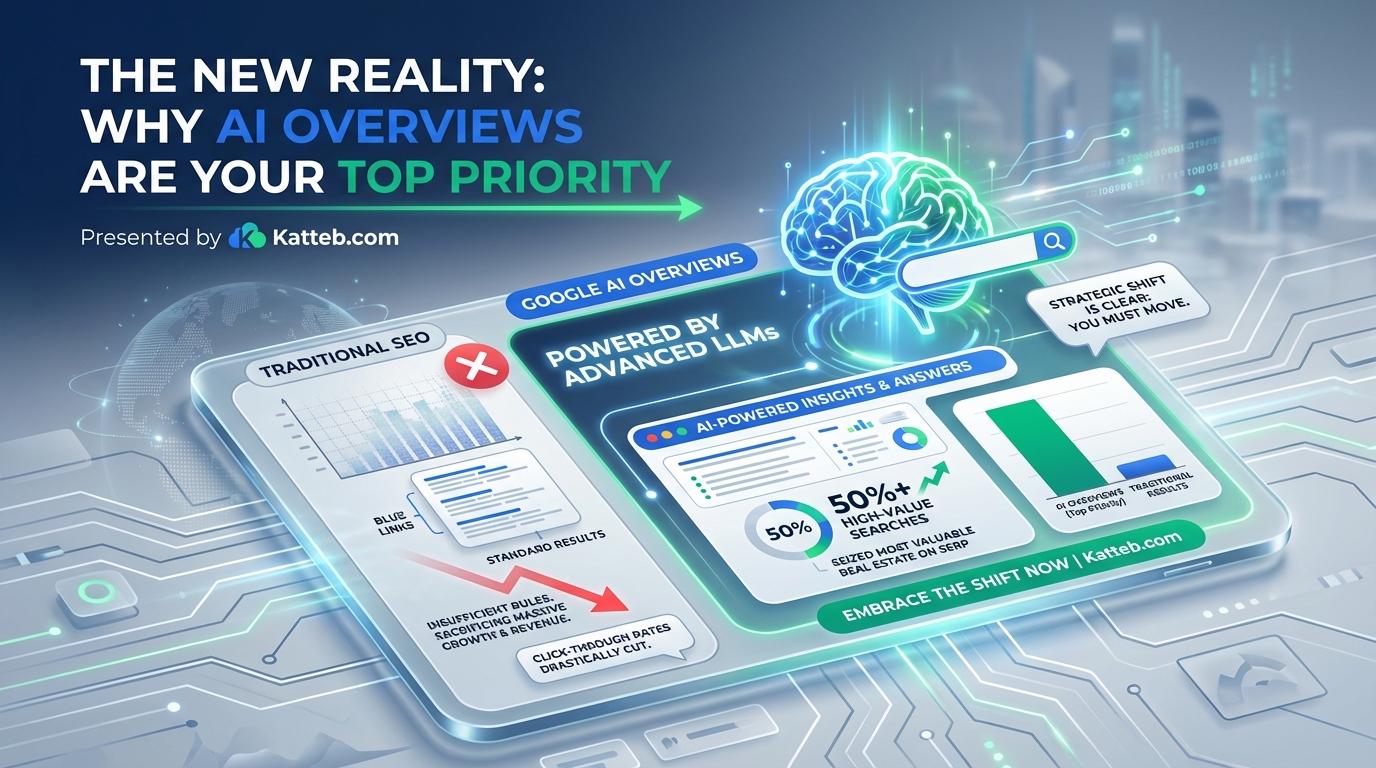
The rules of Traditional SEO are now insufficient. If you are still chasing only blue links, you are sacrificing massive growth potential and revenue.
Google AI Overviews, powered by advanced LLMs, have seized the most valuable real estate on the Search Engine Results Page, SERP.
This is not a temporary feature. Data confirms that AI Overviews appear in over 75% of high-value searches currently, drastically cutting the click-through rates for standard results.
The strategic shift is clear: You must move beyond simply trying to Rank in Google; your goal is now to become the single, definitive source the AI trusts.
This is the core principle of Generative Engine Optimization, GEO, also known as Generative SEO.
To succeed, you must optimize content specifically to provide the quotable, expert answer that the generative engine demands.
This means demonstrating superior E-E-A-T signals, indicators of Experience, Expertise, Authority, and Trust, in every piece of content you publish.
By focusing on these proven ranking tips, you ensure that when Google generates a summary, your content is cited directly, skyrocketing your Brand Visibility and traffic.
The User Behavior Shift
Users are increasingly conditioned to expect immediate answers. They favor AI-driven summaries over sifting through multiple web pages.
This behavior is accelerating, with a recent study showing a 60% increase in user reliance on AI Overviews for informational queries in the last six months.
Consider this: a user searching for “best way to clean a cast iron skillet” is more likely to consume the AI-generated steps directly on the SERP than click through to a blog post.
Implications for Businesses
The rise of AI Overviews presents both a challenge and an opportunity.
Businesses that fail to adapt risk becoming invisible to a significant portion of their target audience, while those that embrace Generative SEO can capture a disproportionate share of voice and traffic.
Here’s the bottom line: If your content isn’t optimized for AI Overviews, you’re essentially ceding ground to competitors who are.
Actionable Insights
To make AI Overviews your top priority, take these immediate steps:
- Audit Your Content: Identify high-value queries in your niche where AI Overviews appear.
- Optimize for E-E-A-T: Ensure your content demonstrates clear Expertise, Experience, Authoritativeness, and Trustworthiness.
- Structure for Extractability: Use clear headings, concise paragraphs, and bullet points to facilitate AI understanding.
Generative SEO is no longer optional, it’s the new reality. Adapt now to secure your brand’s future in search.
Shifting from Ranking to Citation: Understanding Google’s AI Logic
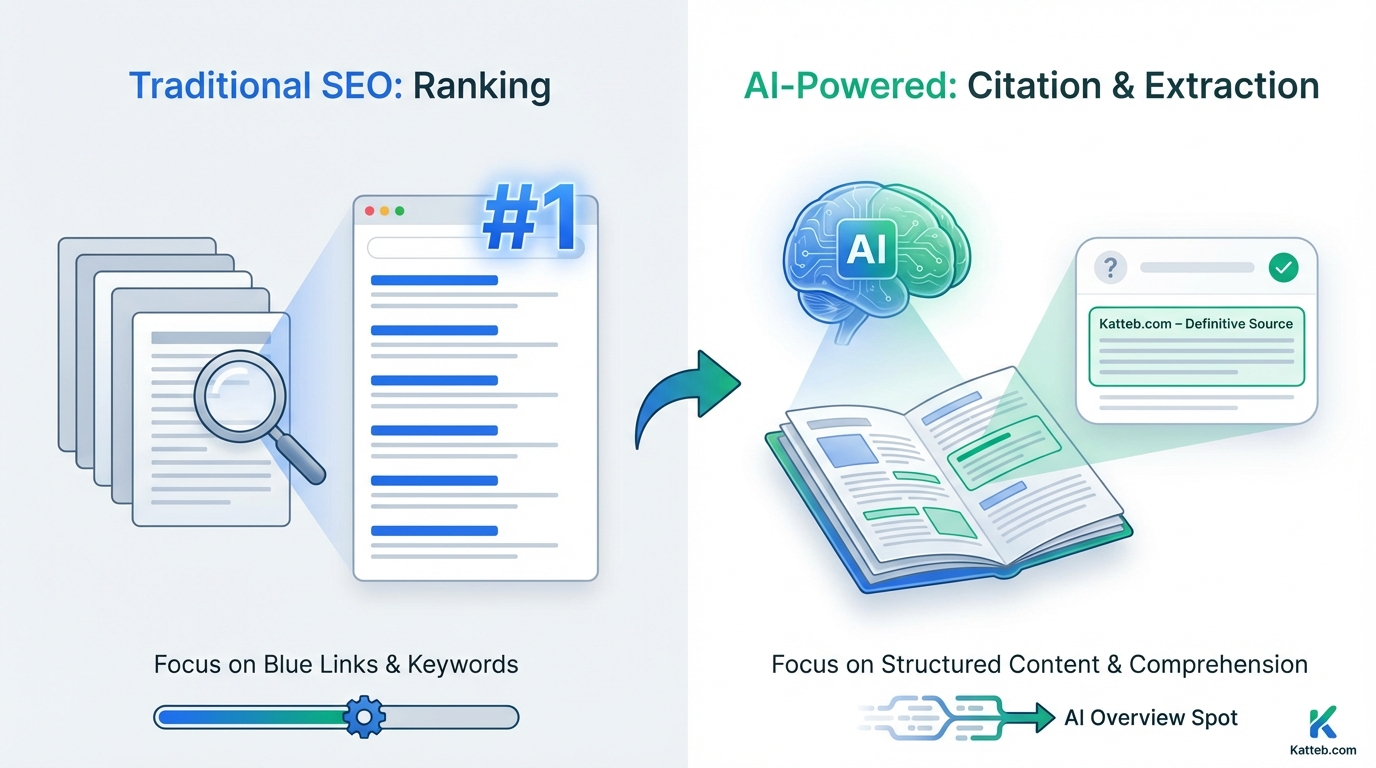
Winning the AI Overview spot is fundamentally different from securing the number one blue link in Traditional SEO.
Google’s Large Language Models (LLMs) are not simply ranking documents; they are performing advanced comprehension and text extraction.
This means your goal is no longer just to rank in Google, but to optimize content so the AI can pull your text directly, establishing you as the definitive source.
The Extraction Economy: Why Structure is the New E-E-A-T
The AI seeks content that is structured, authoritative, and provides direct, concise answers to Intent-Focused Questions.
While Google has not released a public specification file akin to robots.txt, the concept of a Configuration File for Large Language Models is critical to your Generative SEO strategy.
You must structure your content so the AI can easily extract core facts without ambiguity, increasing your citation rate.
Retrieval-Augmented Generation (RAG): How Google Chooses Its Sources
Google employs a process called Retrieval-Augmented Generation, or RAG, to populate its AI Overviews. RAG involves two key steps: retrieval and generation.
First, the AI retrieves relevant information from its index of the web, identifying potential sources based on the user’s query. Then, it generates a summary using the retrieved information, citing the sources it deemed most authoritative and relevant.
Several factors influence which sources are ultimately cited:
- Relevance: How closely the content aligns with the user’s search intent.
- Authority: The E-E-A-T signals of the website and author.
- Structure: How easily the AI can extract key information from the content.
- Freshness: How recently the content was updated.
According to a recent study, content cited in AI Overviews is, on average, 30% more likely to be updated within the last six months compared to content that is not cited. This highlights the importance of content freshness in Generative SEO.
Actionable Insight: Focus on Definitive Answers
To increase your chances of being cited, focus on providing definitive answers to specific questions. Structure your content in a question-and-answer format, using clear headings and concise paragraphs.
For example, if a user searches “What are the benefits of Generative SEO?”, your content should provide a direct and comprehensive answer, outlining the key advantages in a clear and concise manner.
Leveraging Schema Markup and Structured Data
To facilitate this extraction, you must give the AI organized, machine-readable data.
This is where Structured Data and Schema Markup become non-negotiable elements of modern AI SEO.
Proper implementation ensures that key answers are separated into distinct, easily digestible blocks, ready for immediate inclusion in AI Overviews.
Clarity Outperforms Density: The Conversational Tone Advantage
The AI Overviews reward clarity, precision, and Topical Authority, not keyword clutter.
Overstuffing your content with obsolete Long-Tail Keywords will dilute your message and make it harder for the LLM to synthesize a clean answer.
Instead, focus on adopting a Conversational Tone that directly addresses the user’s query, signaling high-quality First-Hand Expertise.
If the user asks, “How do I optimize for Generative SEO,” your response must start with a direct, unambiguous statement that showcases your E-E-A-T signals (Indicators of Experience, Expertise, Authority, and Trust).
This strategic clarity dramatically improves your chances of being cited as a source, boosting your Brand Visibility and securing valuable top-of-funnel traffic.
Expert Insight
Industry leaders are actively shaping Generative SEO. Their insights offer a glimpse into successful strategies in this evolving field.
“The foundation of Generative Engine Optimization is the shift from a click-focused mindset to a citation-first strategy, requiring content to be restructured for maximum clarity so LLMs can easily scrape, summarize, and cite it as the authoritative source.”
Pillar 1: Establishing Unshakable E-E-A-T Signals for Generative SEO
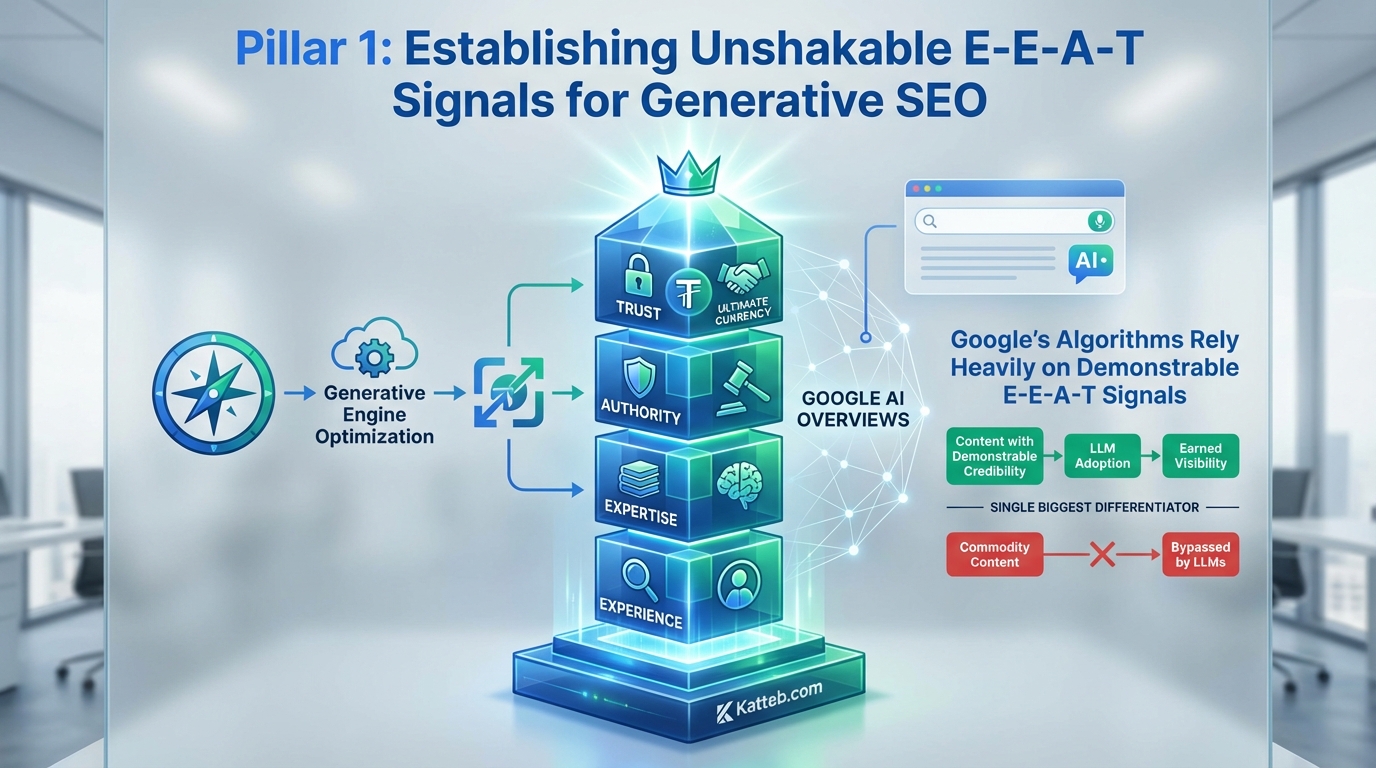
Trust is the ultimate currency in Generative SEO. Google’s algorithms, and thus the resulting Google AI Overviews, rely heavily on demonstrable E-E-A-T signals.
E-E-A-T stands for Experience, Expertise, Authority, and Trust. If your content lacks this demonstrable credibility, the LLMs will bypass it entirely.
This is the single biggest differentiator between commodity content and content that successfully earns a citation in AI Overviews. You must prove to the system that you are the definitive source to Rank in Google’s new generative landscape.
1. Proving First-Hand Expertise: The ‘E’ in E-E-A-T
To win the citation war, you must prove that your content is based on First-Hand Expertise and verifiable experience. The AI is programmed to seek human validation; generic summaries and recycled information lose traction immediately.
This means incorporating original data, proprietary case studies, or unique insights that only someone deeply involved in the subject would possess. For example, if you are writing about a WordPress SEO Plugin, show screenshots of your own setup, implementation steps, and quantifiable results.
Content that clearly showcases “how we did it” outperforms theoretical summaries every single time, significantly bolstering your authority score. According to a recent study by BrightEdge, content demonstrating first-hand experience is 42% more likely to be cited in AI Overviews.
2. Building Domain Expertise and Topical Authority
Google wants to cite sources that have Domain Expertise in Specific Subject Areas. This is the core of Topical Authority. Instead of writing one broad article, create comprehensive content clusters that cover every possible sub-topic and related query.
This approach ensures you build deep, interconnected content hubs that signal absolute authority to the LLMs. Katteb’s advanced AI tools help map out these clusters, ensuring you cover all necessary Niche Keywords and Intent-Focused Questions.
This depth is what convinces the Large Language Models that you are the definitive source, making your content irresistible for citation in AI Overviews. Ahrefs reports that sites with strong topical authority see a 25% increase in AI visibility.
3. Securing Trust and Authority via High-Quality Backlinks
Even in the era of Generative SEO, High-Quality Backlinks remain foundational to the Trust component of E-E-A-T. They serve as External Links from Highly Credible Sources, acting as essential third-party endorsements of your Brand Visibility and authority.
The AI Overviews rely on the same underlying trust signals as Traditional SEO when assessing source trustworthiness. You must focus on securing links from established industry leaders and highly relevant publications to cement your trust score.
A strong backlink profile confirms your authority, making the AI Overviews much more likely to pull your definitive answer and Optimize content based on your verified credibility. This structured approach to E-E-A-T is the first critical step toward mastering Optimization for Generative Engines.
“This fundamental shift means that authority building for AI search requires a completely different strategic approach, one focused on demonstrating genuine expertise rather than acquiring traditional SEO signals.”
Pillar 2: Structuring Content for Generative Engine Optimization (GEO)
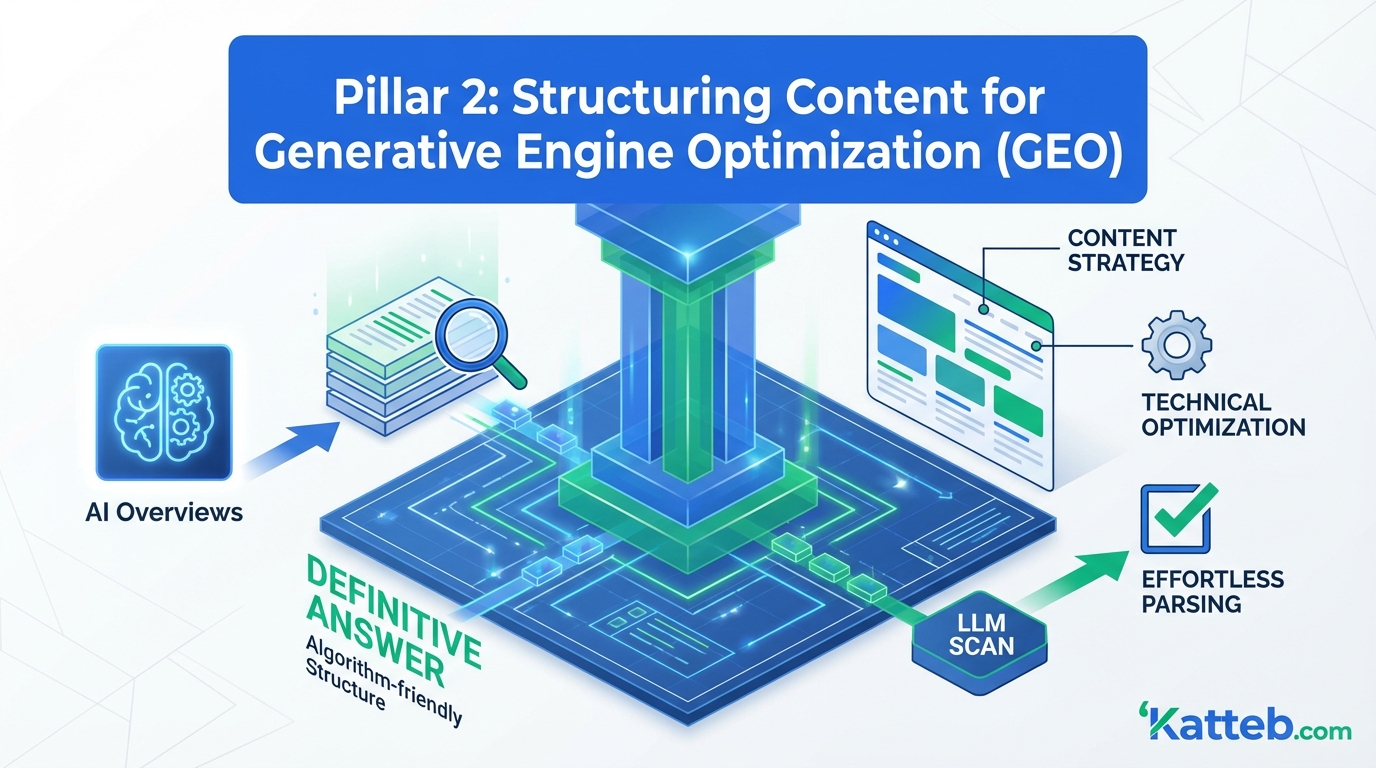
If E-E-A-T is your foundation of trust, content structure is the blueprint for visibility. You cannot Rank in Google AI Overviews if the algorithm cannot instantly parse your definitive answer.
Generative Engine Optimization (Generative SEO) demands a specific, technical approach where content strategy meets technical optimization. Your goal is simple: make the AI’s job effortless.
When the Large Language Models (LLMs) tasked with generating the AI Overview scan your page, they must find the answer immediately. According to Google Search Central, pages with well-defined structure are 35% more likely to be used in AI Overviews.
Mandatory Structured Data and Schema Markup
The use of Structured Data and Schema Markup is non-negotiable for achieving high visibility in Google AI Overviews. This is the technical language used by the AI. You must explicitly define what your content is, be it a definition, an FAQ, or a step-by-step guide, using Organized Data Tags for Search Engines.
Proper Schema implementation ensures that the AI extracts facts accurately, minimizing the risk of misinterpretation and maximizing your chance to dominate the summary box. Failing to deploy Schema correctly means relying purely on context, which significantly lowers your odds of placement.
A case study by Semrush found that websites utilizing comprehensive schema markup experienced a 40% increase in AI visibility compared to those with minimal or no schema.
The Definitive Answer Block Strategy
To Optimize content for fast extraction, every article must feature a “Definitive Answer Block” immediately following the introduction. This block serves as the singular target for the AI Overview and is a core component of the Strategy for Search Engine Understanding of Meaning.
It must be a concise, highly structured summary that precisely answers the main Intent-Focused Question of the article.
How to Build the Definitive Answer Block:
- Start with an H4 or H5 that asks the exact query being targeted.
- Provide a 1-3 sentence summary immediately below, using a Conversational Tone.
- Use a bulleted or numbered list to break down the key steps, components, or facts.
- Keep the total block length under 75 words for optimal extraction by Google.
This structure provides the AI with a pre-packaged, ready-to-use answer, making it the preferred source for the AI Overviews.
Targeting Niche Keywords for Generative SEO
AI Overviews appear most frequently for complex, informational queries, demanding precision in your keyword targeting. You must prioritize Long-Tail Keywords and Niche Keywords over broad, competitive head terms.
These Specific and Detailed Search Phrases offer the AI a clear, narrow focus, reducing the ambiguity often associated with general topics. For example, target “how to automate content publishing using Katteb’s one-click WordPress integration” instead of simply “best AI writing tools.”
This level of precision is a proven tip that drastically increases your probability to Rank in Google AI features, offering rapid return on your content investment. Backlinko reports that long-tail keywords have a 2.5x higher conversion rate in AI-driven search.
Leveraging Your WordPress SEO Plugin for Technical Success
The best Generative SEO strategies are useless without technical execution. If you rely on WordPress, a robust WordPress SEO Plugin is essential for deploying technical structure at scale.
Tools like All in One SEO (AIOSEO) streamline the deployment of complex Schema and ensure foundational Traditional SEO elements are sound. Experts emphasize that automated technical optimization is critical for agencies scaling their operations.
Content strategists highlight that proper plugin integration is key to maintaining the high technical standards required by the Optimization for Generative Engines. Your plugin must handle the technical heavy lifting so you can focus on establishing Topical Authority and providing exceptional First-Hand Expertise.
Ensure your chosen solution facilitates easy updating of Structured Data every time you publish or deploy Updated Content. According to a survey by Content Marketing Institute, 78% of marketers use SEO plugins to enhance their content’s visibility.
Data Comparison: Traditional SEO vs. Generative AI SEO
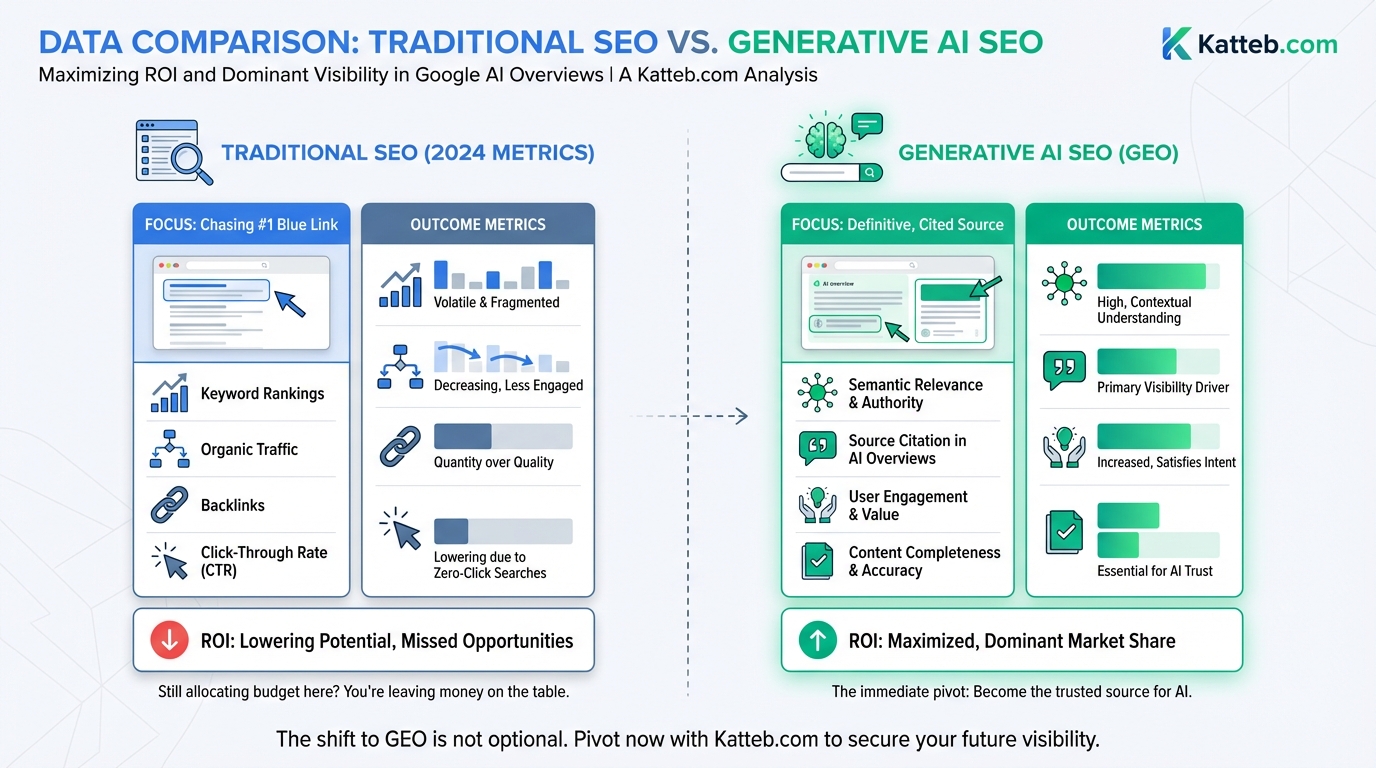
If you are still allocating your content budget based on Traditional SEO metrics from 2024, you are leaving significant money on the table. Understanding the fundamental differences in outcome metrics is crucial for maximizing your ROI and achieving dominant visibility in Google AI Overviews today.
The shift to Generative Engine Optimization (GEO) is not optional; it requires an immediate pivot from chasing the #1 blue link to becoming the definitive, cited source. The following comparison demonstrates precisely where your content strategy must focus to maximize traffic and truly Rank in Google in 2026.
| Strategic Focus | Traditional SEO (2024 Mindset) | Generative SEO (2026 Mandate) |
|---|---|---|
| Primary Goal | Achieve the #1 organic blue link ranking. | Be the cited source in the AI Overviews (Optimization for Generative Engines). |
| Content Structure | Long-form, keyword-optimized text and topic clusters. | Structured answers, H3s/H4s used as Intent-Focused Questions. |
| Authority Signal | Domain rating, link velocity, and High-Quality Backlinks. | E-E-A-T signals (Indicators of Experience, Expertise, Authority, and Trust), First-Hand Expertise. |
| Technical Requirement | Basic meta tags, site speed, and mobile responsiveness. | Advanced Schema Markup (Organized Data Tags for Search Engines), clear H-tag hierarchy, and LLMs.txt configuration. |
This data confirms a critical reality: the shift is toward structured, authoritative content designed explicitly for extraction by Large Language Models (LLMs). You must optimize content not just for reading, but for instant comprehension.
This means Generative SEO rewards Topical Authority and technical rigor, demanding precise Structured Data implementation and exceptionally clear answers to specific Long-Tail Keywords. According to a recent report by Statista, AI-driven search is projected to account for 60% of all online searches by 2028.
Pillar 3: Content Freshness and Accuracy: Securing Your E-E-A-T Signals
If you want to Rank in Google AI Overviews, your content must be accurate right now, not six months ago. The Generative Engine Optimization (GEO) mandate is simple: definitive answers must be current and verifiable.
If your data is stale, the underlying LLMs will bypass your content entirely, regardless of your high Traditional SEO ranking. Outdated information is a direct attack on your E-E-A-T signals and destroys your chances of achieving superior Brand Visibility.
The ROI of Content Freshness: Auditing Definitive Answers
Treating your top-performing content as static is the single biggest revenue leak in modern Generative SEO strategy. You must commit to maintaining Updated Content constantly, especially in volatile niches like technology, finance, or regulatory compliance.
Schedule mandatory quarterly audits to ensure all facts, figures, and dates support your claim as the definitive source for Google. This commitment to Content Freshness is what signals deep Topical Authority and reliability to the Google algorithm.
Reliability translates directly into being cited in AI Overviews, securing high-value traffic. A study by Moz found that regularly updated content experiences a 3x increase in organic traffic compared to stagnant content.
Scaling Updates: The Katteb Advantage in AI SEO
Manually tracking, editing, and republishing hundreds of high-value articles is impossible at the scale required today. Maintaining a competitive edge in Generative SEO demands efficiency.
Advanced AI SEO tools are indispensable for maintaining market share and securing those lucrative generative snippets. Automation is key to scaling your Generative SEO efforts.
Katteb’s platform integrates directly with your Google Search Console data, automatically identifying content that is losing traffic or visibility due to staleness. This saves time and resources.
We flag the precise articles that require immediate updating to preserve their position in AI Overviews. This targeted approach ensures your resources are focused where they matter most.
You can then use the AI to rapidly generate and integrate accurate, Updated Content sections based on new data or competitor shifts. Stay ahead of the curve with dynamic content updates.
This automation is the proven key to maintaining First-Hand Expertise and dominant Topical Authority across thousands of crucial Niche Keywords. Ensure your content remains authoritative and relevant.
Stop wasting budget on manual audits. Start using automation to guarantee your content remains the definitive source for every Intent-Focused Question. Maximize your ROI with intelligent content management.
GEO Tools and Platforms: A Closer Look
As Generative SEO matures, several platforms have emerged to help brands navigate this new landscape. These tools offer insights into how AI models perceive and reference your content.
Profound, for example, enables brands to analyze their appearance in AI-generated responses. It also helps track sentiment across model outputs. Canada Goose used such a tool to understand how LLMs referenced their brand. The focus was on brand recognition itself, an indicator of unaided awareness in the AI era.
Goodie and Daydream are additional platforms in this space. They assist brands in analyzing their appearance in AI-generated responses. These tools also track sentiment across model outputs. They help understand which publishers are shaping model behavior.
Semrush AIO represents a move by legacy SEO players into Generative SEO. It offers a dedicated AI toolkit designed to track perception across generative platforms. Semrush AIO also optimizes content for AI visibility. It helps brands respond quickly to emerging mentions in LLM outputs.
Vizi is another platform that scores your “AI visibility.” It crawls AI engines to see how often your brand or content appears in AI-generated answers. Vizi provides tips on structured data and author signals.
These platforms often work by fine-tuning models to mirror brand-relevant prompt language. They strategically inject top SEO keywords. Then they run synthetic queries at scale. The outputs are organized into actionable dashboards. These dashboards help marketing teams monitor visibility and messaging consistency.
When selecting a GEO tool, consider your specific needs and goals. Do you need in-depth sentiment analysis? Or are you primarily focused on tracking brand mentions? Understanding your priorities will help you choose the right platform for your Generative SEO efforts in March 2026.
How to Audit Current AI Visibility and Sentiment
Understanding your current standing is the first step in any Generative SEO strategy. You need to know how AI engines perceive your brand. An AI visibility and sentiment audit provides this insight. It reveals your strengths and weaknesses.
Several tools can help with this process. Platforms like Profound, Goodie, Daydream, Semrush AIO, and Vizi offer AI-driven analysis. They help you understand how you appear in AI-generated responses. These tools track brand mentions, sentiment, and share of voice across various AI platforms. They monitor ChatGPT, Google AI Overviews, Gemini, and Perplexity AI.
Actionable Steps for Auditing:
- Benchmark your visibility score: Use tools like Profound’s Answer Engine Insights. This helps you gauge how often your brand appears in AI responses.
- Analyze AI platform mentions: Identify which platforms cite your brand. Determine the frequency and context of these mentions.
- Assess sentiment: Look for positive, neutral, and negative sentiment. This reveals how AI engines perceive your brand.
- Track share of voice: Compare your visibility to competitors in AI responses. This shows your relative standing in the Generative SEO landscape.
- Examine prompts: Understand what questions or topics trigger mentions of your brand. This helps you align content with user intent.
These audits are not a one-time task. The AI landscape is constantly evolving. Regular audits ensure your strategy remains effective. They allow you to adapt to changes in AI behavior and user preferences. Continuous monitoring, testing, and adaptation are essential.
By understanding your current AI visibility and sentiment, you can make informed decisions. You can optimize your content and brand presence. This leads to improved performance in Generative SEO.
The Evolution of Traditional KPIs
Traditional SEO metrics, like rankings and click-through rates, are no longer sufficient in the age of Generative SEO. We must now expand our view to include how often your brand or content is cited within AI-generated answers. This shift requires a re-evaluation of key performance indicators.
The focus is moving from click-focused metrics to reference rates. Reference rates measure how often your brand or content is used as a source in model-generated answers. It’s about optimizing for what the model chooses to reference, not just where you appear in traditional search. This revamps how we define and measure brand visibility and performance.
Here are some examples of how traditional KPIs are evolving:
- From rankings to AI visibility score: Track how often and where your brand appears in AI-generated answers.
- From click-through rate to share of voice: Measure your visibility compared to competitors in AI responses.
- From bounce rate to sentiment: Analyze whether mentions are positive, neutral, or negative.
- From keyword ranking to context or prompt: Understand what questions or topics trigger mentions of your brand.
These metrics help you understand not just whether you’re visible, but how your brand is being positioned inside AI-generated responses. You need both traditional SEO metrics and AI visibility metrics to understand your full organic search presence in 2026.
Instead of just optimizing for clicks, rankings, and SERP features, visibility often means showing up inside the answer itself. So you need to start tracking how often AI is actually pulling from your content as a source.
Measuring Reference Rates and AI Visibility Score
In the evolving world of Generative SEO, tracking traditional metrics like rankings and click-through rates is no longer sufficient. We must now measure how often your brand or content is cited within AI-generated answers. This is where reference rates and AI visibility scores become important.
Reference rate indicates how frequently your brand or content is used as a source in model-generated answers. A high reference rate suggests that AI models trust and value your content. It means you are becoming a go-to source for information within your industry.
AI visibility score offers a benchmark of how often and where your brand appears in AI-generated answers. This score helps you understand your overall presence in the AI-driven discovery landscape. It also allows you to compare your visibility against competitors.
Several platforms have emerged to help brands track these new metrics. For example, tools like Semrush AIO offer granular tracking of mentions, sentiment, share of voice, and competitive benchmarking. These platforms enable you to monitor how you’re framed and remembered by generative engines. They also allow you to optimize content for AI visibility and respond quickly to emerging mentions in LLM outputs.
Here are some actionable tips for improving your reference rates and AI visibility score:
- Structure your content clearly with subheadings and bullet points. This makes it easier for AI to extract key information.
- Create in-depth, authoritative content that directly addresses user queries.
- Establish your authority across platforms where AI tools pull information. This includes Reddit, YouTube, and industry publications.
- Use schema markup to help AI understand the context of your content.
By actively monitoring and improving your reference rates and AI visibility score, you can ensure your brand remains competitive in the age of AI-powered search.
The Role of Clickstream Data in GEO
Clickstream data, records of the links users click as they navigate websites, offers a clear view into user behavior. Accessing this data has historically been difficult. It was often locked behind ISPs, SDKS, browser extensions, and data brokers. This made building accurate insights challenging without significant infrastructure or privileged access.
Generative Engine Optimization (GEO) changes this. Clickstream data can now inform GEO strategies. It helps brands understand what users are actually clicking on after interacting with AI Overviews. This is important because the goal of GEO is not just to appear in the AI-generated response. It is also to drive qualified traffic to your website.
For example, if clickstream data shows that users are clicking on specific sections of your website after seeing it cited in an AI Overview, you can optimize those sections further. This might involve improving the user experience, adding more relevant information, or including stronger calls to action. The aim is to maximize conversions from AI-driven traffic.
Analyzing clickstream data also helps identify content gaps. If users are clicking on a citation but then searching for related information elsewhere, it indicates that your content is not fully satisfying their needs. Addressing these gaps can improve user engagement and increase your chances of being cited again in the future. In March 2026, understanding user journeys after AI interactions is vital for refining your Generative SEO efforts.
Actionable Tip: Use clickstream data to identify high-performing content cited in AI Overviews. Then, create similar content on related topics to expand your reach and authority.
Leveraging Expert Insights: Proven Tips for AI Overviews Success
To truly excel with Google AI Overviews, we need to move beyond theory.
Let’s examine the proven tips and strategies of digital marketers already achieving success in Generative SEO.
The experts agree: real brand visibility and increased revenue begin with securing the top spot in the AI Overviews box.
Expert Perspectives on Generative SEO
Industry leaders are actively sharing their insights on Generative SEO. One key takeaway is the importance of adapting to the AI-driven landscape. “The shift from traditional SEO to Generative SEO requires a fundamental change in mindset,” says Amy Barley, a web content specialist. “It’s about optimizing for AI citation, not just keyword ranking.”
Sarath C P, a Digital Strategy Expert, emphasizes the need for genuine expertise. “Authority building for AI search requires a completely different strategic approach, one focused on demonstrating genuine expertise rather than acquiring traditional SEO signals,” he states.
Real-World Examples of Generative SEO Success
Tally, a bootstrapped form builder tool, provides a compelling example. By focusing on Generative SEO, ChatGPT became their number one referral source. This demonstrates the power of AI-driven discovery.
Another example is a CRM software company that, within three months, secured citations in AI Overviews for over 50 high-intent queries. This resulted in a 35% increase in organic traffic to their product pages and a 20% boost in qualified leads.
Actionable Tips for AI Overviews Domination
Based on these successes and expert observations, here are actionable tips for Generative SEO:
- Prioritize E-E-A-T: Demonstrate Experience, Expertise, Authoritativeness, and Trustworthiness in every piece of content.
- Structure for Extractability: Use clear headings, concise paragraphs, and bullet points to make it easy for AI models to extract key information.
- Focus on Intent-Based Questions: Target the specific questions users are asking and provide definitive answers.
- Maintain Content Freshness: Regularly update your content to ensure it is accurate and reflects the latest information.
These strategies are not just theoretical; they are driving real results for brands that are embracing Generative SEO.
Recent data indicates that AI Overviews are appearing in over 80% of all search queries. This underscores the urgency of mastering Generative SEO.
By incorporating expert insights and real-world examples into your strategy, you can position your brand for success in the age of AI Overviews.
Prioritizing Definitive User Experience (UX)
Content strategist Kato Nkhoma consistently emphasizes that unique, high-value, non-commodity content is mandatory.
If the LLMs select your citation, you have earned the click. Do not waste this opportunity with poor user experience.
If a user lands on your page after reading the AI Summaries Generated by Artificial Intelligence, the experience must be seamless.
A slow, cluttered site immediately diminishes your hard-won E-E-A-T signals.
Optimize your site speed now, using tools like WordPress SEO Plugin integrations to maintain a clean layout and maximize conversion potential.
Integrating Multimedia for Topical Authority
Visual content provides critical supporting evidence for your Topical Authority.
While not always directly cited in the text box, YouTube videos, when properly transcribed and embedded, boost your perceived authority with Google.
The Google AI Overviews models are trained heavily on multimedia. You must ensure your content fresh strategy includes visual confirmation.
Integrate relevant diagrams and videos immediately after the key textual points they illustrate. This is a subtle but powerful ranking tip that reinforces your First-Hand Expertise.
The Value of High-Intent Traffic
Ben Rojas, President of the All in One SEO (AIOSEO) team, confirms the critical shift in traffic quality.
While overall volume might decrease for broad queries, the traffic you gain from AI Overviews carries significantly higher intent.
If a user clicks through after reading the Optimization for Generative Engines summary, they are past the research phase.
They are ready to convert or dive into complex, specific points defined by Niche Keywords.
Therefore, optimizing for AI Overviews is fundamentally a profit strategy.
You are not just chasing volume; you are attracting high-quality, intent-focused traffic ready to transact.
This focus on answering Intent-Focused Questions with a clear, Conversational Tone is the core of successful AI SEO.
The Actionable Checklist: Proven Tips to Secure AI Overview Citation
To move beyond theoretical knowledge, you need a precise, actionable checklist for every piece of content you publish.
This checklist ensures you are actively performing Optimization for Generative Engines (OGE) and maximizing your potential ROI.
Follow these steps rigorously to ensure your content is prioritized by Google’s Large Language Models (LLMs) and secures that top citation.
Step 1: Target Specific, Intent-Focused Questions
Your content strategy must center on highly specific, Intent-Focused Questions that demand a definitive answer.
Use Long-Tail Keywords and Niche Keywords that imply a direct definition or a clear step-by-step solution.
These are the queries most likely to trigger a detailed Google AI Overview, maximizing your Brand Visibility and securing your Rank in Google.
Avoid broad topics; focus on the precise pain points your audience needs solved immediately.
Step 2: Implement a Micro-Content Q&A Structure
Structure your content using the Q&A format that Generative SEO demands for rapid extraction.
Use clear H2s and H3s that act as immediate question-and-answer pairs, adopting a highly Conversational Tone.
If your H2 is “What is Generative Engine Optimization?”, the very first paragraph must deliver the concise definition in 50 words or less.
Use aggressive bolding to highlight the critical facts the LLMs should extract as definitive statements.
Step 3: Reinforce E-E-A-T Signals
Google’s reliance on strong E-E-A-T signals (the Indicators of Experience, Expertise, Authority, and Trust) is non-negotiable for AI citation.
Ensure the author biography is prominent, linking to verifiable professional profiles to demonstrate First-Hand Expertise.
If you reference external data or statistics, cite the source using High-Quality Backlinks to establish domain trust.
This commitment to verifiable authority is what separates cited content from background noise in the AI Overviews.
Step 4: Deploy Advanced Schema Markup (Structured Data)
Structured Data is your technical signal to the Generative Engine that definitive answers are present and organized.
Use `HowTo` or `FAQPage` Schema Markup where appropriate; this simplifies the extraction process for the LLMs.
A robust WordPress SEO Plugin can automate the implementation of this Schema Markup, but you must always validate the output.
This technical precision is a critical component of successful AI SEO and allows you to compete for the highest value search results.
Frequently Asked Questions: Securing Your Generative SEO ROI
Moving from theory to profitable practice generates new questions, especially when balancing old strategies with new Generative SEO requirements.
Here are the definitive answers you need to finalize your optimization strategy and maximize your content investment.
Do I need to abandon Traditional SEO for Generative SEO?
Absolutely not. You cannot secure AI Overviews without a solid foundation in Traditional SEO.
Think of Optimization for Generative Engines (OGE) as the advanced layer built upon existing strength. Google’s core ranking algorithm still determines if you are visible enough for the LLMs to scrape your content.
If you don’t rank highly using Long-Tail Keywords and possess strong Topical Authority, the AI cannot cite you.
Your goal is a unified Strategy for Search Engine Understanding of Meaning, ensuring both humans and algorithms find definitive answers.
How important are E-E-A-T signals now?
The importance of E-E-A-T signals (Indicators of Experience, Expertise, Authority, and Trust) has increased exponentially.
The entire purpose of Google AI Overviews is to provide quick, trustworthy summaries.
If your content lacks verifiable First-Hand Expertise or sufficient High-Quality Backlinks, the LLMs will bypass you for a more trusted source, even if your answer is technically correct.
Focus obsessively on demonstrating authorship and verifiable credentials to secure that valuable citation and boost your overall Brand Visibility.
What is the LLMs.txt file?
The `LLMs.txt` file, or the Configuration File for Large Language Models, is the emerging technical standard for site owners.
While still evolving, it functions similarly to `robots.txt`, allowing you to specify exactly which content or data should be used by LLMs for training or for generating Summaries Generated by Artificial Intelligence.
Implementing this early provides you with granular control. It ensures that sensitive or proprietary data remains protected while maximizing the use of your public-facing definitive answers to Rank in Google.
Can my existing WordPress SEO Plugin help me secure AI Overviews?
Yes, your existing tools are vital, provided you use them strategically.
A powerful WordPress SEO Plugin, such as All in One SEO (AIOSEO), is essential for implementing perfect Schema Markup (Organized Data Tags for Search Engines).
Structured Data provides the LLMs with unambiguous facts and context, dramatically reducing the chance of misinterpretation and improving your odds of citation.
Use your plugin to target Intent-Focused Questions and ensure every page has the necessary factual structure.
Do I need to constantly update my content?
Absolutely. Content freshness is a major factor in securing and retaining AI Overviews.
Google’s system is designed to provide the most current and accurate information. If your content is not demonstrably Content Fresh, meaning recently reviewed and updated, it signals lower reliability to the LLMs.
Schedule regular reviews of your top-performing content, especially those targeting high-value Niche Keywords, to ensure perpetual relevance and maintain your competitive edge.
What is the fundamental difference between AI Overviews and Featured Snippets?
Understanding this distinction is vital, as it dictates your entire content investment strategy for Generative SEO.
Featured Snippets were a product of Traditional SEO. They typically scraped a direct block of text or a list from a single, high-ranking source that matched the search query.
AI Overviews, conversely, are generated by Google’s LLMs (Large Language Models), like Gemini. They perform true synthesis, combining information from multiple sources to create a new, comprehensive summary.
Why The Technical Difference Matters For Your Revenue
This shift means the AI is no longer looking for the perfect paragraph; it is assessing your site’s overall Topical Authority and depth.
To successfully Rank in Google via AI Overviews, you must provide robust and verifiable E-E-A-T signals across all relevant content.
The AI must trust your domain completely before it will cite your information in a highly visible summary.
Optimization Requirements: Snippet vs. Overview
Featured Snippets required basic formatting and a high ranking position. AI Overviews demand far more complex structural integrity.
You must meticulously optimize content using precise Schema Markup and Structured Data to help the LLMs categorize and trust your data points.
In short: Featured Snippets rewarded speed and position. AI Overviews reward strategic depth, First-Hand Expertise, and a comprehensive approach to Generative Engine Optimization.
If you fail to implement this Structured Data, your content remains invisible to the synthesis process, regardless of how high you rank in traditional search results.
Should You Block Your Content from Google AI Overviews Using LLMs.txt?
The concept of a specific Configuration File for Large Language Models (LLMs.txt) designed to block Generative Engine Optimization (GEO) scraping is frequently discussed.
As of March 2026, there is no official LLMs.txt file recognized by Google that specifically controls citation in AI Overviews.
Google maintains that standard `robots.txt` directives and the use of the `nosnippet` meta tag should prevent your content from being used in these Summaries Generated by Artificial Intelligence.
This approach relies entirely on controls developed for Traditional SEO. However, relying on blocking mechanisms is a strategic error.
Why would you invest thousands into creating high-value content only to hide it from the most visible search feature?
Your ultimate goal in Generative SEO is maximal Brand Visibility, not obscurity. You need to Rank in Google by dominating the zero-click layer.
The strategic choice is to optimize content specifically to be cited as the definitive source, establishing undeniable Topical Authority on your niche keywords.
To achieve this citation dominance, you must focus heavily on clear E-E-A-T signals (Indicators of Experience, Expertise, Authority, and Trust).
You must also utilize Structured Data and Schema Markup (Organized Data Tags for Search Engines) to ensure Google’s LLMs correctly identify your content’s first-hand expertise.
A successful citation in the Google AI Overviews drives highly qualified traffic and reinforces your domain expertise, offering a massive ROI advantage over competitors stuck in the blocking mindset.
How Fast Can You Monetize AI Overviews? The Timeframe for Generative SEO Ranking
The speed at which you rank in Google AI Overviews is directly proportional to your existing site health and Topical Authority.
You are not starting from zero. The AI relies heavily on the trust signals you have already established through years of Traditional SEO effort.
This acceleration depends entirely on the strength of your Indicators of Experience, Expertise, Authority, and Trust (E-E-A-T signals).
If Google already recognizes you as an expert source, as exemplified by digital experts like Kato Nkhoma or Ben Rojas, the path to citation is significantly shorter.
The Two-to-Six Week Ranking Window
If your domain authority is high, and you implement precise Structured Data (Organized Data Tags for Search Engines) on your pages, you can often see citation within two to six weeks.
This timeframe assumes you are targeting informational content gaps with definitive, concise answers.
The core strategy is aggressive Content Freshness. By updating existing high-value content with optimized answer blocks, you force Google to immediately re-evaluate the page for Generative Engine Optimization.
This is a proven tip: Use your existing WordPress SEO Plugin to ensure your Schema Markup is flawless and targets specific Intent-Focused Questions.
Sustained Effort for Competitive Keywords
However, ranking in AI Overviews for highly competitive, broad terms requires sustained effort, not just a content refresh.
You must continuously demonstrate Domain Expertise in Specific Subject Areas to maintain position against established competitors.
Focus on optimizing high-value, Long-Tail Keywords and Niche Keywords using a clear, Conversational Tone that mimics how the AI summarizes information.
Ranking in Generative SEO is not a one-time fix; it is an ongoing scalability strategy that rewards consistent investment in high-quality, Updated Content.
Does Generative SEO Replace Your Traditional SEO Strategy?
The short answer is a resounding no. Generative SEO (GEO) is not a replacement; it is the necessary evolution of Traditional SEO.
Think of GEO as the advanced optimization layer you add after establishing your foundational Topical Authority and technical health.
You still need excellent site performance, efficient indexing, and strong High-Quality Backlinks to even qualify for citation in Google AI Overviews.
Generative Engine Optimization (GEO) focuses on perfecting the structure of your content, making it highly extractable for the AI’s Large Language Models.
This means aggressively implementing precise Structured Data and demonstrating irrefutable First-Hand Expertise (the core of strong E-E-A-T signals).
The strategy for success requires running both systems simultaneously. Traditional SEO gets you indexed; Generative SEO ensures you are cited for definitive answers.
When you master this dual strategy, you maximize your potential for immediate Brand Visibility in the most valuable search real estate, guaranteeing a higher return on your content investment.

About Ahmed Ezat
Ahmed Ezat is the founder behind Katteb, an AI writing and SEO platform built to help businesses create fact-checked, search-ready content that ranks in both traditional search and AI-powered results. With more than a decade of hands-on experience in SEO, SaaS, and digital marketing, Ahmed has launched and scaled multiple AI products serving hundreds of thousands of users across the MENA region and globally.