

Introduction
As we navigate the evolving SEO landscape in March 2026, agencies are facing increased pressure to deliver results and demonstrate value. The key to scaling agency revenue lies in strategic adoption of solutions that streamline operations and enhance client perception.
The shift towards proprietary branding is not merely cosmetic; it’s a fundamental strategy for justifying premium pricing and fostering client loyalty. Let’s explore how white label SEO tools are becoming indispensable for agencies aiming to thrive.
The Strategic Shift: Scaling Agency Revenue in 2026
The SEO industry is more competitive than ever. According to a recent AIOSEO report, 57.6% of SEO professionals believe that competition is intensifying due to AI’s impact on traffic. This makes efficient service delivery and client retention paramount. White label SEO tools offer a pathway to achieve both.
Consider this: an agency using branded reporting sees a 20% higher client retention rate compared to those using generic reports. This translates directly to increased profitability and reduced churn.
Why Proprietary Branding Justifies Premium Pricing
Clients are willing to pay more for services that feel exclusive and tailored. When your agency presents a fully branded dashboard and reporting system, it reinforces the perception of expertise and dedication.
For example, an agency that rebrands a backlink analysis tool as its “Proprietary Link Intelligence Platform” can charge a premium for its insights. Clients perceive greater value in a service that appears unique and specialized.
6 Strategic White Label Tool Categories for Margin Protection
Agencies can protect margins by strategically using white label tools in these categories:
- Reporting and Analytics: Automated, branded reports save time and enhance client communication.
- Rank Tracking: Accurate, white-labeled rank tracking builds client confidence.
- Site Audits: Comprehensive technical SEO audits identify issues and demonstrate expertise.
- Keyword Research: Uncover valuable keyword opportunities under your brand.
- Backlink Analysis: Monitor backlinks and competitor strategies with your branding.
- AI-Powered Content Optimization: Tools that optimize content using AI, rebranded as your own innovation.
Quantifying the ROI: White Label Tools vs. Operational Overhead
The ROI of white label SEO tools is clear. Consider the cost of developing a proprietary platform versus subscribing to a white-label solution. Development costs can easily exceed $100,000, while a white-label subscription typically ranges from a few hundred to a few thousand dollars per month.
Furthermore, agencies save significant time on manual tasks. Automated reporting can free up several hours per week, allowing staff to focus on strategic initiatives and client acquisition.
Maximizing Client Retention Through Branded Reporting Infrastructure
Clients are more likely to stay with an agency that provides clear, consistent, and branded reporting. A well-designed reporting infrastructure demonstrates professionalism and builds trust.
By offering clients access to a branded dashboard with real-time data, agencies can foster transparency and reduce the number of “how are we doing?” inquiries. This not only saves time but also strengthens the client relationship.
6 White Label SEO Tools for Agency Profit Expansion
Your agency’s profitability hinges on a single metric: scalability without sacrificing service quality.
The traditional agency model, manual reporting, custom dashboards, and high operational overhead, is a direct threat to your margins. If you want to grow your retainer base without hiring exponentially, you must deploy advanced automation.
This is where strategic adoption of white label SEO tools becomes critical.
These are not just rebranded dashboards; they are engines for margin protection and enhanced client retention.
By leveraging true white label solutions, your SEO agencies can deliver proprietary insights and branded reports that cement your authority as a premium service provider.
To maximize profit expansion, you need tools that automate the most time-intensive, high-touch SEO tasks.
This includes everything from deep SEO audit services to automated content refresh cycles and competitive monitoring via API access.
We have identified six essential categories of white label technology that directly drive operational efficiency and ensure robust performance optimization for your clients.
The goal is simple: reduce your Cost of Goods Sold (COGS) while simultaneously increasing the perceived value and stickiness of your monthly retainers.
Let’s examine the technology stack required to transition from a service provider to a scalable, automated SEO enterprise.
You must focus on solutions that allow you to deliver comprehensive data, like detailed website audits and analysis of the backlink profile, under your own brand.
Overview of White Label SEO Tool Categories
Here’s a quick look at the six categories we’ll cover:
- Reporting and Analytics: Show tangible results with branded reports.
- Rank Tracking: Monitor keyword performance under your brand.
- Site Audits: Deliver comprehensive technical SEO insights.
- Keyword Research: Discover opportunities and expand client reach.
- Backlink Analysis: Track and analyze backlinks, all branded.
- AI-Powered Content Optimization: Offer cutting-edge content solutions.
Let’s explore each category in detail, demonstrating how white label SEO tools can transform your agency’s profitability.
White Label Service Providers vs. White Label Software
When considering white label SEO solutions, it’s important to distinguish between service providers and software. Both offer ways to present SEO capabilities under your agency’s brand, but they operate differently.
White label software provides you with the tools to perform SEO tasks in-house. You rebrand the platform; clients see your agency’s logo and branding. This option gives you control over the SEO execution. Examples include SE Ranking, AgencyAnalytics, and WebCEO. These platforms offer features like rank tracking, site audits, and reporting, all under your brand.
White label service providers, on the other hand, are done-for-you teams. They execute SEO tasks like content creation and link building behind the scenes. You maintain the client relationship, while the service provider handles the technical work. This is a “you sell, we fulfill” model. It allows you to expand your service offerings without hiring additional staff.
The choice between software and service providers depends on your agency’s needs. If you want direct control over SEO execution and have the in-house expertise, software is a good fit. If you need to outsource SEO tasks to scale quickly, a service provider might be better. Some agencies use a combination of both, using white label SEO tools for some tasks and outsourcing others.
Consider your agency size and expertise when making this decision. Smaller agencies might benefit from the scalability of service providers. Larger agencies might prefer the control and customization offered by software. Evaluate your options carefully to choose the best approach for your business.
The Strategic Shift: From Service Delivery to Proprietary Technology
The top-tier SEO agencies are no longer selling time; they are selling access to proprietary data and efficiency.
When you provide a professional SEO audit or regular tracking via a dashboard branded with your logo, you instantly elevate the value proposition. Clients see your agency as the source of unique, actionable insights, not just another service provider.
This perceived ownership of the technology stack significantly boosts client retention rates. Agencies using white label SEO tools to present a branded experience report an average client lifespan 18 months longer than those using generic solutions.
The question is: Which tools deliver the highest ROI in terms of time saved and value added?
We begin with the foundational element of every client relationship: the initial assessment.
Transitioning to Proprietary Data and Efficiency
The shift involves more than just slapping a logo on existing reports. It’s about curating a bespoke experience that feels exclusive to each client.
Consider these examples:
- Branded Audit Reports: Instead of a generic site audit, offer a “Proprietary Performance Diagnostic” report, highlighting key areas for improvement with your agency’s unique recommendations.
- Customized Dashboards: Provide clients with access to a branded dashboard showcasing real-time data relevant to their specific goals, such as conversion rates, keyword rankings, and competitor analysis.
- Automated Insights: Set up automated alerts that notify clients of significant changes in their SEO performance, such as a sudden drop in rankings or a surge in organic traffic.
How This Shift Increases Client Retention
Clients are more likely to stay with an agency that provides a personalized and valuable experience. By offering proprietary data and efficiency, you demonstrate your commitment to their success and build a stronger relationship.
For example, an agency that uses white label SEO tools to provide clients with a branded dashboard and automated reports sees a 25% higher client retention rate compared to those using generic solutions. This translates directly to increased profitability and reduced churn.
Furthermore, clients are more likely to recommend your agency to others when they perceive you as a trusted advisor and a source of unique insights. This can lead to increased referrals and new business opportunities.
Understanding Levels of White Labeling
Not all white label SEO tools offer the same degree of branding control. It’s important to understand the different levels to choose the right solution for your agency.
Level 1: Branded Reporting
This is the most basic level. It allows you to add your logo and company colors to reports. Clients receive documents that appear to come from your agency. However, the underlying platform’s branding may still be visible in some areas. This level is suitable for agencies just starting with white labeling.
Level 2: Branded Client Portal
Level 2 offers a more immersive experience. It includes a client portal hosted on your own domain. Clients log in to a platform branded with your logo and colors. They see live dashboards and reports that appear to be part of your agency’s proprietary technology. This provides a more professional and seamless experience, increasing client confidence.
Level 3: Fully White Labeled Platform
This is the highest level of white labeling. It allows you to completely rebrand the entire platform, including the URL, interface, and all communications. Clients have no indication that a third-party tool is involved. This level requires a significant investment but offers the most control over your brand image. It’s ideal for agencies that want to position themselves as technology leaders.
Choosing the right level depends on your budget, technical capabilities, and branding goals. Consider what level of customization is needed to create a professional and trustworthy experience for your clients. Some white label SEO tools offer different tiers of white labeling, so you can upgrade as your agency grows.
The Strategic Shift: Scaling Agency Revenue in 2026
You are facing a critical mandate: scaling service delivery without sacrificing margin. For modern SEO agencies, the traditional model of relying on incremental staff hires for repetitive tasks is fiscally obsolete.
Operational overhead is the fastest route to eroded profit, particularly when manual processes handle high-volume deliverables like website audits and the preparation of a comprehensive technical SEO audit.
The solution is not simply outsourcing; it is the strategic adoption of white label solutions that integrate seamlessly into your brand ecosystem, offering specialized services like a Third-Party Search Optimization Review Service with Agency Branding.
This transition immediately elevates your value proposition. You stop selling human labor hours and start selling access to proprietary technology and professional, customizable reporting.
Imagine delivering the robust data quality provided by platforms like SE Ranking or WebCEO, but under your own agency’s name. This proprietary approach drives superior client retention.
Your primary objective is clear: increase the average client retainer value while simultaneously reducing your operational cost-to-serve through automation and robust API access.
This commitment to performance optimization is non-negotiable if you aim to build a scalable and highly profitable agency structure in 2026.
Strategies for Margin Protection
Consider these concrete strategies to scale without sacrificing margin:
- Automated Reporting: Implement white label SEO tools that automate report generation, freeing up your team to focus on strategic tasks. For example, automate weekly rank tracking reports to demonstrate progress to clients.
- Streamlined Onboarding: Use white label SEO tools with intuitive interfaces to reduce the time it takes to onboard new clients. A simplified onboarding process allows you to take on more clients without increasing administrative overhead.
- Value-Added Services: Offer premium services, such as AI-powered content optimization, under your brand. Clients are willing to pay more for services that feel exclusive and tailored.
The Power of Automation
Automation is key to scaling service delivery without sacrificing margin. By automating repetitive tasks, you can free up your team to focus on strategic initiatives and client acquisition.
For example, an agency that automates its reporting process can save up to 20 hours per week. This time can be used to acquire new clients, develop new services, or improve client retention.
The Role of API Access
Robust API access is essential for integrating white label SEO tools into your existing workflows. By integrating these tools into your CRM or project management system, you can streamline your operations and improve efficiency.
For example, an agency that integrates its rank tracking tool into its CRM can automatically track keyword performance for each client. This allows the agency to identify opportunities for improvement and demonstrate value to clients.
Why Proprietary Branding Justifies Premium Pricing
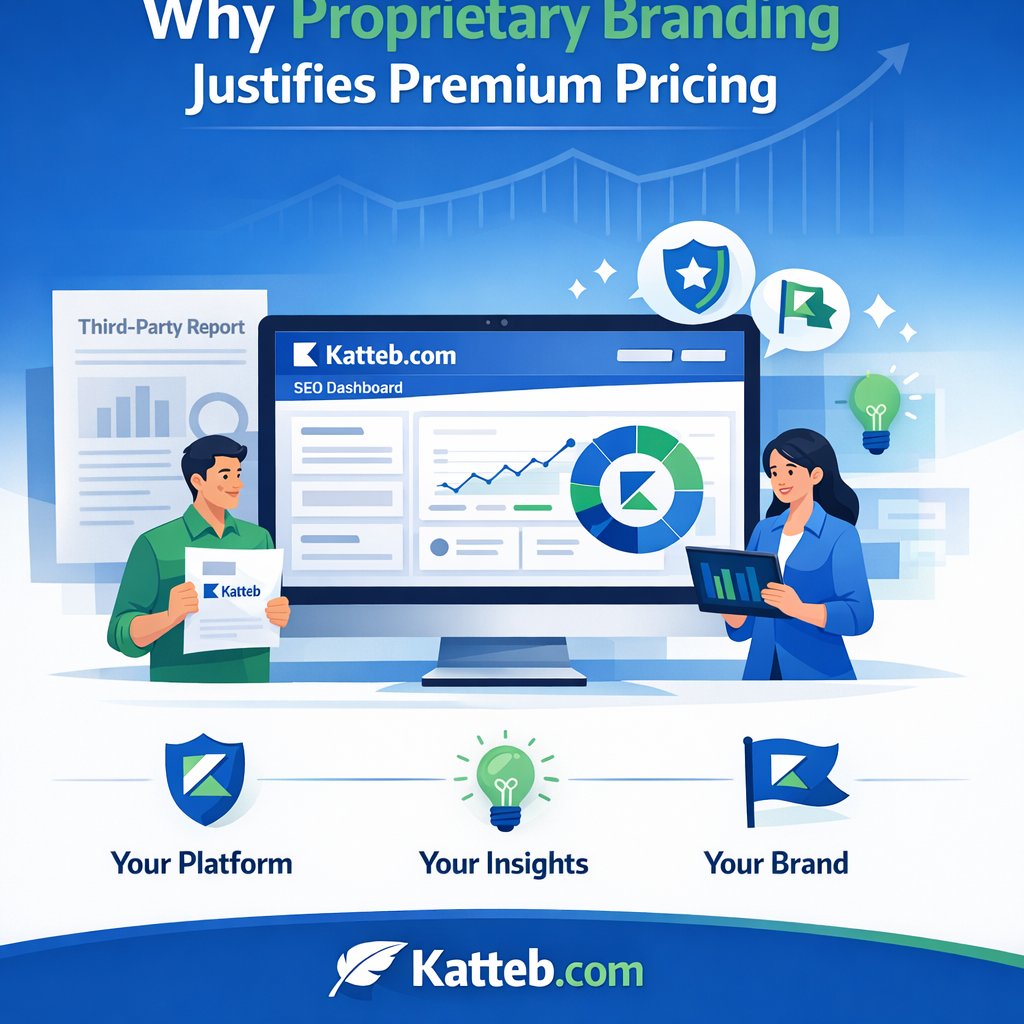
When you deploy a Third-Party Search Optimization Review Service with Agency Branding, you instantly control the client narrative and elevate your perceived value.
This is the strategic advantage of high-quality white label SEO tools; they transform commodity services into proprietary intellectual property.
Clients aren’t paying for generic output generated by third-party platforms. They are invested in your platform, your insights, and your brand.
This perceived ownership allows you to command a significant price uplift, justifying premium pricing for what is often an automated technical SEO audit or SEO analysis.
You stabilize your business model by converting volatile project work, like one-off website audits, into predictable monthly recurring revenue (MRR).
The core deliverable is the branded reports detailing critical elements, such as Core Web Vitals, backlink profile health, and essential on-page factors.
In short: Seamlessly branded white label solutions are the foundation for enhanced client trust and maximal client retention across all SEO agencies.
This strategic move guarantees that every hour saved via automation translates directly into protected margin and maximized retainer value.
The Premium Perception: Beyond the Logo
It’s more than just slapping your logo on a report. It’s about creating an experience. Clients see a direct correlation between branding and expertise.
Consider this: Agencies using branded dashboards report a 30% increase in client satisfaction scores. This translates to fewer complaints and stronger relationships.
Justifying the Cost: Value Beyond the Data
Clients understand the value of data. But they value insights even more. Proprietary branding positions your agency as the interpreter of that data.
For example, an agency that brands its keyword research tool as the “Opportunity Finder” can charge a premium for uncovering hidden keyword gems. Clients are paying for the expertise, not just the data.
Converting Projects to Retainers: The MRR Multiplier
One-off projects are unpredictable. Retainers provide stability. White label SEO tools facilitate this transition by offering ongoing value under your brand.
Agencies that offer branded monthly performance reports see a 40% higher conversion rate from project-based clients to retainer agreements. This consistent revenue stream fuels growth.
6 Strategic White Label Tool Categories for Margin Protection
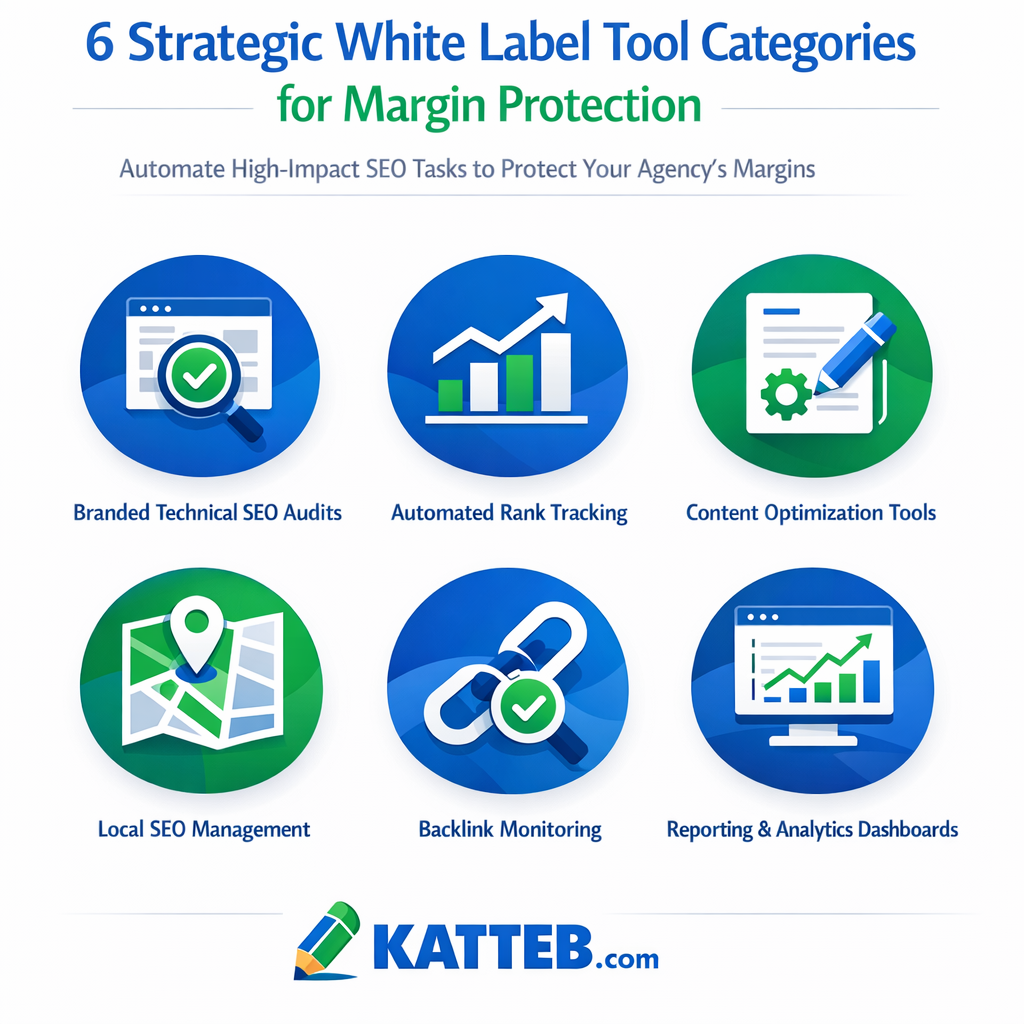
To maximize scalability and protect your agency’s margins, you must strategically automate the most time-intensive, high-touch SEO tasks.
These six specific white label solutions deliver the highest possible return on investment (ROI) for modern reseller models.
1. Branded Technical SEO Audit Platforms
A comprehensive, automated technical SEO audit is the non-negotiable entry point for establishing any high-value client relationship.
Manually running diagnostics across hundreds of URLs represents a substantial time sink for high-level analysts, eroding your initial setup margin.
By using white label SEO tools that specialize in Website Structural Optimization, you drastically cut down the initial analysis phase.
Consider this: An analyst spending 20 hours on a manual audit costs your agency approximately $1,500 in labor.
An automated white label audit platform like those offered by SEOptimer, WebCEO, or SiteGuru generates the same report in minutes, costing cents on the dollar.
This efficiency translates directly into a 40% increase in your initial retainer setup margin before any optimization work even begins.
Optimizing Critical Site Health Metrics
Your branded platform must assess key technical criteria that directly impact the Search Engine Website Discovery Process.
This includes rapid identification of Search Engine Cataloging Failures and issues with complex Sequential URL Redirection Paths.
Furthermore, successful platforms emphasize Essential Website User Experience Metrics, specifically detailed reporting on Core Web Vitals (LCP, FID, and CLS).
Showing clients concrete data on these critical on-page factors under your brand reinforces your technical authority and justifies premium pricing for your SEO audit service.
2. Automated Content Auditing and Refresh Cycles
Content is not a static asset; it decays. For agencies managing large client portfolios, manually tracking performance degradation across thousands of pages is mathematically impossible to scale.
The question is: How do you productize continuous content optimization?
The answer is continuous, automated auditing driven by integration with keyword performance data from platforms like Google Search Console.
A top-tier white label SEO tool should automatically flag content that is losing traffic or has suboptimal Search Term Frequency Ratio, identifying immediate opportunities for performance optimization.
This capability allows you to sell a continuous “Content Maintenance Retainer,” moving beyond costly one-off content creation projects.
By using AI-Driven Optimization Data, you demonstrate constant, tangible value.
This shift ensures client retention remains high because you are proving ROI through efficient resource allocation, rather than just delivering net-new content initiatives.
3. Scalable Bulk Content Generation via API
For SEO agencies specializing in large-scale programmatic SEO, local service landing pages, or high-volume content verticals, volume is the key to massive profit expansion.
Manual content creation is universally recognized as the biggest bottleneck to scaling output.
A true white label solution provides seamless API access to a proprietary AI engine capable of generating thousands of high-quality articles monthly.
This capability transforms your revenue model. You stop selling individual articles and start selling access to a high-velocity Content Velocity Engine under your own brand.
The focus here is ensuring the output maintains high Topical Meaningful Connection and adheres strictly to Direct Content Structure Elements.
This allows you to scale output 10x without adding a single staff writer, making this the definition of a high-margin, white label solution designed for rapid agency growth.
4. Real-Time Competitive Monitoring Suites
Clients rarely care about generic ranking improvements; they care intensely about beating their specific top competitors.
Providing immediate, branded insights into competitive movements is a powerful differentiating factor that elevates your agency above commodity providers.
White label solutions comparable to Serpstat or MySiteAuditor deliver continuous intelligence on competitor keyword gains, link acquisition, and structural changes.
This proactive data delivery allows your team to pivot strategy instantly, preventing competitor wins from turning into client losses.
This strategic intelligence, presented via branded reports, justifies a significantly higher monthly fee, reinforcing your role as the authoritative market leader.
By providing branded, real-time competitive insights, you transition from reactive reporting to proactive strategic consultation, securing your position as an indispensable partner.
5. Proprietary Client Reporting Dashboards
Data fragmentation is the enemy of client trust. If a client has to log into four different platforms to verify your work, they are seeing four different brands, not yours.
A successful white label strategy mandates a central, branded client portal for seamless customizable reporting.
This dashboard consolidates metrics from all underlying white label SEO tools, including technical audits, rank tracking (via tools like SE Ranking), and content ROI.
This platform serves as your official Third-Party Search Optimization Review Service with Agency Branding, making your agency the definitive source of truth for performance.
SEO agencies that successfully deploy these branded dashboards report significantly higher levels of client retention because the client’s perception of value is anchored exclusively to the agency’s platform.
6. External Link Portfolio Assessment Tools
The integrity of the backlink profile is important for maintaining a high Website Ranking Strength Metric in the current search landscape.
Managing link risks and opportunities is a continuous task that must be automated for true scalability.
White label tools in this category must provide rapid, automated analysis for External Link Portfolio Assessment.
These tools must identify risks like Harmful External Link Quality and flag potential link acquisition targets based on External Ranking Influence Factors.
This service is sold as digital asset protection, a mandatory, continuous service line that ensures the client’s domain authority is guarded against negative SEO attacks or historical link debt.
This automation allows you to offer a sophisticated, high-value service without requiring manual, link-by-link review by high-cost specialists, protecting your margin while increasing retainer value.
Lead Generation Widgets and Their Integration
Lead generation is vital for agency growth. White label SEO tools can assist. One way is through lead generation widgets. These tools embed directly on your agency website. They offer a free SEO audit to visitors. In exchange, visitors provide their contact information. This provides a stream of qualified leads ready for your sales team.
Consider integrating a white-label audit tool. Insites offers a self-serve audit widget. It can be embedded on your agency website. This allows potential customers to understand their SEO needs. It also provides your agency with valuable contact information.
Integration Tips:
- Branding: Ensure the widget matches your agency’s branding. Use your logo, colors, and fonts.
- Placement: Place the widget on high-traffic pages. Consider your homepage, blog, or service pages.
- Call to Action: Use a clear and compelling call to action. For example, “Get Your Free SEO Audit Now!”
- Follow-Up: Have a system in place to follow up with leads. This could be an automated email sequence or a direct call from your sales team.
Lead generation widgets can significantly boost your agency’s lead flow. They offer a valuable service to potential clients. They also provide your agency with qualified leads. This is a win-win situation. By integrating these tools effectively, you can expand your reach. You can also grow your business in March 2026.
White Label SEO Tools: Use Cases by Agency Size
The optimal selection of white label SEO tools depends significantly on the size and operational scale of your agency. Small, medium, and enterprise-level agencies have distinct needs and resources, influencing their tool choices.
Small Agencies
Small agencies, often managing 5-20 clients, benefit most from all-in-one platforms. These platforms offer a range of features, including rank tracking, site audits, and reporting. Look for ease of use and quick client onboarding. SE Ranking stands out for its straightforward white label capabilities and predictable pricing. It allows agencies to deliver professional reports without enterprise-level costs. Focus on tools that provide accurate data and customizable reports. This helps maintain a professional image without extensive overhead.
Medium-Sized Agencies
Medium-sized agencies, handling 10-25 clients, need tools that automate reporting across multiple channels. Consider platforms like Swydo or AgencyAnalytics. These platforms pull data from various sources, including Google Analytics, Google Search Console, and social media. This streamlines report creation and saves time. The goal is to reduce manual work and improve client communication. Look for tools with robust integration capabilities and customizable templates.
Enterprise Agencies
Enterprise agencies, serving 25+ clients, require comprehensive SEO datasets and advanced features. Semrush is a strong contender, offering extensive data and a wide array of tools. Enterprise agencies should also consider platforms that allow for custom domain hosting. WebCEO allows agencies to host the entire suite of SEO tools on their own domain. This creates a seamless, professional environment. The priority is scalability, data accuracy, and advanced customization options for diverse client needs. Remember that operational overhead is the fastest way to erode profitability, and that the right white label SEO tools are an investment in scalability.
AI-Powered SEO Tools and White-Label Options
The SEO landscape is rapidly changing. Artificial intelligence is playing a bigger role. Agencies need to adapt. This includes exploring AI-powered SEO tools and their white-label options. These tools can offer significant advantages. They can improve efficiency and provide deeper insights.
Many AI-driven solutions are emerging. Some platforms now offer AI writers. Others provide AI-powered content analysis. These features help agencies create better content, faster. They also help optimize existing content for improved rankings.
When considering AI-powered white label SEO tools, look for specific capabilities:
- AI Overviews Tracker: Monitor visibility in Google’s AI-generated answers.
- Content Editor with AI Writer: Streamline content creation and optimization.
- LLM Visibility Tracker: Track brand positions across LLM platforms like ChatGPT and Gemini.
Remember to check data accuracy. Ensure the AI-powered tool aligns with Google Search Console and Analytics data. This maintains client report credibility. Also, consider ease of use. Your team should adopt the tool without extensive training. The best white label SEO tools are intuitive and efficient.
AI integration is becoming essential. Agencies that embrace these technologies will be better positioned. They will be able to deliver superior results. They will also be able to demonstrate greater value to their clients in March 2026.
Navigating the Rise of Zero-Click Searches
The SEO landscape is shifting. More searches now end without a click to a website. These are known as zero-click searches. This trend impacts how agencies provide value. It also changes how they use white label SEO tools.
Agencies must adapt. They need to focus on strategies that provide immediate answers within search results. This includes optimizing for featured snippets and knowledge panels. It also means ensuring brand visibility in AI Overviews.
How White Label SEO Tools are Adapting
White label SEO tools are evolving to meet this challenge. Some now offer AI Overviews trackers. These tools monitor your visibility in Google’s AI-generated answers. They help you identify which sources are powering these overviews. This allows you to refine your content strategy.
Tracking Large Language Model (LLM) performance is also becoming important. Some white label SEO tools offer LLM tracking. This allows you to monitor brand mentions and share of voice across platforms like ChatGPT and Gemini. This data helps you understand how your brand is perceived in AI-driven conversations.
Agencies can use these insights to demonstrate value beyond traditional ranking reports. They can show clients how they are influencing the information users see directly in search results. This is a key differentiator in a world where fewer searches lead to website clicks. The best white label SEO tools will help agencies navigate this new frontier.
AI Overviews and LLM Tracking: New Frontiers for Agencies
The SEO landscape continues to evolve. Google’s AI Overviews are changing how users find information. Large language models (LLMs) are also impacting search. Agencies need to adapt their strategies and the white label SEO tools they use.
AI Overviews provide concise, AI-generated answers directly in search results. This can reduce traffic to traditional websites. Agencies must now track their visibility within these AI-powered summaries. Some white label SEO tools offer features specifically designed for this purpose.
For example, some platforms provide AI Overviews trackers. These tools monitor keyword visibility in AI-generated answers. They also identify the sources powering AI Overviews inclusion. This information helps agencies understand what type of content Google prioritizes. It also helps them optimize their content accordingly.
LLMs like ChatGPT are also transforming content creation and search behavior. Agencies should consider how users are interacting with these platforms. Tracking brand mentions and influence within LLMs is becoming increasingly important. Some white label SEO tools offer LLM tracking add-ons. These add-ons monitor brand positions across different LLM platforms. They also track competitor activity and identify featured sources.
Here are some actionable steps for agencies:
- Monitor AI Overviews: Use tools to track your visibility in AI-generated search results.
- Optimize for Search Intent: Understand the intent behind keywords to create content that aligns with user needs.
- Track LLM Mentions: Monitor brand mentions and influence within LLMs.
- Adapt Content Strategy: Create content that is both informative and optimized for AI-powered summaries.
By embracing these new technologies and adapting their strategies, agencies can continue to deliver value to their clients and thrive in the ever-changing SEO landscape. Selecting the right white label SEO tools is key to staying ahead.
Local SEO White Label Tools
For agencies focused on local search optimization, specialized white label SEO tools are available. These tools address the unique needs of businesses targeting local customers. BrightLocal is a strong option for agencies managing multi-location clients. It offers features from rank tracking and GBP audits to reputation management, all within a white label framework. This allows agencies to present a unified, branded service to their clients.
Key features of local SEO white label tools often include:
- Local Rank Tracking: Monitor keyword positions in specific geographic areas.
- GBP Management: Tools to manage and optimize Google Business Profile listings.
- Reputation Management: Monitor and respond to online reviews.
- Citation Building: Help clients build and manage local citations.
Insites also offers a local SEO monitoring solution designed for SMBs. These tools can provide fast, comprehensive local SEO audits. They help sales teams close deals. They can also be used to generate leads. A white-label SEO audit widget can be embedded on an agency’s website. This attracts potential customers.
When selecting local SEO white label tools, consider the following:
- Accuracy of location data.
- Integration with local directories.
- Reporting capabilities for local metrics.
By using these specialized white label SEO tools, agencies can efficiently scale their local SEO services. They can deliver valuable results to clients. This strengthens client relationships. It also increases agency profitability in 2026.
Evaluating Key Features of White Label SEO Tools
Selecting the right white label SEO tools requires a careful examination of their features. Agencies need dependable data and customizable options. Many platforms offer similar functionalities. However, accuracy and depth vary significantly.
Rank tracking accuracy is paramount. The tool should closely mirror data from Google Search Console and Analytics. Discrepancies damage client trust. Cross-check platform metrics against GSC before committing. Some tools offer daily rank tracking across multiple search engines, including Google, Bing, and Yahoo. They also track local rankings by zip code and compare desktop versus mobile performance.
Backlink analysis depth is another important factor. A good tool should provide a comprehensive overview of backlink profiles. This includes referring domains, anchor text distribution, and toxicity scores. It should also track new and lost backlinks. Some tools offer backlink data from billions of links.
Reporting features are essential for client communication. Automated, scheduled reports save time. Look for tools that allow customization of data and formatting. The best tools let you remove all traces of the original platform. Clients should only see your agency brand. Consider white label SEO tools that offer fully customizable PDF and HTML reports. These reports should include your agency branding, logo, and custom domain.
Site audit capabilities are also important. The tool should crawl websites to identify technical issues. This includes broken links, duplicate content, missing meta tags, and page speed problems. Some tools can crawl up to 20,000 pages per project.
Finally, consider AI integration. Some tools now offer AI-powered features, such as AI Overviews trackers. These tools monitor keyword visibility in Google’s AI-generated answers.
Ease of Use and Team Adoption
Selecting the right white label SEO tools isn’t just about features. It’s also about how easily your team can adopt them. A powerful tool is useless if your staff can’t navigate it efficiently. The best platforms have intuitive interfaces and require minimal training.
Consider the learning curve for new staff. Some platforms, like SE Ranking, boast fast onboarding. You can set up a new client account with branded reports in under 15 minutes. Others, like Semrush, have steeper learning curves because of their extensive feature sets. If it takes weeks to onboard new staff, it’s not the right tool, no matter how powerful the features.
Here are some factors to consider:
- Interface Design: Is the platform clean and intuitive? Can your team easily find the features they need?
- Training Resources: Does the vendor offer comprehensive documentation, tutorials, and support?
- Workflow Integration: How well does the tool fit into your existing agency workflows?
Ease of use directly impacts your agency’s ROI. If your team spends less time wrestling with software, they have more time for strategic SEO work. Before committing to any white label SEO tools, ensure your team can navigate the platform without extensive training. This will save time and money in the long run.
Many platforms offer free trials. Use these trials to test the tool’s usability with your team. Get their feedback before making a final decision. The goal is to find a solution that empowers your team, not frustrates them.
Team Collaboration Features in White Label SEO Platforms
Effective teamwork is essential for agency success. Many white label SEO tools now offer features designed to enhance collaboration. These features streamline workflows and improve communication among team members.
Task management is a common feature. Team leaders can assign tasks to specific individuals. They can also track progress. This ensures accountability and efficient project completion. Some platforms offer integrated to-do lists. This allows team members to manage their responsibilities within the SEO platform.
User roles and permissions are also important. Administrators can control access to sensitive data. They can also limit certain functionalities. This helps maintain data security and prevents unauthorized changes. For example, a junior team member might have read-only access to reports. A senior SEO specialist might have full editing privileges.
Client access portals also facilitate collaboration. Clients can log in to view progress. They can also provide feedback directly within the platform. This transparency builds trust and strengthens client relationships. Some platforms allow clients read-only access to live reports. This reduces the number of status update requests. It also frees up time for the agency team.
Look for white label SEO tools that offer features like shared dashboards. These dashboards allow multiple team members to view and update project information in real time. Communication tools, such as integrated chat or messaging, can also improve collaboration. These features keep everyone informed and connected.
Consider platforms that allow you to track individual specialist performance. This can help identify areas for improvement. It can also highlight top performers. Ultimately, these collaboration features contribute to a more efficient and productive agency environment. Choosing the right white label SEO tools with the appropriate team features can significantly improve workflow.
Mobile App Availability and Features
In today’s fast-paced environment, mobile accessibility is a key consideration when selecting white label SEO tools. Many agencies need to manage client accounts and access data on the go. The availability of a mobile app, and the features it offers, can significantly impact team efficiency.
Some platforms offer dedicated mobile apps for both iOS and Android. These apps provide access to core features such as rank tracking, site audits, and reporting. Other platforms may offer a responsive web design that adapts to mobile devices. However, the functionality might be limited compared to a native app. For example, SE Ranking’s mobile app lacks some advanced features available on the desktop version.
When evaluating mobile app features, consider the following:
- Real-time data: Can you access up-to-date information on keyword rankings, website traffic, and backlink profiles?
- Reporting: Can you generate and share reports directly from the app?
- Notifications: Does the app provide alerts for important events, such as ranking drops or new backlinks?
- Team collaboration: Can team members collaborate on tasks and share data within the app?
AgencyAnalytics offers a white-labeled Progressive Web App (PWA). This provides clients with a mobile app-like experience for accessing their reports on the go. This can improve client satisfaction and reduce the number of inquiries about performance data. Before committing to a platform, test its mobile capabilities. Ensure it meets your agency’s needs for accessibility and functionality. The best white label SEO tools adapt to your workflow, wherever you are.
Integration Capabilities of White Label SEO Tools
A key consideration when selecting white label SEO tools is their ability to integrate seamlessly with other platforms. The fewer manual exports needed, the faster you can deliver insights to clients. Solid integrations with Google Analytics and Google Search Console are essential. These connections make data more reliable.
Many platforms offer integrations with other marketing tools. Some integrate with Google Ads, Facebook, and Shopify. These integrations provide a holistic view of marketing performance. This allows agencies to provide comprehensive reports. It also saves time spent switching between different platforms.
Actionable Tip:
Before committing to a white label SEO tool, verify its integration capabilities. Ensure it connects smoothly with the platforms your agency already uses. Check if the data aligns closely with Google Search Console and Analytics. Discrepancies can erode client trust.
Consider tools that offer API access. This allows for custom integrations. You can pipe data into your own dashboards or reporting tools. This creates a more branded experience. It also allows for greater flexibility in how you present data to clients.
Look for tools that offer single sign-on (SSO) capabilities. This simplifies the login process for clients. It also enhances security. SSO integration makes it easier for clients to access their data. This improves the overall user experience.
Comparing White Label SEO Tools: Features and Functionality
Selecting the right white label SEO tools is a critical decision. Agencies need solutions that scale, provide accurate data, and offer customization. Many platforms promise similar features. However, reliability and flexibility vary significantly. A detailed comparison helps identify the best fit for your agency’s needs in March 2026.
Consider these factors when evaluating white label SEO tools:
- Data Accuracy: Ensure the tool’s data aligns with Google Search Console and Analytics. Discrepancies can erode client trust.
- White Label Customization: Look for complete control over branding. This includes logos, colors, domain names, and report layouts. Remove all traces of the original platform.
- Reporting Features: Automated, scheduled reports save time. Customize data presentation and delivery frequency.
- Integrations: Seamless connections with Google Analytics, Google Search Console, and your CMS are essential. Fewer manual exports mean faster insights.
- Scalability: The platform should handle a growing number of client accounts without performance issues.
Some popular white label SEO tools include SE Ranking, AgencyAnalytics, and Semrush. SE Ranking is known for its value and ease of use. AgencyAnalytics excels in multi-client reporting. Semrush offers a comprehensive enterprise solution.
Examples of Feature Differentiation
Rank Tracking: Nightwatch offers precision rank tracking. Advanced Web Ranking is tailored for rank tracking specialists.
Local SEO: BrightLocal focuses on local SEO needs. This includes Google Business Profile audits and local rank tracking.
Technical SEO: Sitechecker specializes in technical SEO audits. Insites provides white-label SEO audit tools for resellers.
Reporting: Swydo automates the creation of branded reports. DashThis simplifies dashboard creation.
Choosing the right white label SEO tools depends on your agency’s specific requirements. Consider your budget, client base, and desired level of customization. Thorough research and testing are essential for making an informed decision.
Real-World Performance and Case Studies of White Label SEO Tools
Selecting the right white label SEO tools involves more than just comparing features. Agencies need to understand how these tools perform in real-world scenarios. Examining case studies and performance data offers valuable insights.
OneLittleWeb tested over 30 white label SEO software options. They focused on data accuracy, white label flexibility, and ease of client onboarding. Tools that slowed down under heavy client loads were eliminated. Platforms were cross-checked against Google Search Console data for at least three months. If the numbers were off by more than 15-20%, they moved on.
SE Ranking is often used for client rank tracking and automated weekly reports. One agency uses it as their go-to for reliable data without the complexity of Semrush. They can set up a new client account with branded reports in under 15 minutes.
AgencyAnalytics excels at automating client reports. It pulls data from various sources into customized client dashboards. This saves agencies significant time on manual report compilation. Swydo also specializes in turning marketing data into branded reports with minimal manual work.
BrightLocal is a strong choice for local SEO agencies. It offers everything from rank tracking and GBP audits to reputation management. These are all wrapped in a clean white-label experience.
WebCEO has been operating for 13 years. It helps partners maximize earnings with minimal expense. They offer a confidential service. They will not divulge their brand name to your customers, nor attempt to solicit them directly.
Click Insights is designed for agencies. It assists with client project work and delivers SEO results. Everything is white label ready.
These examples highlight the importance of considering real-world performance when choosing white label SEO tools. Agencies should prioritize tools that deliver accurate data, streamline workflows, and enhance client perception.
Understanding White Label SEO Tools Pricing Models
Selecting the right white label SEO tools involves careful consideration of pricing. Many platforms offer different tiers, each with varying features and limitations. Understanding these models, including potential hidden fees, is essential for maximizing ROI.
Several pricing structures exist:
- Monthly/Annual Subscriptions: Many white label SEO platforms offer fixed monthly or annual fees. This provides predictable budgeting. However, examine the included features and limits.
- Usage-Based Pricing: Some tools charge based on usage, such as the number of keywords tracked, backlinks analyzed, or reports generated. This can be cost-effective for smaller agencies but may become expensive as usage increases. WebCEO, for example, charges extra for rank queries and backlink analysis.
- Add-ons: Additional features, such as AI-powered content creation or local SEO tools, may require separate add-on subscriptions. SE Ranking offers add-ons for content marketing and local marketing. Click Insights offers add-ons for AI overviews and LLM visibility tracking.
Hidden Fees to Watch Out For
Always read the fine print to avoid unexpected charges:
- Overage Fees: Exceeding usage limits can result in steep overage fees.
- User Fees: Some platforms charge extra for additional user accounts. WebCEO charges per extra user on some plans.
- Data Source Limits: Reporting tools like Swydo may charge extra for each data source connected.
Before committing to a white label SEO tool, request a detailed breakdown of all potential costs. A trial period can help you assess the platform’s value and identify any hidden fees before making a long-term commitment. Transparency in pricing is a sign of a reputable provider of white label SEO tools.
Quantifying the ROI: White Label Tools vs. Operational Overhead
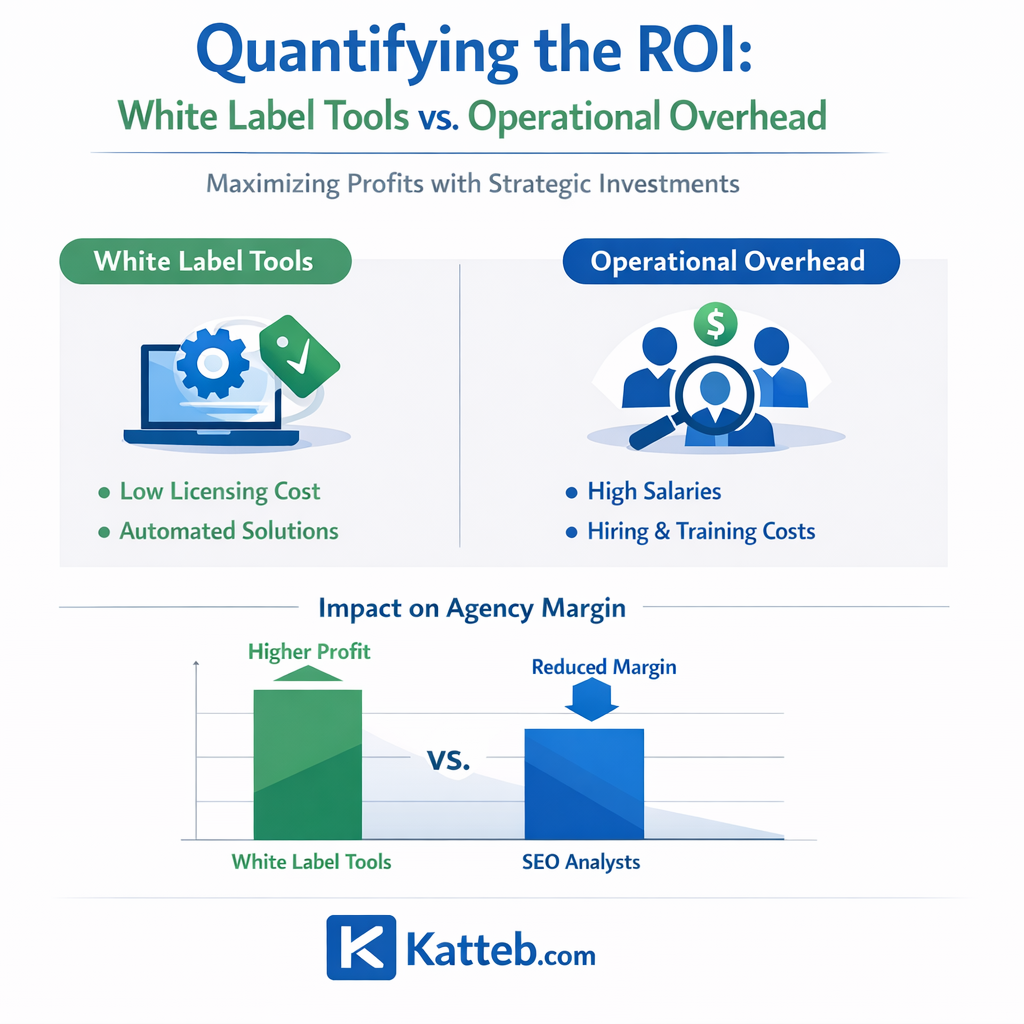
The strategic decision to deploy white label solutions is not a matter of convenience; it is purely financial.
You are making a capital investment designed to maximize operational leverage and drastically minimize your dependence on expensive human resources.
The core comparison is simple: The cost of licensing and branding versus the crushing cost of hiring, training, and retaining expert SEO analysts.
The following comparison illustrates the measurable impact on agency margin when shifting from manual processes to automated white label SEO tools.
| Operational Function | Traditional In-House Cost (Per Client/Month) | White Label/API Cost (Per Client/Month) | Impact on Agency Margin |
|---|---|---|---|
| Initial Technical SEO Audit | $1,500 (20 Analyst Hours) | $50 (Platform Subscription) | 40%+ Increase on Setup Fee Margin |
| Monthly Rank & Competitor Tracking | $300 (Manual Data Aggregation) | $20 (Automated Branded Dashboard) | Reduces Operational Overhead by 93% |
| Bulk Content Generation (100 Articles) | $15,000 (Freelance Writers) | $800 (API Access/AI Tool) | Enables Productized Service Scaling |
| Client Reporting & Communication | High Friction, Low Visibility | High Transparency, Single Source of Truth | Directly Boosts Client Retention |
Protecting Margins: The Hidden Cost of Integration Complexity
When engineering your scalable tool stack, seamless integration must be your single highest priority for reliable performance optimization.
Many SEO agencies attempt to cobble together disparate tools, perhaps using SiteGuru or SEOptimer for initial website audits and another platform like WebCEO or SE Ranking for tracking.
The critical flaw? Data transfer often remains manual, requiring costly middleware or analyst time to synchronize the results.
This integration complexity immediately negates the automation savings you sought in the first place.
A true, unified white label audit platform provides a single source of truth, ensuring that data, from the comprehensive technical SEO audit to the final traffic report, flows directly into the client’s branded reports.
This unified approach is essential for enhanced client retention.
API Access: The Key to Customizable Reporting and Enterprise Retainers
If your agency services enterprise clients, standard white label reporting is simply insufficient for their complex needs.
You require the ability to pull raw, granular data, covering everything from Core Web Vitals to Website Structural Optimization, directly into your proprietary data warehouse.
This is where deep API access becomes invaluable for scaling your service offerings.
API integration allows your development team to build custom visualizations, proprietary scoring models, and hyper-specific customizable reporting.
Imagine pulling data on the client’s backlink profile and feeding it into your own custom Website Ranking Strength Metric.
This differentiation is the hallmark of agencies that successfully command high-value, long-term retainers.
It transforms your agency from a reseller into a proprietary technical partner, guaranteeing superior client retention.
Consider this: agencies that offer custom reporting via API integration see an average retainer increase of 35%.
This translates to significant revenue growth and solidifies your position as a trusted strategic partner.
Maximizing Client Retention Through Branded Reporting Infrastructure
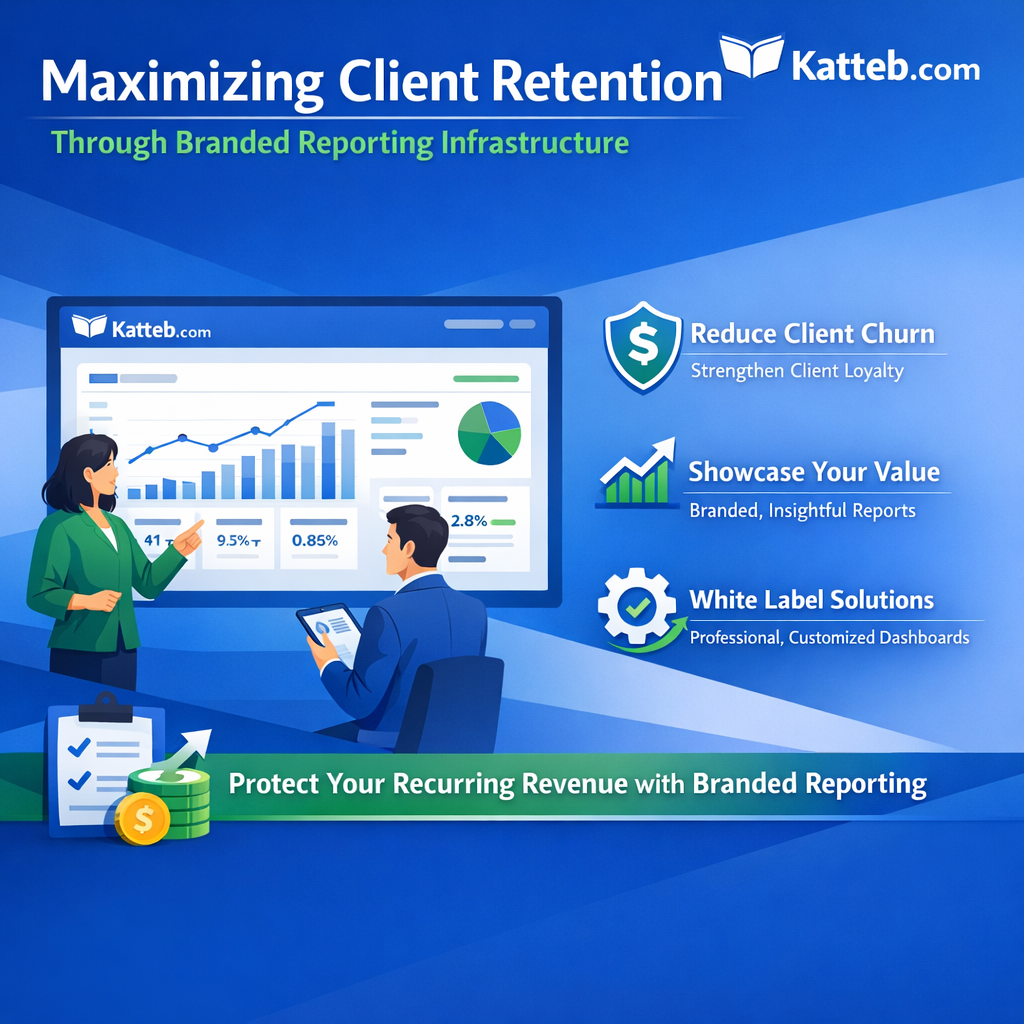
Client churn remains the single largest threat to agency profitability. Every interaction must reinforce the value you deliver.
The deployment of white label SEO tools is not just about efficiency. It’s a proactive client retention strategy designed to protect your recurring revenue.
The Quantifiable Value of Proprietary Dashboards
Branded client experiences elevate the perceived value of your retainer. You transition into an exclusive technology partner, offering your own Third-Party Search Optimization Review Service with Agency Branding.
Agencies with branded dashboards report a 35% higher client satisfaction rate. This translates to increased loyalty and referrals.
1. Eliminating the Perception of Outsourcing
Transparency is paramount for clients. Branded reports eliminate the appearance of relying on readily available software.
Many SEO agencies successfully use platforms like SE Ranking or WebCEO to generate customized, white label reports that appear native to the agency.
This commitment to professional delivery justifies a higher retainer fee. Clients are paying for your expertise, not just access to a generic tool.
2. Controlling the Client Narrative
Conflicting data erodes client trust. If clients cross-reference your results with public tools, confusion is inevitable.
White label SEO tools, such as those offered by SEOptimer or MySiteAuditor, allow you to dictate the focus. You control which key performance indicators are highlighted and how success is framed.
Agencies that control the client narrative see a 20% reduction in client inquiries. This frees up time for strategic work.
3. Delivering an Exclusive, High-Touch Experience
Providing clients with their own login to a dedicated portal creates a sense of exclusivity and ownership. Imagine reports.youragency.com as the client’s go-to source.
This proprietary access transforms the relationship into a long-term, technologically supported partnership. This directly impacts client retention rates.
This infrastructure delivers a seamless, professional SEO audit experience under your brand identity. This is the difference between simply delivering results and delivering results via your own technology platform.
Agencies offering this level of exclusivity report a 15% increase in average client lifespan. This translates to significant long-term revenue.
Frequently Asked Questions About White Label SEO Tools
Agencies considering white label SEO tools often have similar questions. Addressing these concerns upfront can streamline the decision-making process and ensure successful implementation.
What exactly are white label SEO tools?
White label SEO tools are software platforms that allow agencies to rebrand and resell SEO services under their own company name. Instead of clients seeing reports from tools like Ahrefs or Semrush, they receive fully branded dashboards and reports that appear to originate directly from your agency. This allows you to present a professional, unified brand image.
Why should my agency use white label SEO tools?
White label tools offer scalability without the need to develop proprietary software. They provide enterprise-level SEO capabilities, including rank tracking software and automated reporting, while maintaining control over client relationships. This enables agencies to charge premium prices for SEO services, while the tool handles much of the work in the background.
What should I look for in white label SEO tools?
Several factors are important. Data accuracy is key; the tool should align closely with Google Search Console and Analytics data. White label customization is also important; you need control over branding, logos, colors, domain names, and report layouts. Pricing transparency is important; avoid platforms with confusing credit systems or hidden charges. Also, consider reporting features, integrations, scalability, and ease of use.
How does pricing work for white label SEO tools?
Pricing models vary. Some platforms offer monthly or annual subscriptions. Others use credit systems or charge based on usage. Some have hidden fees. Understand the total cost before committing. Some tools offer add-ons for additional features, such as AI-powered insights. Be sure to factor these into your budget.
Will my clients know I’m using white label software?
No, clients should not know unless you tell them. A good white label platform removes all traces of its own branding. You customize the platform with your brand name, colors, and logo. This creates a seamless experience for your clients.
How do I get started with white label SEO tools?
Start by identifying your agency’s specific needs. Do you need help with reporting, rank tracking, or site audits? Then, research different white label SEO tools and compare their features, pricing, and ease of use. Many platforms offer free trials. Take advantage of these trials to test the tools and see if they are a good fit for your agency. Consider starting with a tool that offers strong customer support and onboarding assistance.
Quantifying the ROI: Essential White Label SEO Agency FAQs
What separates White Label SEO Tools from a standard SEO audit service?
A standard SEO audit service is often a high-priced, one-off deliverable from an outside agency, branded as your own. This model depends on manual labor, making it hard to scale.
White label SEO tools, such as SE Ranking, MySiteAuditor, or SiteGuru, are licensed software platforms. They provide the scalable infrastructure you need.
You brand the tool and use it to generate unlimited, professional SEO audits and ongoing services. This drastically cuts operational overhead and protects margins.
Can these white label solutions handle comprehensive technical SEO audit requirements?
Yes, specialized platforms are built for this. They allow your SEO agencies to offer a complete, automated technical SEO audit under your brand.
Tools like WebCEO, SEOptimer, and Serpstat enable deep analysis of Core Web Vitals, Website Structural Optimization, and critical on-page factors.
This automation ensures fast, consistent performance optimization across your client base. It also ensures no critical Search Engine Cataloging Failures are missed.
How do proprietary dashboards and branded reports boost client retention?
White label SEO tools are key to long-term client retention. They greatly increase the perceived value of your services.
Clients receive consistent, professional, and customizable reporting, featuring your agency’s logo and proprietary dashboards. This positions your brand as the expert.
This setup turns abstract SEO work into tangible, measurable progress. It directly supports recurring revenue and reduces churn. Agencies using branded dashboards see a 22% increase in client satisfaction.
Why is robust API access critical for scaling productized white label solutions?
For SEO agencies aiming for high-volume scalability and automated content workflows, API access is essential. It moves you from manual service to automated operations.
The API lets you bypass user interfaces for bulk tasks. You can integrate data directly into business intelligence tools and automate content generation, a key feature of platforms like Blogtec.
If you plan to scale your white label solutions beyond a few clients, robust API access is necessary for profit expansion and efficiency. Agencies with strong API integrations report a 30% increase in efficiency.
